Continued Summons and Arrests During Nowruz in Kurdish-Populated Regions; 19 People Detained in Sanandaj
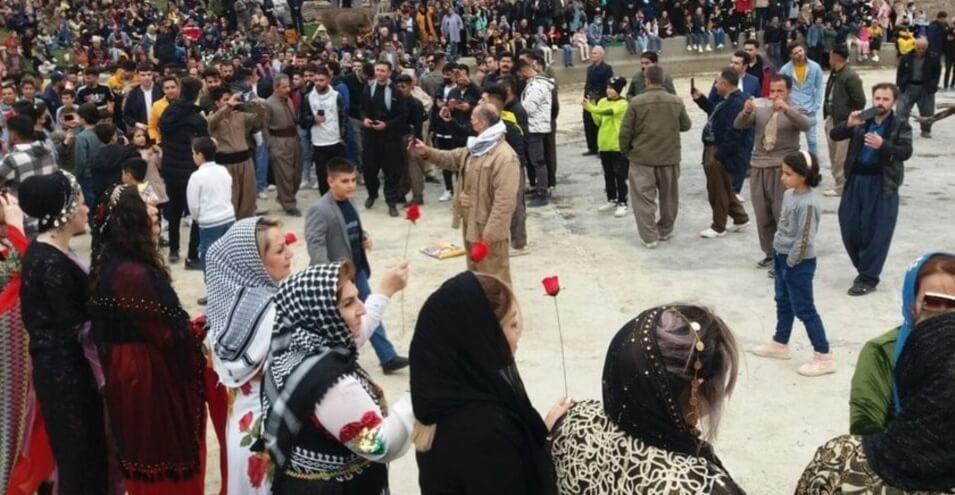
Since the beginning of the year 1401, a number of citizens in Kurdish-populated regions of Iran have been arrested for participating in Nowruz ceremonies, and according to the latest reports, still “19 people” from these individuals are detained in Sanandaj.
According to Mohsen Razavi, a member of the leadership council of the “United Kurdish Front,” from the tenth day of Esfand of the previous year, security agencies summoned some cultural activists and obtained commitments from them not to be active during Nowruz, and in the city of Ilam, they said that Nowruz ceremonies could be held on the condition of “separating men and women.”
Based on reports published by human rights websites active in western Iran, district offices and governorates in the weeks before the start of the new year, through a circular to executive officials of Kurdish-populated cities, prohibited holding Nowruz ceremonies in these regions, using the Kurdistan flag, the jামана (traditional Kurdish shawl), red flowers, and mixed dancing and jumping by women and men, and emphasized the use of symbols of the Iranian government in ceremonies related to the new year.
Mohsen Razavi stated that following the pressure of security agencies, the arrests of citizens in Kurdish-populated regions began on the 28th of Esfand, and only in the city of Sanandaj 30 people were arrested, of whom 11 have been released in recent days.
According to the member of the leadership council of the “United Kurdish Front,” in recent days, the summoning of cultural activists has continued, and besides that, in the cities of Piranshahr, Asnuye, Piranshahr, Salmas, and Khoy, other individuals have also been arrested, but no statistics have been provided regarding the number of people arrested in these cities.
According to Mr. Razavi, the charge against most of the arrested individuals, among whom there are girls as young as 14 years old and women as old as 75 years old, has been wearing the “جامانه” (a type of Kurdish head and neck shawl, comparable to the agal keffiyeh).
On the 5th of Farvardin, a number of political, civil, and cultural activists from Kurdistan, through the publication of a statement, while emphasizing the need for the release of arrested individuals, stressed the necessity of “changing the approach to human cultural rights and removing formal and informal restrictions.”
Source: Radio Farda