A New Solar Century Began with Solidarity and Continuity of Iranian Justice Seekers’ Voices; Report on the Situation of Three Families of Victims
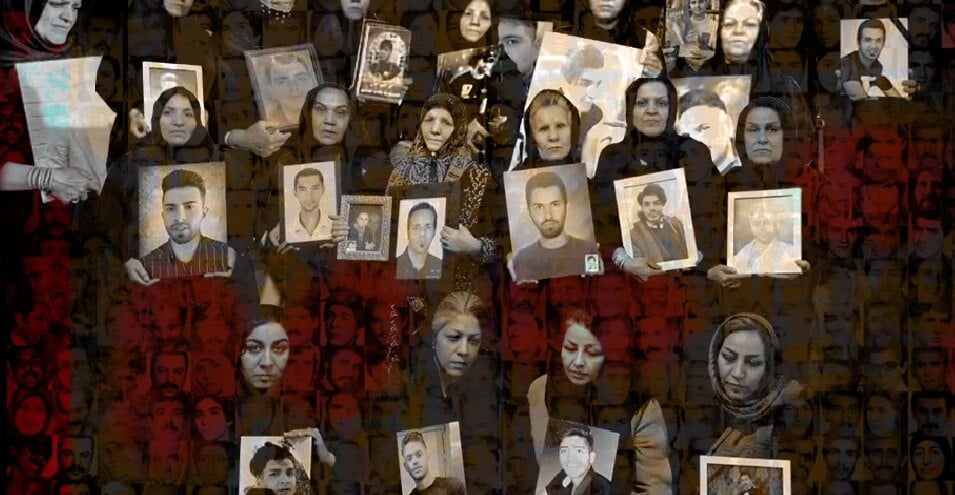
The perpetration of injustice and lack of justice against the families of victims of government suppressions is one of the primary forms of the regime’s confrontation with the concept of “justice-seeking” and, in a sense, the clearest example of “injustice” inflicted upon those whose only desire is to reach “truth” and “justice.”
In recent years, we have witnessed various forms of injustice perpetrated against families of victims and those harmed by government suppressions; from arbitrary detention and unfair trials and imprisonment to security threats and beating of family members of victims. The intensification of these actions by the regime against defenseless justice-seeking families has made their voice of justice-seeking today resound more than ever as a unified voice against discrimination. A re-reading of each instance of the regime’s treatment of families of suppression victims highlights clear examples of the regime’s view of justice-seeking, and on the other hand, demonstrates the perseverance of justice-seekers and the expansion of the concept of justice-seeking in Iranian society. On days when all Iranian families try to be together and find relief from the bitterness and hardship of life, many justice-seeking families endure the sorrow of separation from lost loved ones or those in imprisonment, in hope of a clear resolution to their quest for justice. In the final years of the past solar century and following the spread of public protests and consequently the brutal suppressions by the regime, more instances of injustice and lack of justice against families of victims were documented and recorded. A re-reading of some of these instances demonstrates how the regime’s systematic treatment of victim families, contrary to the government’s assumption, has led to the expansion of the narrative of justice-seeking and truth-seeking among families of victims of inequality and discrimination. Today, many families whose loved ones have been taken by the government’s bullets and nooses have become embodiments of justice-seeking. This report examines the account of the regime’s treatment of three families who have lost their loved ones in the course of government suppression and injustice; the family of Navid Afkari, the family of Pouya Bakhtiari, and the family of Farzad Ansarifar.
The Afkari Family; From the Noose to Solitary Confinement
In mid-Esfand 1400 (March 2022), Habib Afkari was released after nearly three years of imprisonment and spending more than 550 days in solitary confinement. Habib, along with his two brothers Vahid and Navid Afkari, had been detained during the August 2018 protests in Shiraz. Navid Afkari was executed in September 2020 after a completely unfair, non-transparent, and ambiguous legal process, and the family’s other brother, Vahid Afkari, is still in solitary confinement. Shortly after Habib Afkari’s release, he, along with his brother Saeed, participated in a virtual conversation session on Twitter. What was very evident and clear in the conversation following Habib’s release was a narrative of struggle, demand, and truth-seeking against the discrimination and injustice that seemed to have deepened the intensity of this narrative by the bitter experience of his brother’s execution and imprisonment, torture, and countless pressures on the family. A narrative that has gained more credibility and standing not only within the Afkari family itself but also in public opinion. Looking at what has been imposed on the Afkari family, we see that not only the Afkari brothers (Vahid, Habib, and Navid) have faced the harshest form of the regime’s treatment, but other family members have also not been spared from the harm of security pressures.
On December 17, 1399 (January 2021), a few months after Navid Afkari’s execution, Navid’s father and brother, when they were at the grave of a family member in the village of Sangar to prepare Navid’s gravestone, were arrested. Security forces interrogated members of this grieving family for hours and ordered them to refrain from placing a gravestone on Navid Afkari’s grave.
On June 11, 2021, when Saeed Afkari, along with several family members and relatives, appeared in front of Shiraz’s Adel Abad Prison in protest of Habib and Vahid’s detention in solitary confinement, security forces attacked the Afkari family members (father, mother, sister, and aunts of Navid Afkari) and severely beat them.
On September 12, 2021, on the eve of the anniversary of Navid Afkari’s execution, security forces arrested Navid’s brother and sister, Saeed and Elham Afkari, as they were walking to visit their imprisoned brothers, after beating them.
On November 7, 2021, coinciding with Cyrus the Great Day, the parents of the Afkari brothers were arrested by a number of security forces and released hours later. It was reported that security forces, during the arrest, seized photographs of Navid Afkari, a cake, and Navid’s father’s car.
Although these instances show aspects of the regime’s and security apparatus’s treatment of the Afkari family, perhaps the most tragic forms of torture and injustice against the imprisoned Afkari brothers, Vahid and Habib, occurred; from severe psychological and physical torture to the illegal and unfair legal proceedings in their case.
The Afkari brothers’ case from the very beginning became linked with torture and severe psychological pressure on these brothers; Navid Afkari’s account, which is reflected in recordings of him in prison and parts of his court session and statements by the Afkari family, leaves no doubt that the psychological and physical torture of these brothers continued in various forms. In the very first days of the Afkari brothers’ detention, Bahaeh Namjoo, mother of the Afkari brothers, said that “her sons were tortured so they would testify against each other, and one of her sons (Vahid) attempted suicide twice in prison.” The primary pressure on Vahid was to write against his brother Navid. That is, the harshest form of psychological torture for members of one family, both of whom are imprisoned.
The Ansarifar Family; An Endless Tale of Justice-Seeking
Farzad Ansarifar, a 28-year-old young man from Behbahan, died on November 16, 1399 (January 2021) from a gunshot fired by military forces. Farzad had left home on a day when the streets of Behbahan, like many other Iranian cities, witnessed people’s protests against the sudden increase in gasoline prices, to “water the plants and bring back his two younger brothers home.” He was concerned about his brothers so that nothing would happen to them in those circumstances. According to some witnesses’ accounts, Farzad Ansarifar, at the time of shooting, was with several others in an alley completely away from the conflict sites. Farzad Ansarifar, along with three others, was shot from behind. Farzad was targeted 100 meters from his father’s house. His body was initially transferred to Ahvaz by security forces and two days later brought back to Behbahan and handed to the family, and on the afternoon of November 28, 1399 (January 2021), he was buried in Behbahan.
The justice-seeking process for Farzad Ansarifar’s family began very soon by his family, and the security and judicial apparatus strongly resisted this justice-seeking. Farzaneh Ansarifar, Farzad’s sister, was the first family member to face judicial confrontation. Farzaneh Ansarifar was arrested on the night of Thursday, July 17, 1399 (September 2020) during a protest gathering at Bank Melli Square in Behbahan and transferred to Sepidbar Prison in Ahvaz. Farzaneh Ansarifar was ultimately released from prison on August 24, 1399 (October 2020) under bail. The gathering that Farzaneh Ansarifar participated in was in protest of “the country’s dismal economic situation” and “the issuance of execution sentences in response to the 2018 public protests,” during which many protesting citizens were arrested at the gathering, and some were arrested in their homes after the protests ended. At the time of arrest, Farzaneh Ansarifar was accused of charges such as “insulting the leader,” “propaganda against the system,” “inciting public opinion,” and “interviews with foreign media.” Despite numerous security and judicial pressures, Farzaneh Ansarifar remained persistent in seeking justice for her brother.
On the other hand, the judicial apparatus repeatedly and for various reasons issued summons for Farzaneh Ansarifar and called her to court. In one of these summons, Ms. Ansarifar was summoned to the Revolutionary Court on the complaint of the former commander of the Behbahan Special Forces with charges such as “grand theft.” On November 25, 2021, Farzaneh Ansarifar published an image of this summons in which she was asked to appear at Behbahan Criminal Court a month later to address her charges.
Among the charges mentioned in this summons were “intentional assault and battery,” “publishing inflammatory images,” “membership in mujahedin groups,” “insulting the leader,” “propaganda against the Islamic Republic system through sloganeering and participation in 2018 protests,” and “grand theft and stone-throwing against police and security officials.”
This case was filed following a complaint by Rahman Badri, the former commander of Behbahan Special Forces, who is now retired, and the prosecutor of Behbahan, against Farzaneh Ansarifar. On Monday, December 6, 2021, a court session was held to examine the charges of 25 people arrested during the July 2019 protests in Behbahan in Branch 1 of the Mahshahr Revolutionary Court. Farzaneh Ansarifar’s name was among the accused.
Later, on December 25, 2021, a court session was held in Branch 103 of Behbahan Criminal Court 2 presided over by Judge Rasoul Rasouli Nejad, against Farzaneh Ansarifar. Finally, a court session to examine some other charges against Farzaneh Ansarifar was held on February 2, 2022 in Branch 1 of the Bandar Mahshahr Revolutionary Court, during which she was sentenced to 4 years and 6 months of imprisonment.
In February 2022, an informed source regarding the Ansarifar family’s situation stated that concurrent with the holding of the second round of the 2018 People’s Tribunal in London, judicial officials, while pressuring the Ansarifar family, had opened three separate cases against Farzaneh Ansarifar. Cases that, although the charges are different, there is no doubt that the main reason for Farzaneh Ansarifar’s persistence in justice-seeking is the driving force.
Farzaneh Ansarifar was not the only family member who chose the path of justice-seeking and enduring security and judicial pressures to reach truth and justice. Amin Ansarifar, a disabled war veteran of the Iran-Iraq War, had previously, during the holding of the first round of the 2018 People’s Tribunal in London, appeared as one of the witnesses online and testified about the killing of his son and the security pressures on his family.
In fact, this very issue led to the intensification of security and judicial pressures on Farzad Ansarifar’s father. In February 2022, concurrent with the intensification of judicial pressures on Farzaneh Ansarifar, court summons for Amin Ansarifar and also Arman Ansarifar (Farzad’s brother) were sent by the court, according to which Farzad’s father and brother were to appear at the (Revolutionary) Court in Behbahan within five days. In this summons, “propaganda in favor of groups or organizations opposing the Islamic Republic system” was announced as Amin Ansarifar’s charge.
Amin Ansarifar was arrested on February 19, 2022 following a visit to the prosecutor’s office in Behbahan and transferred to the prison of this district. Arman Ansarifar was also arrested one day after his father’s detention, accused of “propaganda activity against the system,” and transferred to Behbahan Information Security Department detention.
Following the publication of this news, Arash Sadeqi, a former political prisoner, tweeted that Farzaneh Ansarifar, who had gone to the Behbahan prosecutor’s office to follow up on her father and brother’s situation, “was beaten in the prosecutor’s office and threatened with arrest.”
According to Arash Sadeqi’s post, “the beating of Ms. Farzaneh Ansarifar was done in such a way that it caused bruising of her body and injury to her shoulder.”
On Wednesday, March 16, 2022, Farzaneh Ansarifar announced the release of her father and brother after nearly a month in detention.
Earlier, an informed source about Farzad Ansarifar’s family situation had told Voice of America that “they went after anyone who had dealings with them and took him [for interrogation and threats].” He said that “two of Farzad Ansarifar’s uncles had also been arrested before and interrogated.”
The Bakhtiari Family; Keeping Justice-Seeking Alive at the Price of Imprisonment
Pouya Bakhtiari, a 27-year-old young man from Karaj, was killed on November 16, 1399 (January 2021) in Phase 4 of Mehr City in Karaj during public protests by gunfire from security forces. According to Pouya Bakhtiari’s father, his son, along with his mother and sister, had joined the ranks of protestors on the second day of public protests against the sudden increase in gasoline prices. A security force’s bullet struck Pouya Bakhtiari’s skull, and he died before reaching the hospital. A tragic account of the brutal suppression of public protests by the regime’s coercive forces. The flag of justice-seeking of Pouya’s family was raised very soon, and his parents, shortly after the tragedy of their son’s death, began their quest for justice, and consequently, security and judicial pressures on them intensified. Nahid Shirpisheh and Manouchehr Bakhtiari, through repeated conversations with media outlets and correspondence with international organizations, sought to convey their voice of justice-seeking. On December 4, 1399 (January 2020), less than a month after Pouya Bakhtiari’s death, Nahid Shirpisheh, Pouya’s mother, in an interview with Iran Human Rights Campaign, stated that her family would declare their complaint to Iranian courts and judicial apparatus and international bodies, and they demanded the identification and punishment of those responsible for their son’s death.
One month after Pouya Bakhtiari’s death, his parents announced that as the fortieth day of their son’s death approached, they had been summoned by the Iranian Ministry of Intelligence and were told that if they disagreed with holding a ceremony at a location approved by the Ministry of Intelligence, they would not be allowed to hold Pouya’s fortieth-day ceremony. Nevertheless, Pouya’s parents, by issuing a call, asked people to participate in a ceremony marking forty days since their son’s death on December 25, 1399 (January 2021). Two days before this date, reports of security officials’ raid on the Bakhtiari family home and the arrest of many family members were published. One of the Bakhtiari family members said that during the security forces’ raid, at least 10 members of Pouya Bakhtiari’s family were arrested. The parents, sister and sister-in-law, two uncles, and 11-year-old cousin of Pouya Bakhtiari were arrested at Mr. Bakhtiari’s house, and then security forces went to the house of one of Pouya’s uncles and arrested him as well.
At that time, Amnesty International also tweeted demanding the immediate and unconditional release of Nahid Shirpisheh and Manouchehr Bakhtiari, Pouya Bakhtiari’s parents.
Manouchehr Bakhtiari wrote a three-page letter in June 2020 to some human rights officials of the United Nations, including Michelle Bachelet, the UN High Commissioner for Human Rights, asking them to “help reveal the truth, convey the voice of victims, and pressure the regime for accountability for violations.” In this letter, he detailed the brutal and bloody suppression of the people and described what his son and family had endured during these times.
Shortly thereafter, some images and videos were circulated on social media showing that Manouchehr Bakhtiari, Pouya’s father, and his brother had participated in ceremonies honoring Qasem Soleimani, the former commander of Iran’s Quds Force. In early July 2020, Manouchehr Bakhtiari announced by releasing a video on social media that he and his brother had been “forced” to participate in ceremonies honoring Qasem Soleimani, the former commander of Iran’s Quds Force. Mr. Bakhtiari said that his participation in these ceremonies occurred at a time when he and his family were “in the clutches of mercenaries.” Manouchehr Bakhtiari emphasized that with “threats and intimidation of the family,” they forced him to participate in these ceremonies.
On July 14, 2020, security forces kidnapped and arrested Manouchehr Bakhtiari while he was traveling to Kish Island. Following Manouchehr Bakhtiari’s arrest, family members and relatives, including his brother Mehrdad Bakhtiari, on September 25, 2020, gathered in front of the Ministry of Interior holding a placard reading “Justice-seeking is not a crime, release Manouchehr Bakhtiari,” but security forces, in addition to beating them, including 80-year-old grandmother Bibi Zahra Bakhtiari, Pouya’s grandmother, detained these family members for hours. After that, on the eve of the anniversary of November protests, Mehrdad Bakhtiari, Pouya’s uncle, was also arrested by security forces. On December 12, 2020, Bibi Zahra Bakhtiari, Pouya’s grandmother, in a video said: “While four months have passed since Manouchehr Bakhtiari’s [Pouya’s father’s] arrest, my other son Mehrdad Bakhtiari was also kidnapped yesterday when he left home to buy bread by the security forces of the Islamic Republic.”
Manouchehr Bakhtiari was released on December 6, 1399 (January 2021) after enduring approximately five months of detention on bail, and Mehrdad Bakhtiari was also released on Thursday, December 18, 1399 (January 2021), after 47 days in detention. Manouchehr Bakhtiari said that his brother (Mehrdad) had been sentenced to five years suspended imprisonment and two years of travel ban.
Manouchehr Bakhtiari was arrested again a few months later, on April 8, 2021, during his presence and gathering at the grave of Sردار Asad Bakhtiari, one of Iran’s constitutional advocates, in Isfahan, along with the family of some people killed in public protests and a number of civil activists, and was released sometime later.
Less than a month later, on May 29, 2021, security forces raided Manouchehr Bakhtiari’s private home, beating him, and arrested him, transferring him to an undisclosed location for some time, and finally, the Revolutionary Court sentenced Manouchehr Bakhtiari to 3 years and 6 months imprisonment, 2 years and 6 months exile, and 2 years travel ban, transferring him from one security institution’s detention facility to Karaj Central Prison. Shortly after Mr. Bakhtiari’s arrest, an audio file of him was released in which he emphasized that during the proceedings of his case, he was deprived of having a lawyer and had no information about when the sessions would be held. In September 2021, Nahid Shirpisheh, Pouya’s mother, reported the raid of four security officials on her home. Nahid Shirpisheh said that four security officials on Monday, September 13, 2021, raided her home and, with insults, searched the house and confiscated her personal mobile phone, taking it with them.
In December 2021, reports emerged of Manouchehr Bakhtiari’s hunger strike in prison and his transfer to solitary confinement. A hunger strike in protest of injustice in the proceedings of his case.
The Regime Against Justice-Seeking; Imprisoning Justice and Erasing Truth
A re-reading of the regime’s confrontation with justice-seeking families demonstrates a structured, though defined, pattern of violent treatment and suppression of justice-seeking, which reveals various forms of violence. It can be clearly seen that all the regime’s violent and suppressive measures against victim families revolve around several fundamental axes; erasure and obliteration of truth, suppression and discrimination, distortion of reality and file-making against family members, and finally humiliation of justice-seekers through beating, insult, and invasion of privacy.
Preventing the holding of burial ceremonies and holding commemorations of fortieth-day and anniversaries of victims is the best example to illustrate the approach of truth erasure, which over the past forty years, in confronting the justice-seeking movement, has been imposed on justice-seeking families by the regime. The destruction of Khavaran Cemetery and continuous restrictions on the Mothers of Khavaran to hold mourning ceremonies is the oldest example of this inhumane and anti-human rights policy. A policy that on its other side is also aimed at distorting reality. A matter that, with new tactics of security apparatus such as forcing the Bakhtiari family to participate in Qasem Soleimani’s commemoration ceremony, has been and continues to be pursued. One can also see glimpses of this tactic in the Afkari family’s case. The efforts of security forces and interrogators to extract forced confessions from the Afkari brothers against each other or the creation of multiple television documentaries about the Afkari brothers’ case is another form of reality distortion by the regime’s repressive force. A method that is also linked to file-making against family members of victims. In recent years, we have frequently witnessed security and police officials behaving in extremely inhumane and violent ways toward many justice-seeking families. The beating of Gohar Eshkhi, the elderly mother of Satar Beheshti, who died as a result of torture by police officials, and the brutal raid on the home of Shahrnaz Akmaei, the mother of Mostafa Karimbeygi, among those killed in the 2009 suppression of protests, are among the latest examples of insulting and violent treatment of justice-seeking families, against which they have continually stood.
Although security and judicial pressures on justice-seeking families continue to intensify, it appears that the voice of justice-seeking of these families is heard louder than ever each day, and the circle of unity of this voice becomes more continuous, and the identity of justice-seeking of these families is constructed and reinforced in connection with each other.
In the initial days of the beginning of the fifteenth solar century, clear examples of the continuity of justice-seeking families were witnessed, which are signs of the continued and increasing strengthening of the path of justice-seeking.
The year 1401 (March 2022) began as a number of justice-seeking mothers came to the streets in Tehran and some other cities and gave flowers to the people so that they could preserve the memory of their lost loved ones with the people of the streets. The mother of Pejman Gholipour, one of those killed in November 1998; the mother of Navid Afkari; the mother of Sarou Ghahramani whose son was killed in December 2017; and the parents of Amirhossein Zare Zadeh, another victim of the November 1998 killing, and the brother of Nasser Rezaei, who was also killed in the bloody November 1998 massacre. In the city of Sanandaj, the mother of Ramin Hosseini Panahi, whose son was executed in 2018, also distributed flowers to the people present at the Nowruz ceremony to commemorate her son.
Source: Iran Human Rights Campaign