Iran’s Aviation Industry; Grounded, Deteriorated, and on the Brink of Bankruptcy
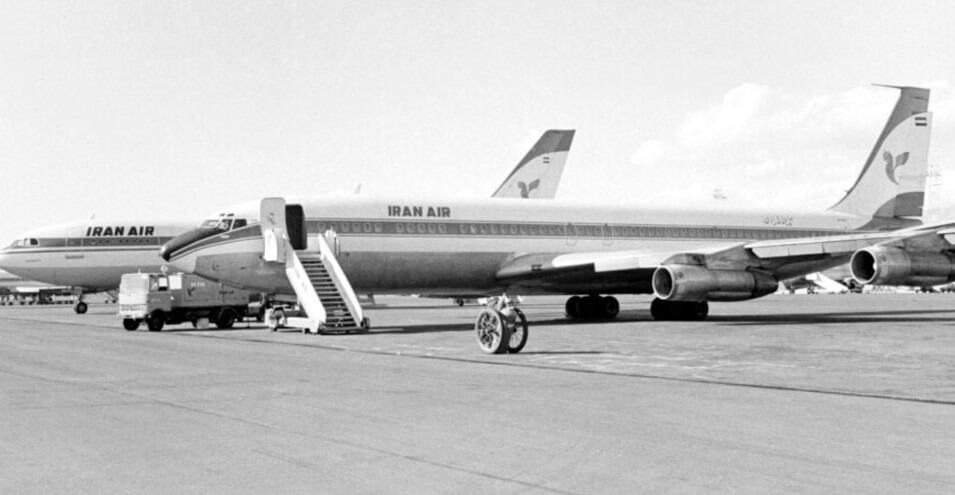
The latest assessments show that the average age of Iran’s aviation fleet is “over 20 years.” The advanced age of the aviation fleet is mainly due to the inability of Islamic Republic officials to purchase new aircraft from reputable international manufacturers such as the United States and France.
In fact, a significant portion of Iran’s aviation fleet is under U.S. sanctions, as Washington claims that the Islamic Republic has used this fleet, particularly Mahan Air, to transport weapons to countries such as Syria.
Much of the aviation accidents in Iran stem from the advanced age of the aviation fleet; a fleet that must annually transport millions of people within the country. However, investigations show that most domestic airlines are unprofitable and, despite government subsidies and cheaper fuel compared to foreign companies, are on the brink of bankruptcy; a situation that Iran Air’s CEO recently described as surviving on “life support.”
- History of Aviation Industry in Iran
In 1945, a group of Iranian merchants established a company called “Iranian Airways” which initially operated flights between Tehran and Mashhad and later expanded to cities including Isfahan, Shiraz, Abadan, Ahvaz, and Bushehr. The company subsequently expanded its flights to Cairo, Beirut, and Baghdad, and conducted its first flight to Europe one year after its establishment via Beirut to Paris.
Another airline called “Persian Air Service” was established in 1954 in Abadan, which initially handled only cargo flights and later established regular flights to Paris, London, and Brussels. In the winter of 1961, the management of these two companies merged, and “Iran Air” was created.
Four years after its establishment, Iran Air became one of the most equipped aviation fleets by purchasing Boeing 727 jets. However, Iran Air’s golden era occurred in the 1970s when a large number of Boeing 727, 737, and expensive 747 aircraft were added to Iran Air’s fleet. A direct flight route from Tehran to New York as the longest non-stop airline route was launched. Even a purchase agreement for two supersonic “Concorde” aircraft was signed, which was cancelled after the Revolution’s victory.
In 1976, Iran’s National Airline Company “HOMA” was the most profitable and modern airline in the world and was considered the safest airline in the world after Qantas.
After the Revolution, the number of airlines increased. Currently, there are 18 active airlines and approximately 18 inactive airlines in Iran.
- Aviation Accidents in Iran
While before the Revolution only one aviation accident occurred for Iran’s flights in 1952, after the Revolution aviation accidents increased significantly. For example, the Tehran-Tabas flight of Sepahan Air on August 10, 2014, left 38 dead due to a technical defect and aircraft crash.
However, these accidents are not limited to aircraft crashes. In many cases, technical defects cause flight delays or cancellations in Iran. Two years ago, a passenger aircraft from Tehran to Mahshahr veered off the runway at Mahshahr Airport due to a “technical defect” during landing.
- Grounded Industry
According to reports, 50 percent of Iran’s aviation fleet is “grounded.”
Alireza Barkhordari, Vice Chairman of the Board of Directors of the Association of Airline Companies and CEO of the Islamic Republic of Iran Air, stated in December of this year that more than half of Iran’s aircraft are “grounded due to lack of parts, especially engines.”
According to him: “Currently, more than 170 aircraft are inactive due to lack of necessary financial resources and limitations resulting from sanctions for procuring required parts.”
Five years ago, after the nuclear agreement with world powers and the implementation of the JCPOA, Iran signed contracts with aircraft manufacturers Boeing and Airbus and another European company to purchase 200 passenger aircraft.
However, according to reports, the signing of the JCPOA resulted in only three Airbus aircraft and 13 Italian-French “ATR” aircraft entering Iran, and the delivery of other aircraft was halted after the United States’ withdrawal from the JCPOA and the reimposition of sanctions.
It appears that Iran’s aviation industry, like many other Iranian industries that have become deteriorated and grounded due to lack of capital, sanctions, and economic isolation, is a victim of the Islamic Republic’s macroeconomic policies; policies that have made Iran’s economy hostage to the controversial nuclear program.
Source: Voice of America