Three European Countries: Iran’s Actions Are Causing the Nuclear Deal to Collapse
Three European countries participating in negotiations to revive the nuclear deal have described Iran’s recent actions in developing its nuclear program and its approach toward the International Atomic Energy Agency as rendering the nuclear deal meaningless. Iran says it is still seeking to revive the deal.
Germany, France, and Britain—three European countries in the P4+1 group conducting negotiations with Iran to revive the nuclear deal—announced in a joint statement that “given Iran’s actions in developing its nuclear program, we are approaching a point where the nuclear deal is effectively becoming meaningless.”
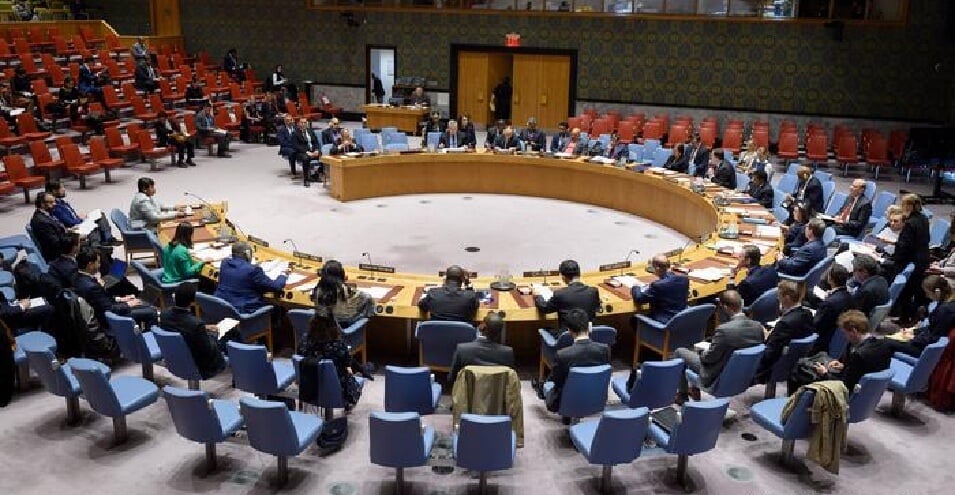
The statement was issued during a Security Council session on Tuesday, December 14, related to reviving the nuclear deal and implementing UN Resolution 2231.
Under the nuclear deal reached in 2015 between Iran and the P5+1 group consisting of UN Security Council members and Germany, and based on UN Resolution 2231 which underpins this agreement, international sanctions against Iran would be lifted in exchange for limiting Iran’s nuclear activities.
In 2018, following the Trump administration’s withdrawal from the agreement and the imposition of “maximum pressure” sanctions on Iran, the Islamic Republic reduced its commitment to the nuclear deal and resumed uranium enrichment beyond the 3.65 percent limit, accumulation of these materials, and rapid development of centrifuge technologies.
In the statement by the three European countries, read by Nicolas de Rivière, French ambassador to the UN Security Council, Iran’s approach was criticized for “disregarding agreements reached during six rounds of negotiations in the final months of the Rouhani administration in Vienna.”
The statement said the new Iranian government “has retreated from agreements reached after several weeks of intense negotiations in Vienna and has placed even more maximalist demands on the table.”
The statement refers to six rounds of negotiations that took place from December of last year until the end of the Rouhani administration in August of this year between the P4+1 and Iran to revive the nuclear deal and achieve the return of the United States to the agreement. According to officials from the Rouhani administration, about 80 percent of the issues and differences had been resolved.
The three European countries said Iran should make use of open diplomatic channels and demonstrate its commitment to preventing the collapse of the deal and reaching an agreement in line with the interests of the Iranian people.
Antje Leendertse, German ambassador to the United Nations, also said during Tuesday’s Security Council session that Iran’s nuclear activities over the past six months contradict the provisions of the nuclear deal and that “time is running out rapidly.”
Takht-Ravanchi: Iran’s Conditions Align with the Nuclear Deal and Resolution 2231
The Islamic Republic is accused of not only drastically reducing its commitments under the nuclear deal in recent months but also increasingly restricting IAEA inspectors’ oversight of its nuclear activities.
Linda Thomas-Greenfield, the U.S. representative to the United Nations, also called on Iran in this Security Council session to demonstrate seriousness and commitment at the Vienna negotiations table and quickly return to compliance with the nuclear deal.
Majid Takht-Ravanchi, Iran’s representative to the United Nations, rejected the accusations by the three European countries and the United States, warning them against “making any mistakes,” and stated that “Iran’s demands in Vienna negotiations are in line with the spirit of the nuclear deal and Resolution 2231.”
He insisted that Iran should be described as seeking “complete, timely, unconditional, and verifiable implementation of the nuclear deal, no more and no less,” and added: “Any attempt to link the implementation of the nuclear deal to unrelated issues or to broaden or expand its provisions is absolutely unacceptable and doomed to failure.”
Western parties to the nuclear deal say they had expected the 2015 nuclear agreement to serve as an opportunity for Iran to reconsider its approach and revise its regional policies and strategies and limit its missile program—expectations that have not been fulfilled.
At the beginning of the Security Council session on Tuesday, Rosemary DiCarlo, the UN’s political affairs official, called on the United States to lift sanctions against Iran. At the same time, she said Iran must abandon actions that contradict its commitments under the nuclear deal.
Grossi’s Concerns and Iran’s Optimism About Reaching Agreement with Him
Hours before the Security Council session, the Associated Press published a lengthy interview with Rafael Grossi, Director General of the International Atomic Energy Agency, in which he expressed concerns that given Iran’s restrictive measures on IAEA inspectors’ access, there is no clear picture of this country’s nuclear activities.
The Agency particularly considers Iran’s prevention of replacing memory cards in cameras installed at the TESA center in Karaj as a fundamental limitation on monitoring Iran’s nuclear activities. This center is involved in research and production of advanced centrifuges for uranium enrichment.
Grossi also said in the interview that he does not claim Iran is building nuclear weapons, but the level of enrichment that the country is currently conducting is mainly carried out by nuclear weapons-possessing states.
Hours after the publication of this interview with Grossi, Said Khatibzadeh, spokesman for Iran’s Foreign Ministry, said in an interview with Press TV that progress has been made in talks between Mohammad Eslami, head of Iran’s Atomic Energy Organization, and the Director General of the International Atomic Energy Agency.
Without elaborating on details, he added that “ongoing talks between Eslami and Grossi have led to progress and narrowing of gaps on several topics of mutual interest, and the understanding between the two sides is close.”
Source: DW