Twenty-Fifth Session of Court in 1988 Executions Case; Witness Account of Truck Where Gallows Were Transported
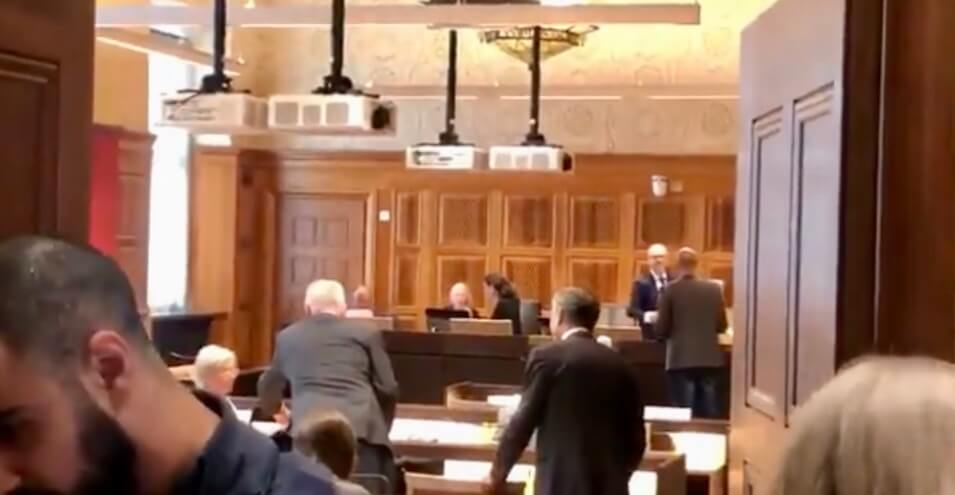
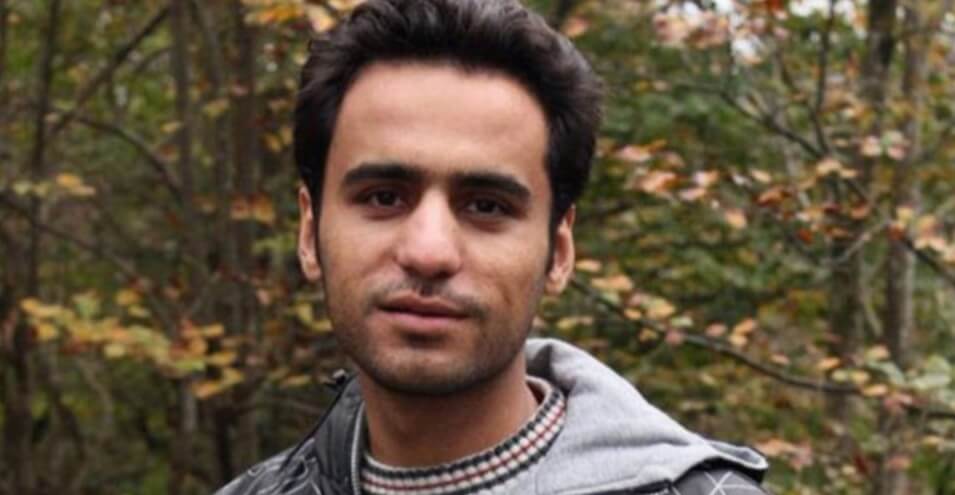
In the twenty-fifth session of Hamid Noori’s trial in Stockholm, Sweden, held on Thursday, October 6, Majid Jamshediyat testified as a witness and complainant that after his release from prison, he accidentally saw Hamid Noori again and spoke with him.
Mr. Jamshediyat testified in Hamid Noori’s trial on charges of participating in the mass execution of thousands of Iranian political prisoners in 1988, saying that before the executions he had seen Hamid Noori more than 15 times and noticed a truck in which gallows were being transported.
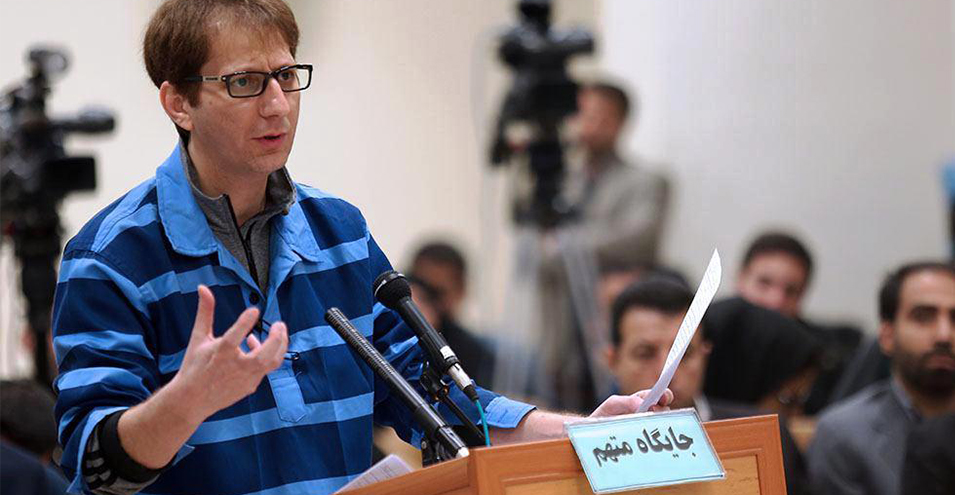
Hamid Noori is accused of participating in the mass executions of political prisoners while serving as former prosecutor of Gohardasht Prison in Karaj; an accusation he denies. He arrived at Stockholm airport on November 9, 2019, on a direct flight from Iran and was immediately arrested.
According to his lawyer’s statement, Majid Jamshediyat was detained in September 1981 while he was a student and was imprisoned for ten years in Evin, Qazelhesar, and Gohardasht prisons.
His lawyer said that Mr. Jamshediyat saw Hamid Noori in Evin Prison in 1983, in Gohardasht Prison in 1986, and by chance on the street in 1994 or 1995.
Majid Jamshediyat said that when he accidentally saw Hamid Noori on Abbas Abad Street in Tehran in 1994 or 1995, Noori nervously told him that he no longer worked in the prison: “In prison they felt very powerful, but outside prison, they felt fear and perhaps even shame. He immediately came towards me and said that he no longer works in the prison and is now working in mining.”
He added that in the death committee room, he saw four people and recognized (Hossein Ali) Niri and (Morteza) Eshragi, and later learned that the other two were Ebrahim Raisi and Mustafa Pourmohammadi: “They questioned me for 20 minutes and took me to solitary confinement and then transferred me to a ward opposite Jihad, where the prisoners in that ward were not informed of the executions. Naserian (Mohammad Moqisseh) and Hamid Abbasi (Hamid Noori) lined everyone up and questioned them and took everyone to the death corridor, some of whom did not return. After that we heard only silence and then they started executing the communists.”
Mr. Jamshediyat said he sat blindfolded in the death corridor for two hours and since he had seven years of experience with blindfolds, he knew how to try to see from under it, while the state of smell and sound was very important for a prisoner: “Hamid Abbasi’s (Noori’s) first direct encounter with me in Gohardasht Prison was in the execution corridor. He hit me on the shoulder and said it was finally your turn, recite the prayer for the dead.”
When asked by the prosecutor how he knew it was Hamid Noori, he said: “I could see from under the blindfold. I also recognized his voice. In Evin Prison in 1982 he was the guard of our ward for 4 or 5 months. I had heard his voice many times as he would humiliatingly open the door, hitting our door with a key or hose for food, toilet, washing, and showering. He was the one who came to open the door for interrogation to take the prisoner away.”
He said that “some people don’t change much when they get old. He (Hamid Noori) hasn’t changed either, he’s just gotten older. Compared to the average height of an Iranian man, he was tall and thin with the same hair and a long nose.”
Majid Jamshediyat then referred to a visit with his father in the presence of Naserian (Mohammad Moqisseh) and Hamid Abbasi (Noori) and said that he was being questioned in the presence of his father and when the blindfold was removed he saw that his father, Naserian, and Hamid Abbasi were in the room: “They wanted to convince my father that I still support the Mujahedin and that’s why they won’t release me.”
Majid Jamshediyat, who lives in Canada, testified in Hamid Noori’s trial in Sweden that by writing a letter condemning the Mujahedin-e Khalq Organization, he escaped execution: “I knew if I didn’t write it I would be executed.”
He said: “We weren’t even sure we would survive by accepting the conditions. We didn’t know the boundary of our survival. In August 1988 I felt death near me for the umpteenth time, and I think if those people who were executed had been willing to accept the conditions, these authorities would have imposed harsher conditions and killed more of us because they had decided to execute many.”
According to Mr. Jamshediyat, on July 29, 1988, all means of communication for prisoners were taken away and “towards evening with Ramin Ghasemi and Mehdi Vosough, who both were executed, we noticed unusual commotion. We looked through a small window opening with very large iron bars and noticed unusual activity. We noticed a truck in which gallows were being transported. On the right side there was a shed or container and we heard sounds of joy and prayers. That same night they took 20 of the guys and these 20 didn’t come back. Before that we had understood from Morsi who talked about the death committee and we realized that major events were happening. That’s why when they took us and lined us up, we were more alert.”
He said that Davoud Lashkari, Naserian (Mohammad Moqisseh), and Hamid Abbasi (Hamid Noori) interrogated the prisoners and “if a prisoner didn’t say hypocrites and said Mujahedin or something else, he would be taken away. They asked me to give an interview and condemn the positions of the Mujahedin, which I refused.”
According to him, “Naserian (Mohammad Moqisseh) was the first. Lashkarians and Hamid Abbasi (Noori) came after him.”
According to his own account, before his arrest, Majid Jamshediyat was a supporter of the Mujahedin-e Khalq Organization and distributed its statements, but two months before his arrest he had severed his ties with the organization.
Regarding how his prison sentence was handed down, he said: “They took us into a room. (Hossein Ali) Niri was on the phone. He was buying rice on the phone and at the same time gave Majid Koochakpoor an execution sentence and issued a sentence of imprisonment for me.”
He said he was sentenced to five years in prison, but in 1982 they sentenced him to ten years of imprisonment again: “In 1982 I went to court again. They knew us as ringleaders and that’s why I was retried and convicted.”
Majid Jamshediyat then referred to the execution of a prisoner named Naser Mansouri who “had suffered spinal cord injury, was taken on a stretcher to the death committee room, and was executed in that condition.”
Hamid Noori has denied the charges against him. According to his lawyer, Hamid Noori’s position is that “these executions never happened and he cannot accept the charges.”
Hamid Noori’s lawyer claims that his client was on leave due to the birth of his child during the time of the executions in August and September 1988.
Source: Radio Farda