Arshan Azari’s Analysis Based on Prince Reza Pahlavi’s Speech Titled “Five Levers to Liberation”
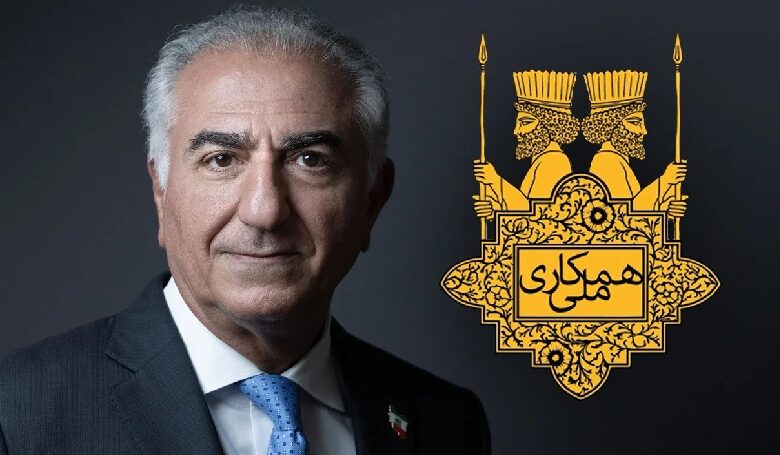
“Arshan Azari” analyzed the speech of Prince Reza Pahlavi at the “National Union for Democracy in Iran” conference titled “Five Levers to Liberation.”
This analysis was conducted based on Prince Reza Pahlavi’s speeches at the “National Union for Democracy in Iran Conference.” Arshan Azari writes: “The message is clear: victory comes from the uprising of the people within the country, and the role of Iranians abroad is to pave the way with practical tools and support. Prince Reza Pahlavi proposes a five-lever plan: pressure on the government, support for the people, defection of officials, coordination of forces, and a plan for the day after. If these levers move forward with organized work and clear reporting, the transition can be low-cost and low-tension.”
- Why is “the people’s uprising” key?
No external force can replace the people. This approach has two practical consequences:
- Hope is converted into action: everyone has a clear role; from correct storytelling and local work to professional advocacy and targeted strikes.
- The role of the outside becomes precise: Iranians abroad must provide tools and support, not ready-made solutions, and this support must be intelligently connected to internal actions.
- Pressure on the government: Raise the cost of staying
What does this mean? Closing financial routes and travel of repression agents, legal prosecution of commanders and perpetrators, and forcing governments and institutions to take a clear stance.
Effect: Each day of staying becomes more costly and riskier for the repressive apparatus.
Practical note: Every step of external pressure should create safer conditions for action inside, otherwise it remains incomplete.
- Support for the people: Effective solidarity
What does this mean? Legal and medical assistance, short-term livelihood support, amplifying the voices of prisoners and families, and formal advocacy in parliaments and civil institutions.
Effect: The cost of resistance decreases and the sense of isolation is broken.
Correct method: Simple and clear packages of lawyers, medical care, immediate family assistance, with transparent, accessible, and accountable methods.
- Defection of officials (erosion): “Separate from the government and join the people”
Goal: Employees and affiliates of the government apparatus see a safe and honorable way to step aside.
Importance: Each defection weakens the arm of repression and shortens the path to transition.
Building trust:
- Protecting the identity of those who defect to maintain their security.
- Regular verification of statistics.
- Immediately connecting defected forces to professional and civil groups.
- Coordination of forces: The backbone of the movement
Principles: The integrity of Iran, equality of citizens, separation of religion from government, and the people’s right to choose the form of government.
Why: Scattered energy does not last. Small working groups must form quickly and simply, with timelines, clear responsibilities, brief meetings, and public monthly reports.
- Plan for the day after: Bread and water and electricity and security
A clear plan for the first hundred days: electricity, water, fuel, healthcare, street security, and stabilizing the money market.
Psychological effect: The greatest fear of the people is “chaos after the fall,” a clear plan breaks this fear.
How? The name of the person responsible for each section, timeline, resources, and progress reports that are understandable and accessible.
Three immediate and low-cost actions (starting today)
- A one-page report on the five levers.
- Guide to “safe defection.”
- Public summary of the “emergency plan” for the first hundred days.
Roles: From workers to those abroad
- Workers, teachers, nurses, merchants: professional networks and targeted strikes.
- Youth and students: connecting neighborhoods and telling the right story.
- Officials within the government: “Separate and join the people.”
- Iranians abroad: lawyers, healthcare, media, and diplomacy.
- Entrepreneurs and experts: completing the hundred-day plan in vital sectors.
Three signs of approaching victory
- Decline in repressive capacity: increase in verified defections.
- Rise of social support: transparent assistance funds.
- More order in actions: transition from sporadic gatherings to sustainable working groups.
Conclusion: Why we can and how we get there sooner
The question is no longer “Can it be done?” but “When” and “How.” The answer is clear: with perseverance, with order, and with solidarity. Prince Reza Pahlavi’s framework is not a slogan; it is a division of labor:
- The main battlefield is inside, and those outside must provide tools and support.
- Fear of chaos is answered with a hundred-day plan.
- Fear of isolation is broken by organized support.
- Fear of lack of coordination is resolved by accountable working groups.
In simple terms: if each of us today takes on one specific task, one report, one assistance, one connection, one safe exit from the repressive apparatus, or one piece of the hundred-day plan, the wheel of transition turns faster. Victory is the sum of these small continuous efforts. “The road is open; let us move forward together.”
The experience of Nepal and Prince Reza Pahlavi’s remarks show that transition in Iran is not a dream but a practical and achievable plan. For years we have seen that the Islamic Republic regime has used repression and fear as tools of survival. But the reality is that the Iranian people have repeatedly shown, from the 2022 uprising to today, that they have the capacity to rise and stand. What we lack is precisely the five levers that the Prince emphasizes: unity, support, and a clear plan for tomorrow. If these elements come together, nothing can prevent the fall of this government. Iran’s future will be built, but not through waiting—through collective work, through connection between inside and outside, and with the belief that “this time, it will happen.”