29 Political and Civil Activists in Iran File Lawsuit Against ‘Solitary Confinement’
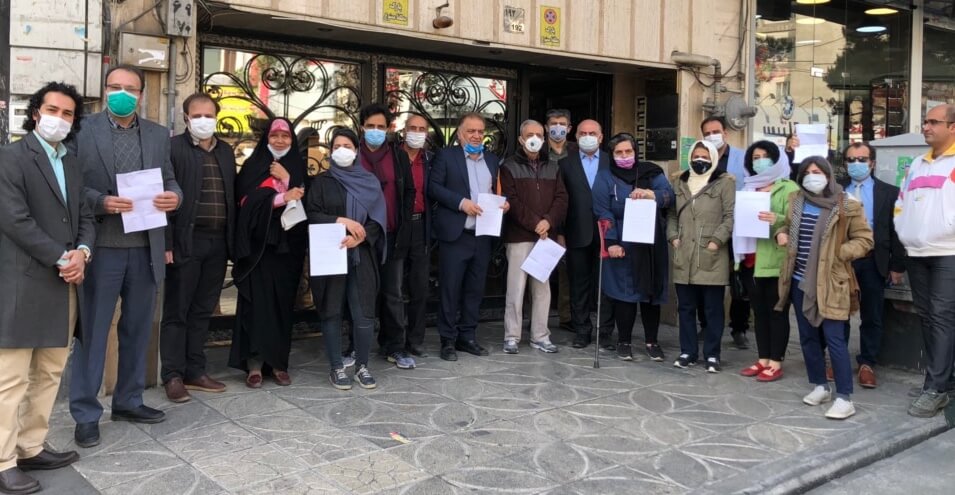
29 political and civil activists who spent long periods in solitary confinement during their detention have filed a lawsuit against the “commanders, perpetrators and officials” who participated in this process.
These activists, among whom are prominent figures such as Narges Mohammadi, Abol Faz Ghanbarzadeh, Jafar Panahi, Faezeh Hashemi Rafsanjani, Zhila Baniyaghoub, Bahman Ahmadi Amouyee, Saeed Madani, Rasoul Badaghi and others, have considered solitary confinement as a form of torture and have called for its cessation.
In a statement signed by some of these political and civil activists, referring to the fact that “enduring solitary confinement has caused many defendants to suffer from physical and psychological illnesses,” they emphasized that “obtaining confessions and statements under psychological and mental torture resulting from solitary confinement” has led to “the issuance of severe prison sentences and even execution of death sentences by courts.”
In this statement, while emphasizing that solitary confinement cells have “harsh and exhausting conditions” and are “outside any form of control and supervision,” the detention of defendants in solitary confinement cells is described as “inhumane” and as “clear instances of torture subject to legal prosecution.”
International human rights bodies, including Amnesty International, have repeatedly stated in their announcements regarding Iran’s political and conscience prisoners that solitary confinement cells violate international law and constitute torture, and have called for the cessation of prisoners’ detention in solitary confinement cells.
Iranian judicial authorities in recent years, citing the Supreme Leader of the Islamic Republic, have announced that “spending one month in solitary confinement is equivalent to one year in a general prison.”
In September 2013, Nemat Ahmadi, spokesperson for the Judicial Commission of the Islamic Consultative Assembly, said the Supreme Leader of the Islamic Republic issued a fatwa to the Guardian Council stating that “detention in solitary confinement is torture.”
Despite such precedents, prolonged detention of prisoners in solitary confinement cells and their interrogation and torture remains a common approach of Iran’s security and judicial authorities.
Source: Radio Farda