Kesravi Nouri’s Name Added to List of Ten Journalists “in Immediate Danger”
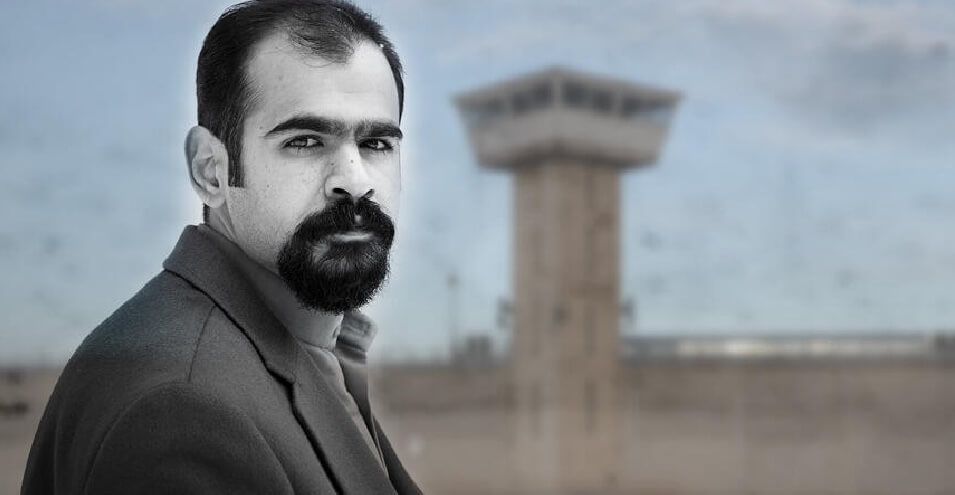
Kesravi Nouri, an imprisoned Gonabadi Dervish held in Adel Abad Prison in Shiraz, has been included in the list of ten journalists worldwide who are in immediate danger.
This list, prepared and published by the “Committee to Protect Journalists” and the “Press Freedom Coalition,” has placed Kesravi Nouri’s name alongside journalists from Mozambique, Bahrain, Vietnam, Egypt, Brazil, India, Uzbekistan, Belarus, and Russia who are at risk due to their “human rights activities.”
According to this report, citing the website “Majzobin Nour” – which covers news related to Gonabadi Dervishes – and the “Iran Human Rights Center based in New York,” Mr. Nouri was sentenced to 12 years in prison for covering news of the violent suppression of religious protests in Bahman month of 1396 (January-February 2018), and during his sentence has been transferred between prisons multiple times. The report adds that he has spent a considerable amount of his detention time in solitary confinement, and his family currently cannot communicate with him.
It should be noted that the journalists whose names appear on this list were subjected to harassment, fines, and lengthy imprisonment because in their journalistic work, they covered attacks on minority communities, anti-government protests, environmental destruction, and the rights of the LGBTQ+ community.
Also, in part of this report, citing the Committee to Protect Journalists, it is stated that 55 percent of imprisoned journalists in the past calendar year wrote about human rights issues, and since 1992 to date, 306 human rights reporters have been killed worldwide.
Previously, Voice of America had reported that Kesravi Nouri, a Gonabadi Dervish prisoner who was transferred from Adel Abad Prison in Shiraz to Evin Prison in early Bahman month of last year, was transferred back to Adel Abad Prison in Shiraz on Friday, the 29th of Esfand, following his coordination of a hunger strike among prisoners in Evin, Adel Abad, and Feshafouyeh prisons.
Following this transfer, an informed source told Voice of America that these transfers are based on “Article 513 of the Criminal Procedure Code, which states that a prisoner should serve their sentence in their place of residence, and the first time Kesravi was transferred, prison officials told his family that they had verified that Kesravi is a resident of Shiraz.” This is while, according to this source, Mr. Nouri’s family resides in Tehran.
Kesravi Nouri, who was arrested in the Golestan Haftom incident and transferred to prison, was sentenced in Mordad month of 1397 (July-August 2018) to 12 years imprisonment, 74 lashes, two years exile to Baba Jani region, two years of travel ban, and two years of deprivation from membership in political, social groups and parties, and media activities. Mr. Nouri’s final sentence was communicated to him in late Esfand month of that year.
Following the Golestan Haftom events and attacks by security forces and special units on Gonabadi Dervishes in front of the home of Nour Ali Tabandeh, the former head of these dervishes, 202 of them were arrested and collectively sentenced to more than 1,080 years in prison. A group of these Gonabadi Dervishes, including Kesravi Nouri and Mohammad Sharifi Moghaddam, remain imprisoned.
The United States has repeatedly condemned violent clashes and widespread suppression of protesters and civil activists, as well as the repeated and continuous violation of Iranian citizens’ rights by the Islamic Republic.
Source: Voice of America