G7 Meeting: Iran Should Release Foreign and Dual National Prisoners
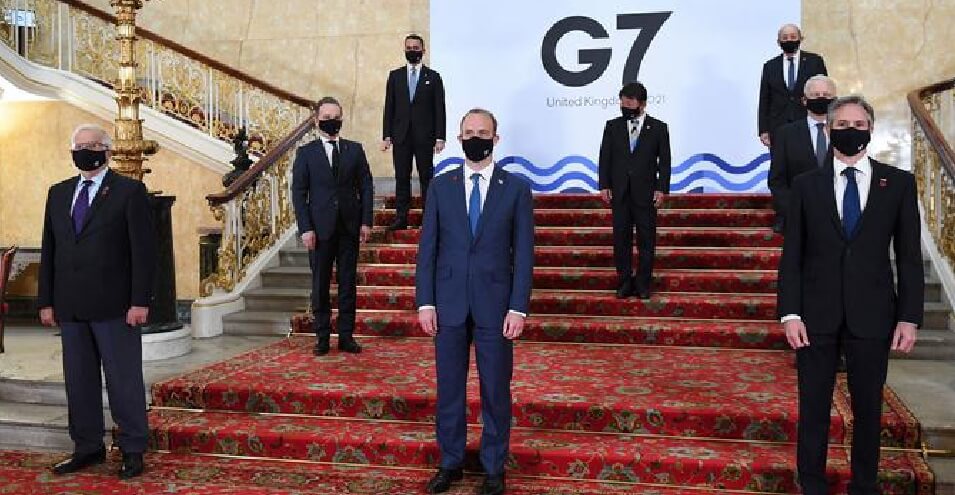
Foreign ministers of the G7 condemned human rights violations in Iran at their first in-person meeting and welcomed progress in Vienna negotiations. They said they support investigations into the Ukrainian flight and called on Iran to release dual national prisoners.
The meeting of foreign ministers from seven industrialized countries, which took place in London for the first time in over two years, ended on Wednesday, May 5 (15 Ordibehesht). These seven countries are Britain, the United States, France, Germany, Italy, Canada, and Japan.
The foreign ministers of these countries called on the Islamic Republic to release foreign citizens and dual nationals who “are arbitrarily detained in Iranian prisons.”
JCPOA Negotiations in Final Statement
In its final statement, the G7 meeting referenced progress made in Vienna negotiations aimed at reviving the JCPOA. In this statement, published on the British Foreign Office website, the member countries welcome the JCPOA negotiations for the mutual return of the United States and Iran to the agreement, “since the JCPOA remains the best means to ensure that Iran’s nuclear program is exclusively peaceful in nature.”
They said they want to ensure that Iran never produces nuclear weapons. The statement also emphasized that “it is crucial that Iran preserve the space for these discussions by preventing any further escalation of tensions.” These countries considered Iran’s recent actions very concerning and said they support the International Atomic Energy Agency in monitoring Iran’s compliance with nuclear commitments related to the NPT and its other commitments.
Iran’s Destabilizing Actions, Flight 752 Investigation, and Human Rights Violations
The G7 countries condemned Iran’s support for proxy forces and non-state armed actors, including through financing, training, and advancing missile and weapons technology, and called on Iran to cease all ballistic missile activities that are inconsistent with Resolution 2231, to refrain from destabilizing actions, and to play a constructive role in strengthening regional stability and peace.
They also said they support efforts to ensure a thorough and credible investigation into the tragedy of Ukraine International Airlines Flight 752, which was shot down by Iran’s Islamic Revolutionary Guard Corps, to hold Iran accountable.
The foreign ministers of the seven industrialized countries emphasized that they are deeply concerned about human rights violations in Iran, including the suppression of peaceful gatherings, freedom of association, freedom of religion and conscience, and freedom of expression.
At this meeting, they also addressed global geopolitical issues, the coronavirus pandemic, and climate change. Senior G7 diplomats strongly criticized China for “human rights violations” and the rights of Uyghurs and called for an end to the suppression of protesters in Hong Kong.
These countries also emphasized that they will keep the door open for future cooperation with Beijing and stated that they “are seeking opportunities to cooperate with China to promote regional and global peace, security, and prosperity.”
They also strongly criticized Russia and referred to Russia’s “destabilizing” policy by deploying forces on the Ukrainian border and this country’s “destructive cyber activities.” The foreign ministers of the seven industrialized countries also firmly condemned the military coup in Myanmar.
Source: DW