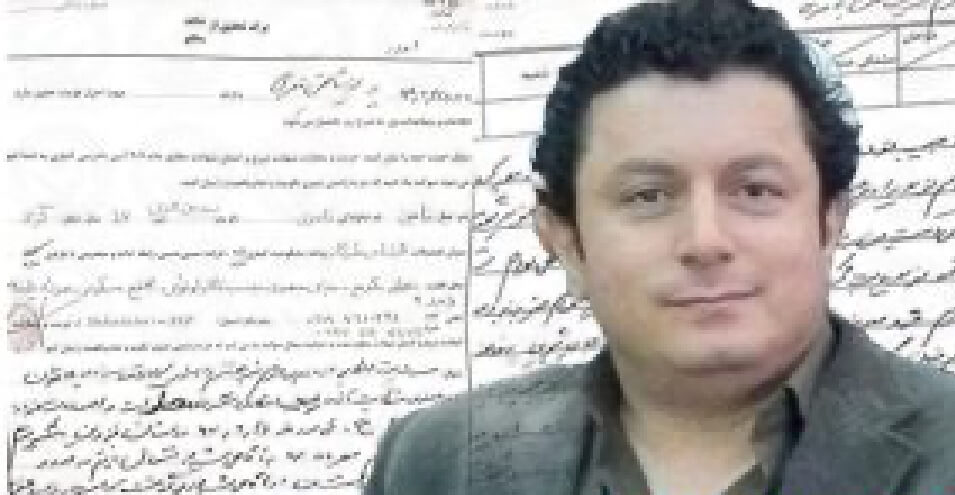
Farida Visi and Siros Abbasi, two civil activists from Kurdistan; Another account of detention and torture for forced confessions on camera
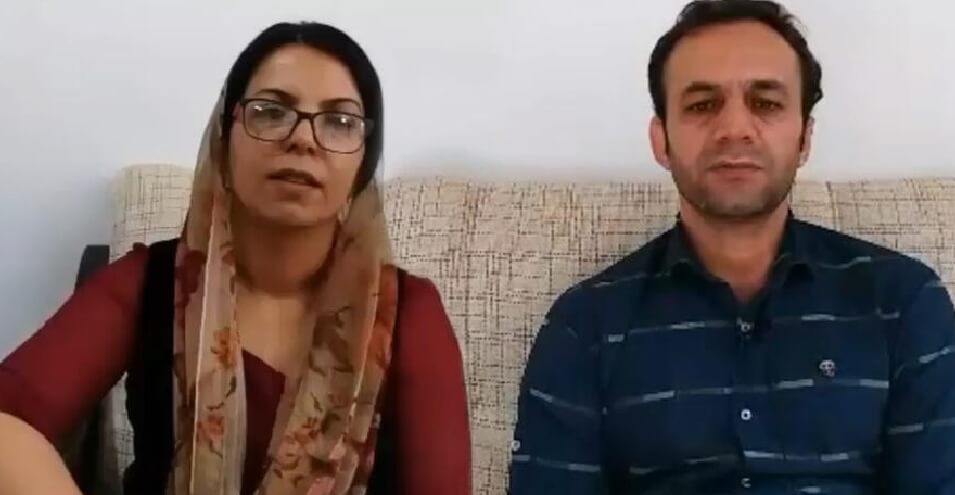
An informed source says that Farida Visi, a civil activist from Iran’s Kurdistan Province, and her husband, who were detained by security forces in late December of last year, were forced to make confessions on camera.
This informed source, who requested anonymity for security reasons, told Voice of America that the two civil activists, residents of Dehgolan city, were violently arrested by security forces at their workplace in December of last year. According to this source, they spent at least two months in one of Sanandaj’s prisons, known as the “Reformation and Training Center,” and during that time each of them was subjected to torture and forced to make confessions on camera.
This informed source added that the interrogators of the two civil activists’ case forced them to confess on camera to connections with “Kurdish movements and parties, including the Democratic Party of Iranian Kurdistan” as well as connections with foreign media; allegations which, according to this aware source, have no documentary evidence and Visi and Siros Abbasi, her husband, have to this day engaged in neither political activity nor connections with political parties.
Based on information provided to Voice of America, the interrogators of this civil activist’s case allowed her to meet with her husband Siros Abbasi at least 58 days after her detention. During this meeting, when Mr. Abbasi saw Ms. Visi’s poor physical condition, he told her that if necessary, she should appear in front of the interrogators’ camera and confess to whatever they want.
This informed source told Voice of America that each of these two civil activists was placed in front of the Sepah Sanandaj’s camera for forced confessions for at least one session lasting 5 hours each, to confess to activities they had not carried out. According to this source, these forced confessions and admissions are now being used as evidence for convicting them of charges such as action against national security, propaganda against the system, insulting the leadership, and several other charges.
Iran’s state television usually publishes footage of televised confessions of security detainees to prove the legitimacy of their convictions. However, to date, almost all detainees after leaving solitary confinement and transfer to the general ward of prison have recanted their televised confessions, citing pressure, torture, and threats of harm to relatives by interrogators.
The issue of forced confessions on Iran’s state television has been raised before. However, despite this Iranian regime’s propaganda method of broadcasting confessions on television being repeatedly criticized by human rights organizations, the Islamic Republic’s judiciary continues to do so. Among the victims of this practice are names such as Maziar Bahari, Manouchehr Bakhtiari, father of one of those killed in November protests, Maziar Ebrahimi, Sepideh Qolian, Ibrahim Bakhshi, Saeed Malekpour, and dozens of others.
This informed source continued, saying that Farida Visi, who was subjected to severe psychological and mental torture during her detention, suffers from epilepsy. He said that during detention, Ms. Visi was not given access to a doctor. This aware source says that this civil activist apparently suffered hair loss as a result of pressures applied during interrogations, developed vision problems, and experienced several seizures during her detention.
Based on information received by Voice of America, during Ms. Visi’s detention her requests to see a doctor were denied twice. According to this informed source, Farida Visi was able to meet with a prison doctor only once, and that was after the interrogations ended and her forced confession was obtained.
This informed source also told Voice of America regarding the proceedings of this couple’s case that the first hearing of the case was held on July 20 in the first branch of Sanandaj Revolutionary Court under the presidency of Judge Saeedi, and the judge did not give the two civil activists an opportunity to defend themselves.
According to this informed source, new summonses were also sent in recent days for these two civil activists to appear at the second court session on Monday, November 3, but Ms. Visi and Mr. Abbasi refrained from attending the court session due to the unjust nature of the proceedings.
Based on information this informed source provided to Voice of America, Farida Visi and her husband Siros Abbasi were arrested on December 15, 2019, when security forces raided their workplace, the “Zanest” scientific and educational center in Dehgolan. According to this informed source, they were ultimately released on March 15 of that year temporarily and until the end of legal proceedings after posting a total bail of 150 million tomans.
Human rights organizations say that the Islamic Republic does not fairly investigate allegations and sometimes innocent people have been tried and even executed.
The U.S. State Department has repeatedly and in various cases condemned violent treatment and widespread suppression of protesters, as well as repeated and continuous violations of the rights of Iranian citizens by the ruling regime.
Source: Voice of America