Environmental Official: Suspended Particles in Iranian Cities Are Carcinogenic and Classified With Radioactive Materials
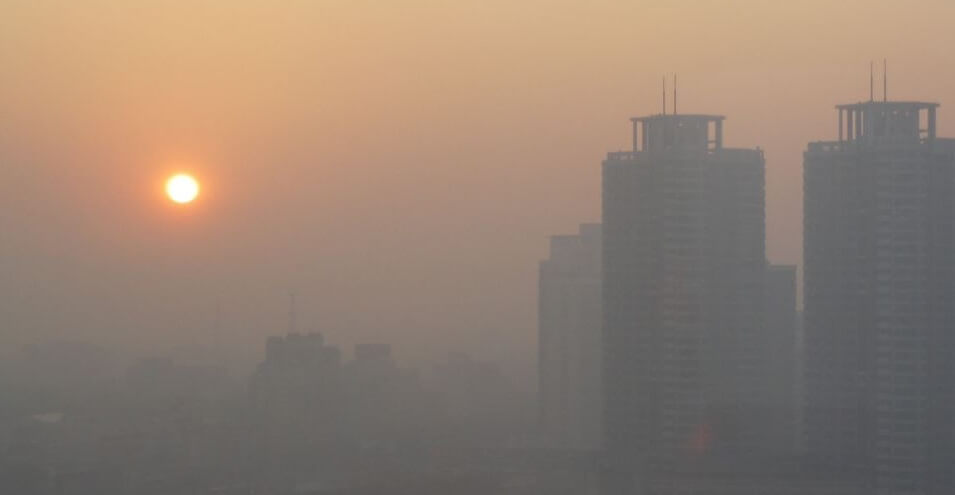
One day after the head of the Parliamentary Energy Commission stated that “if fuel oil consumption is halted, 25 percent of the country will face blackouts,” the director of the National Center for Air and Climate Change at Iran’s Environmental Protection Organization announced that suspended particles currently being released into the air of Iran’s major cities are “carcinogenic and classified with radioactive materials.”
According to ISNA news agency, Mehdi Mirzaei Ghomi, director of the National Air Center, said on Wednesday, the 8th of Bahman: “According to World Health Organization statistics, suspended particles smaller than 2.5 microns, which are considered the main cause of air pollution in the country’s major cities, are classified in the first group of carcinogenic substances and are in the same category as radioactive materials.”
In this regard, referring to the highly polluting fuel oil, he stated that the quality of fuel consumed by industries in Iran has declined rather than improved, and “fixed pollution sources in our country have shifted toward the use of non-standard fuels.”
According to Mehdi Mirzaei Ghomi, more than 10,000 tons of suspended particles smaller than 2.5 microns are produced annually in Tehran, and studies by the World Bank in 2018 show that air pollution causes 2.6 billion dollars in annual damage to Tehran, with this figure reported as 7 billion dollars for the entire country.
Despite these health hazards for citizens, Fereidoun Abbasi, head of the Parliamentary Energy Commission, said on Tuesday, the 7th of Bahman, in a meeting that “if fuel oil consumption is halted, 25 percent of the country will face blackouts.”
Speaking at a meeting at the Student Mobilization Organization, he added: “During the recent blackouts, the country needed 193 million cubic meters of gas, but we were only able to inject 80 million cubic meters into the network; however, to compensate for this deficit, we would need 110 million liters of liquid fuel daily, including fuel oil and diesel.”
Abbasi further criticized the management of the energy sector in the country, saying that there is “no management coherence” between the Ministry of Oil, Ministry of Energy, and the Atomic Energy Organization.
The peak in domestic electricity consumption in recent weeks has led the government to use highly polluting fuel oil in power plants, to the extent that air pollution in major cities, particularly Tehran, has gone beyond the red alert level and reached the extremely dangerous “purple” level.
This comes as Iranian officials have blamed the people for high electricity and gas consumption, even though according to official statistics, on average only one-third of the country’s electricity and about half of its gas are consumed by the residential sector.
On Wednesday, the head of the laboratory affairs department at the Central Province Environmental Protection Directorate reported extremely severe conditions in Arak, saying that “Arak’s air is in emergency and red conditions for all groups.”
Alireza Mohrabian told IRNA that Arak’s air quality index, with pollution from particles smaller than 2.5 microns and sulfur dioxide, reached 163 from 10 a.m. that day, indicating a red status and unhealthy air conditions for all groups.
On the same day, Kourosh Mohammadi, head of the Social Affairs and Environment Commission of Isfahan’s Islamic City Council, noting that “over the past month, the air pollution index has sometimes reached above 200 and become very unhealthy, which is a serious threat to citizens’ health,” said: “Recent studies show that in past years we have neglected the air pollution issue, and the path we have taken in this regard has been wrong.”
Source: Radio Farda