Discrimination in Coronavirus Testing Between Officials and Citizens
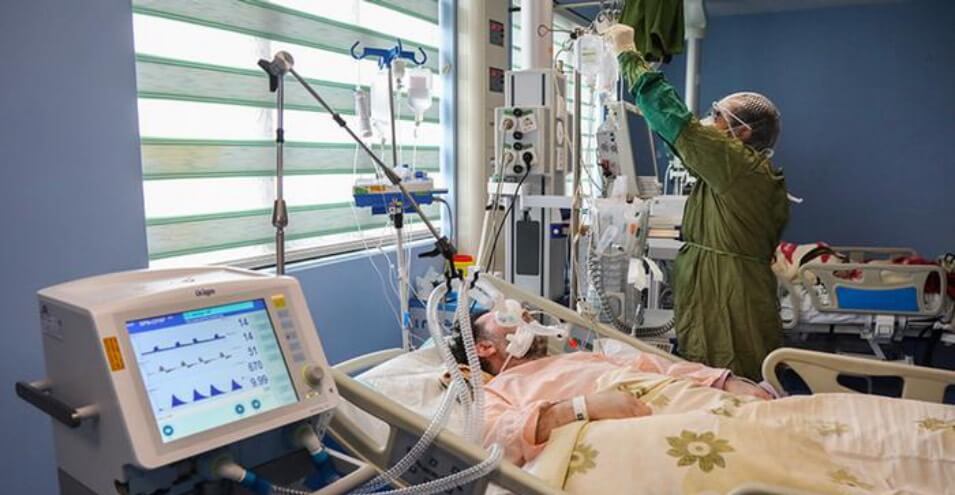
Officials have been given free coronavirus tests, and there is hardly a day when news of positive test results for some of them is not published in the country’s media. However, ordinary people can only undergo coronavirus testing if they have a high fever of 37.5 degrees or higher. What other discriminations exist between officials and ordinary citizens?
The discrimination in conducting coronavirus tests between officials and citizens is so widespread that even the country’s official and state media have opened their mouths to criticize it.
The IRNA news agency, in a report titled “Discrimination in Coronavirus Testing; What Difference Do People Have from Officials?,” reported on the existence of discrimination between citizens and officials in the principles of coronavirus care and hygiene, and writes that in the first days when corona spread in Iran, when ordinary masks and disinfectant gel became rare in pharmacies, masks and gel were distributed among parliamentary representatives.
The Assembly of Experts postponed its eighth annual session to another time, and the Islamic Consultative Assembly announced a closure for the next 10 days. This is while the administrators of pilgrimage and religious sites, despite recommendations and decisions by the Ministry of Health, did not limit their activities.
Pilgrimage sites in Iran’s religious cities, including Qom, which was declared the center of the coronavirus outbreak, continue their activities. The city of Qom was the first to record infection with the coronavirus and the death of patients due to coronavirus infection. The failure to quarantine this city led to the spread of the coronavirus in many parts of the country and neighboring countries including Iraq.
Ali-Akbar Hosseini-Nejad, an advisor to the custodian of the Holy Shrine of Hazrat Ma’sumeh in Qom, said: “What necessity is there to close the shrine? People should be careful themselves.”
Discrimination in Testing
But the greatest discrimination has been observed in conducting coronavirus diagnostic tests. Officials who did not even have symptoms of coronavirus infection underwent testing.
The parliamentary public relations office, with the rapid spread of corona, asked its members to quickly undergo testing. Health experts immediately came to parliament to conduct coronavirus tests.
A doctor told IRNA that coronavirus testing is expensive and testing members of the city council and parliamentary representatives while they still had no symptoms of coronavirus infection is “unethical” because in conditions of shortage of coronavirus diagnostic kits, their necessity is for patients in need.
But can ordinary Iranian citizens go to medical centers and undergo coronavirus testing like officials?
The doctor who spoke with IRNA said: “For a patient suspected of having coronavirus to be hospitalized, first they must have a high fever of 37.5 degrees, and second their blood oxygen saturation level must be below 90. If they have these conditions, they are considered suspected cases of coronavirus, then a PCR test is taken from this patient.”
What is not transparently stated in the country’s media is that officials have not yet officially informed the public of accurate statistics on the number of coronavirus infected people and the dead and victims, and this has caused trust in officials and the statistics they publish to decrease.
With the outbreak of the coronavirus, the price of masks in Iran increased several times immediately. The government took action to combat “hoarding” and the shortage of masks and took over their purchase and distribution. The Ministry of Interior decided to purchase all masks produced in the country to organize the distribution situation among citizens.
But solutions such as purchasing masks from abroad and importing coronavirus diagnostic kits, given the widespread expansion of this new virus in the country, are not sufficient on their own, and officials must seek help from the international community to save the people and properly manage the coronavirus crisis.