Donald Trump: Islamic Republic in ‘Fragile’ Condition and Struggling for Survival
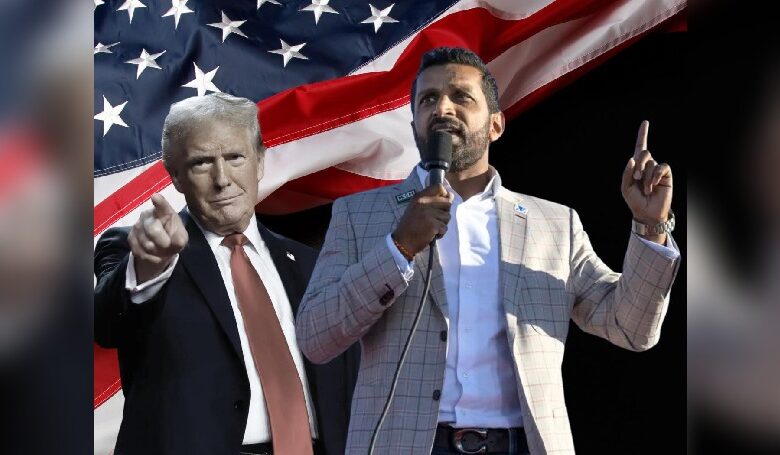
At a joint meeting between Donald Trump and the FBI Director, Trump described the government as “fragile” while pointing to the weakening of Iran’s power, saying it is struggling for survival.
He said the Islamic Republic government is in a “fragile” condition; simultaneously, the FBI Director announced a 50 percent increase in espionage cases related to Iran.
At a meeting held yesterday, Wednesday, October 15 (Mehr 23), at the White House, U.S. President Donald Trump and Kash Patel, Director of the Federal Bureau of Investigation (FBI), discussed security and international issues. A significant portion of this meeting was devoted to Iran and the current situation of the Islamic Republic.
In his remarks, Trump described Iran’s government as being in “fragile and vulnerable” conditions, saying: “Iran did not benefit from the recent confrontation and is now struggling for its survival.”
Referring to joint military operations by the United States and Israel against Iran’s nuclear facilities, he considered this action as laying the groundwork for a Gaza ceasefire agreement and added: “If we hadn’t destroyed Iran’s nuclear capability, this agreement would never have happened. Arab countries were afraid of Iran at that time, but Iran no longer has any power, and this is because of actions we and Israel took.”
Trump emphasized that destroying Iran’s nuclear capability was a necessary condition for creating regional stability. He had also stated in his recent speech to the Knesset (Israeli Parliament) that a ceasefire agreement would not have been possible without an attack on Iran’s atomic facilities.
Donald Trump referenced U.S. airstrikes against Iran’s nuclear centers in another part of his remarks and, praising the precision of the “Midnight Hammer” operation, said: “B2 bombers carried hundreds of thousands of pounds of bombs with them, and each one hit its target precisely. They entered Iranian airspace in darkness and at night, were completely radar-invisible, and no one noticed them.”
He warned that if Iran resumes atomic activities, related facilities would be targeted and destroyed. Trump also said that building nuclear weapons is the last thing Iran wants, and if Tehran even approaches it, the sites will be destroyed.
According to the Pentagon, in the aforementioned operation, six B2 bombers dropped fourteen “MOAB” bunker-buster bombs over the “Fordow” and “Natanz” facilities, and at the same time, an American submarine also targeted Isfahan facilities with dozens of Tomahawk missiles. Trump, after this strike, had said that this action has set Iran’s nuclear program back for several decades.
The U.S. President continued his meeting with the FBI Director by addressing the situation of the Hamas group and said: “Iran previously supported Hamas, but today it says do not involve us in this matter. The last time they got involved, they did not benefit.”
Trump emphasized that “the terrorist organization Hamas has no support today,” and considered this as a sign of weakening the Islamic Republic’s regional position.
In the domestic security section of the meeting, Kash Patel, FBI Director, presented a report on espionage cases. He announced that handling espionage cases related to the Islamic Republic of Iran has increased by 50 percent during Trump’s presidency.
According to him, espionage activities of three countries—China, Russia, and Iran—are simultaneously under FBI surveillance. Patel said: “Arrests related to Chinese espionage have increased by more than 50 percent, cases related to the Islamic Republic have shown similar growth, and Russian activities show a 33 percent increase.”
According to the FBI report, from the beginning of this year to now, 125 espionage-related arrests have been made, whereas in a similar period last year there were 100 cases.
Kash Patel, who was appointed as FBI Director in December of last year, previously served as National Security Advisor during Trump’s first term. During congressional investigations into the January 2021 attack on the U.S. Capitol building, he had also defended the attackers.
Patel is a vocal critic of the FBI’s traditional structure and has repeatedly emphasized that the organization should operate in accordance with Trump administration policies. In his sharp remarks, he had said: “Anyone who disobeys this order should be fired.”
The recent meeting between Trump and Patel can be seen as a demonstration of the U.S. government’s focus on countering security threats from the Islamic Republic and its allies. At the same time, Trump’s emphasis on the role of military strikes in weakening Iran and his claims of success in nuclear deterrence indicate his military-centered approach toward Iran.
On the other hand, analysts believe Trump’s statements are primarily a political message to Tehran and its regional allies to emphasize readiness for renewed military action.