Housing prices in the capital have increased by 500 percent over three years
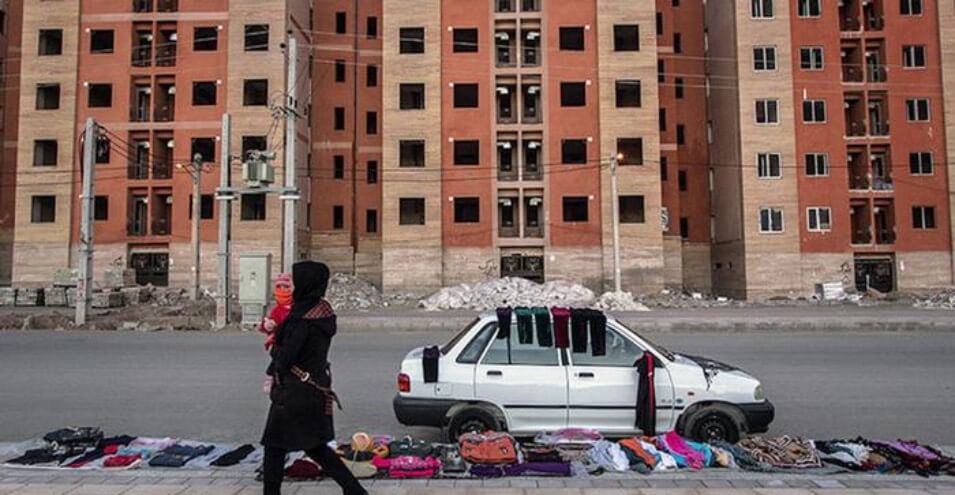
Housing prices in major cities and the capital have experienced a 500 percent increase. At the same time, people’s purchasing power has declined. A trend that has severely inflamed and disrupted the housing market in suburban areas and the most disadvantaged neighborhoods.
According to statistics from the Ministry of Road and Urban Development, over the past three years, the price per square meter of residential units in the capital has increased from approximately 4,619,000 tomans to 21,775,000 tomans, which represents a five-fold jump. An examination of price changes among the statistics of the Ministry of Road and Urban Development shows that in just the past year, housing prices in Tehran experienced a 39 percent increase during the first four months of the current year.
Mehr news agency on Tuesday, August 28, in a report titled “500 Percent Housing Price Growth Over Three Years” addressed the causes of this situation and wrote: “Since mid-1396, following a period of severe recession in the housing market and construction industry, a wave of housing price increases began from major cities.” This increase has been influenced by multiple factors, including the stark difference between housing production and actual demand, a dramatic collapse in the value of the rial, and a severe increase in the price of building materials. Factors that, according to the report, spread unprecedented housing price increases “across the entire country.”
The report mentions a “price shock.” This is especially noteworthy as studies show that “the increase in purchasing power of housing seekers has no correlation whatsoever with the recent price growth!” This has caused many first-time homebuyers to be practically “removed from the list” due to “weakened purchasing power” and “speculators roaming the market.” The report states that this market trend has subjected suburban housing markets and the most disadvantaged areas to “considerable inflammation and disruption.”
Mehr news agency has warned that “if urgent solutions are not provided for the crisis-stricken housing market, painful consequences will follow for housing vulnerable groups and further decline in housing production in the country.” These “painful consequences” have already clearly and abundantly transformed the face of cities.
The astronomical growth in housing prices has occurred parallel to the decline in the purchasing power of prospective buyers and has brought new phenomena to Iran’s major cities. In June of this year, the newspaper Aftab Yazd captured an image of this situation and wrote that although citizens have become familiar in previous years with phenomena such as “increased slum settlement, container renting, and sleeping in cars,” in the current year they are facing new phenomena such as bedroom rental, warehouse renting in residential towers, renting shops for worker overnight stays, rooftop sleeping, and renting one house to multiple families.
The middle class is also experiencing displacement, and its capacity for purchasing housing has shifted from the center or north toward poorer areas in the south or the city’s outskirts. Many reports indicate that even this has become unattainable for many.
“Non-Transparent” Projects
According to a report Mehr published, among the major issues that have been neglected in previous years are controlling land prices using fiscal tools and focusing on infrastructure development aimed at increasing the amount of land available for exploitation in the construction industry.
The report states that for this reason, “alongside the astronomical price increases in the housing market (which apparently shows no signs of stopping!), pressure on the new cadre of the Ministry of Road and Urban Development forced officials, acknowledging the shortcomings of previous years, to produce housing for low-income groups.”
This resulted in the “National Housing Action Plan” entering its operational phase from November 2019 by the Ministry of Road and Urban Development, focusing on providing cheap land with the help of the private sector. A plan that the report says was accompanied by ambiguities: “in determining contractors, calculating prices for applicants, and financing the project.” Vahid Shaghaqi Shehri, an economic expert, told Mehr that “despite multiple media follow-ups, significant information has not been provided about this project and there are many non-transparent matters regarding the national housing action plan.”
Fluctuations in Building Material Prices
Mehr news agency wrote that alongside the crisis of providing cheap land for housing production, what has gripped the construction sector in recent months is “severe price fluctuations in building materials coupled with inability to access some necessary materials needed for construction projects.” But the obstacles go further. According to the report, some construction industry actors “complain about bureaucratic interference in the path of producing residential units, which demonstrates the necessity of reviewing methods to facilitate the issuance of relevant permits by the Ministry of Road and Urban Development.”
This economic expert believes that given multiple problems, the willingness of actors in this sector to build has diminished. He says: “Achieving million-unit housing production requires support in securing financial resources for projects, providing cheap land with appropriate partnership conditions, and accelerating the process of obtaining construction permits.”
Not Just Purchasing, Even Renting Has Become a Luxury
According to official statistics, 10 percent of homes in Iran are empty. Although renting a house has also become expensive, there are many landlords who, waiting for rental prices to increase, refrain from offering their homes in the housing market. The Rouhani government in the early years of its previous presidency pointed to empty houses and presented a plan in 1393 to create a system to coordinate the housing market. A plan that was forgotten at the outset.
In March of this year, it was announced that there was “movement” in this plan. Mahmoud Mahmoudzadeh, Deputy Minister of Housing and Building at the Ministry of Road and Urban Development, announced the launch of a “professional property management system” and promised such a system would be established “soon.” The deputy minister also identified one of the objectives of launching such a system as creating a property and housing information system and said that implementing such a system required identifying empty houses in Iran and “directing” them to the rental market.
The creation of a “professional property management system” was practically proposed on the basis of a plan centered on taxing owners of empty houses. But it faced significant opposition and lack of coordination among executive bodies prevented the project from being implemented.
Empty House Owners Have No Problem Paying Taxes
On August 16, the newspaper Iran in a report titled “Empty House Owners Are So Wealthy They Can Pay Taxes on Empty Houses” reported the approval of the plan to “amend Article 54 Repeated of the Direct Tax Law” in parliament, apparently aimed at taxing empty houses.
The Iran newspaper wrote that the purpose of this measure is “to prevent some people, with the aim of speculation, from manipulating the housing market with their behavior, and on the other hand, increasing the supply of property will cause housing prices to decline.” According to the report, with the approval of this plan, if property owners are unwilling to rent or sell their empty houses, the government can gain tax revenues.
The report also expressed doubt about the effectiveness of this measure and wrote: “People who own empty houses do not only aim at monopolizing housing.” This group was able to purchase “hundreds and thousands of residential units through dirty money and money laundering schemes.” These people have no problem paying taxes and, like before, will continue their practice.”
There is another group among empty house owners who “purchased houses with the aim of investment and profit, and certainly these people also have no problem paying taxes.”