COVID-19 Patient Numbers Triple in Khuzestan Province
The number of COVID-19 patients in Iran has once again shown an upward trend. In Khuzestan Province, nine cities are classified as red zones. Spending time in enclosed environments due to hot weather is accelerating the spread of the virus.
One of the contributing factors to the increase in cases of this disease in Khuzestan Province is the rising temperatures and people seeking refuge in enclosed, air-conditioned environments. Experts had previously warned that the coronavirus spreads more rapidly in closed environments.
Moreover, the declaration of white status and the return to normal activities in a number of cities in Khuzestan Province has facilitated the transmission and spread of the virus. For example, the National Coronavirus Taskforce had introduced the city of Masjed Soleiman as one of the white cities for resuming normal activities, including reopening mosques and holding Friday prayers.
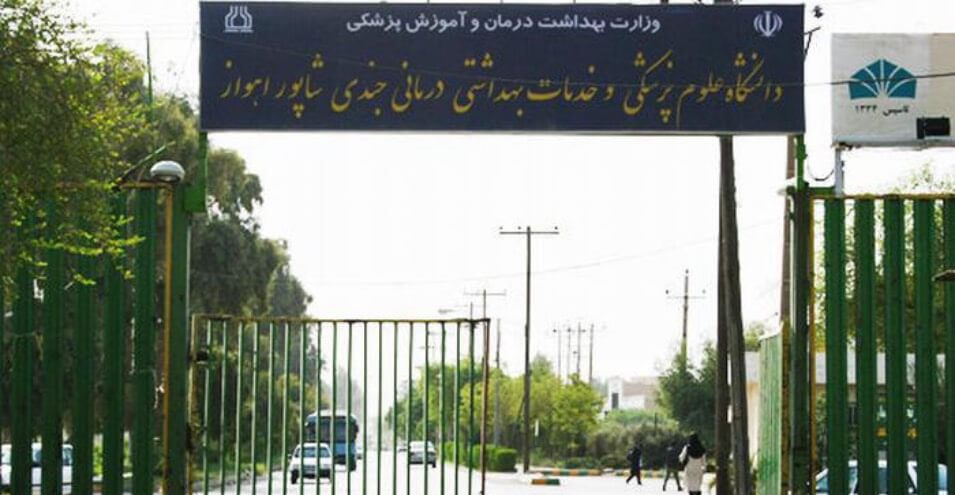
Experts say that the criteria set for declaring white status do not have clear and reliable definitions. Farhad Abolnezadian, the head of Ahvaz University of Medical Sciences, had requested last week that the Ministry of Health review the list of white cities. He had called for several Khuzestan cities to be removed from this list.
The National Coronavirus Taskforce has divided the country’s cities into three risk levels: level one, two, or three. The lowest risk level, “one,” is classified as white. In white cities, one person per 100,000 population is hospitalized daily. Above three is classified as red, and between these two is classified as yellow.
One issue with this classification is the lack of a clear definition of who should be hospitalized. Iranian hospitals only admit people who are severely ill. Other people are asked to stay home and self-quarantine.
As a result, the number of hospitalized patients in hospitals to determine the color status of a city has no correlation with the actual number of people with COVID-19 in that city.
More Tests for Faster Identification of Infected Individuals
The governor of Khuzestan says that disease diagnostic laboratories in the province have increased, resulting in more patients being identified in the province. He has asked people to maintain social distancing.
Aliresa Raisi, Deputy Minister of Health, Treatment and Medical Education, attributed success in controlling coronavirus to “the level of health literacy of the population and public cooperation and solidarity,” and claimed that only in countries where people followed health protocols was the disease progression controlled.
Aliresa Raisi said on Monday, the 22nd of Ordibehesht, that “about 90 percent of the population,” or 78 million people of Iran’s population, were screened. He characterized filling out electronic questionnaires by people as screening and considered conducting coronavirus tests for definitive identification of coronavirus cases as “propaganda.”
The Deputy Minister of Health said: “If we wanted to test everyone, it would impose a high cost on the country. From the 78 million people we screened, we found one million suspicious cases who had symptoms. Among them, 130,000 people were found who warranted further attention. These 130,000 people were tested.”
He called this method a “targeted and smart screening system.”
Experts say that 80 percent of people infected with the coronavirus are unaware of their infection or have mild symptoms. In 20 percent of cases, the person becomes ill. The illness of some of these 20 percent is severe, and the infected person requires medical care.
As a result, there is no definite statistic on the actual number of people infected with the coronavirus, but as the number of these people increases, the number of people with COVID-19 also rises.
The increase in the number of people who require hospital care due to COVID-19 in Khuzestan Province is concerning. The five-million-population oil-rich province suffers from poverty and lack of hospital equipment. According to Iraj Harirchi, Ahvaz is the second city in the country in terms of the rate of marginalization, and given the current conditions, “appropriate measures must definitely be taken for it.”
Source: DW