Concerns Over Coronavirus Outbreak in Refugee Camps
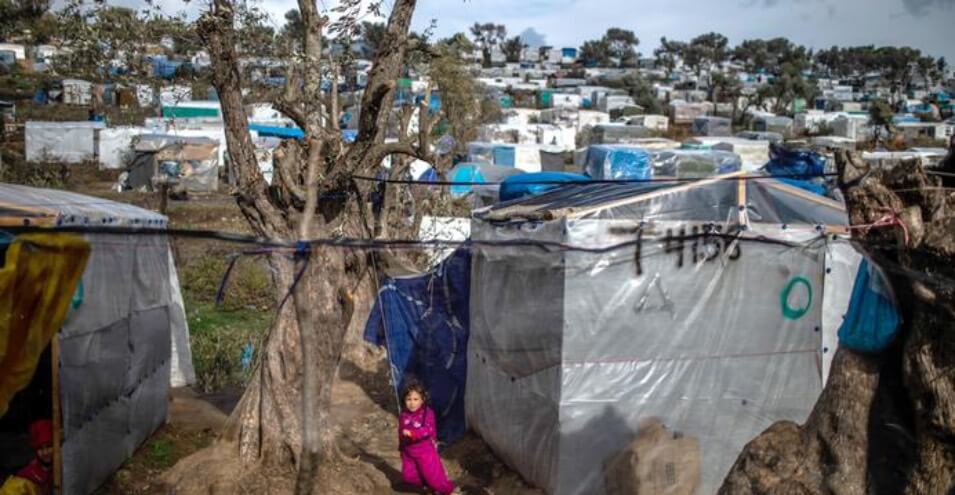
Large numbers of refugees live in close quarters in camps with limited space. Aid workers are trying to prevent the spread of COVID-19 in these camps through strict regulations. Doctors have called this impossible.
Refugees in camps across various countries, from Greece to Lebanon, Bangladesh and Kenya, face severe risk of coronavirus infection.
In the Moria refugee camp on the Greek island of Lesbos, around 20,000 people live in a confined space extending along the edges of olive groves. It is the largest migrant and refugee camp in Greece and Europe. Refugees spend their nights in temporary tents they have set up or under canvas shelters.
Sanitary conditions in this camp are catastrophic. Piles of garbage are visible everywhere, and the smell is unbearable. Each family lives in just a few square meters. The density of tents is so high that sometimes just a single spark is enough to start a fire. Earlier this week, a child died in a fire in this camp.
In Moria, thousands of people must share a single dishwashing facility. According to camp residents, they sometimes have to wait hours in line to receive food.
In many European cities these days, people avoid social contact, use disinfectants everywhere, and wash their hands every half hour. But refugee camp residents lack even the most basic sanitary facilities. The conditions in these camps provide an ideal breeding ground for disease.
Preventing Disease Spread is “Impossible”
The organization “Doctors Without Borders” has called preventing disease spread in Greek refugee camps “impossible.”
Fears of coronavirus spreading to other refugee camps are also increasing. In Greece, only a small portion of approximately four million Turkish refugees live in camps. Refugees in Turkey are trying to reach cities.
However, the situation at the Turkey-Greece border is deteriorating. Since Turkish President Recep Tayyip Erdoğan announced two weeks ago that he would open Europe’s borders, thousands of refugees have settled along these borders.
In southern Bangladesh, Cox’s Bazar hosts one of the world’s largest refugee camps. In late summer 2017, hundreds of thousands of Rohingya (a Muslim minority from Myanmar) fled to Bangladesh following persecution, mass killings, and destruction of villages and homes by Myanmar’s military. Currently, approximately 850,000 people live in this camp.
So far, only three confirmed cases of coronavirus have been identified in Bangladesh, all in the northern part of the country and far from camps. However, experts believe this situation will not last. Bangladesh is one of the world’s most densely populated countries, and its healthcare system faces serious challenges.
Relief workers are trying to prevent the virus from entering camps. The World Health Organization (WHO) has distributed infrared thermometers at airports near Cox’s Bazar camp, and travelers must be checked to determine their body temperature upon arrival. The organization has provided additional protective clothing to regional hospitals. In camps, warnings about COVID-19 symptoms are regularly issued and residents are advised to properly wash their hands.
Minimizing Visits
Similar standards are being applied in other refugee camps. In Kenya, where approximately 500,000 Somali and South Sudanese people live, the United Nations Refugee Agency (UNHCR) sends text messages to camp residents asking them to report any possible symptoms of illness as quickly as possible. Controls have been increased at the entrances of Kakuma and Dadaab camps. Anyone entering these camps must report where they have been in recent weeks.
Eugene Biwon, UNHCR spokesperson in Kenya, says that “our staff only conduct visits that are absolutely necessary.” According to him, relief workers are trying to prevent coronavirus from entering the camps. Therefore, those on leave have been asked not to return to Kenya at this time.
Since Kakuma and Dadaab camps were established from the 1990s onwards, they have better infrastructure compared to other camps. Many refugees do not live in tents but in brick rooms. There is a hospital and a water source in these camps. Biwon says that “despite this, we see the risk.” So far, there has been one confirmed case of COVID-19 in Kenya.
Refugee Malnutrition and Disease Risk
Jason Strazuoso, one of the officials of the International Committee of the Red Cross, says that “malnutrition means people are predisposed to disease in any case.” He adds that for this reason, combating COVID-19 is at the top of our priorities.
This is not the only disease causing concern among aid workers: refugees in many countries are viewed as unwelcome guests. The spread of this disease could increase hostility toward these people, who were already under pressure. According to Filippo Grandi, the UN Commissioner for Refugees, “fear and discrimination have never solved crises.” He has called for “solidarity with those who are most vulnerable.”
Source: DW