Electoral Law Changes Would Limit Guardian Council’s Authority
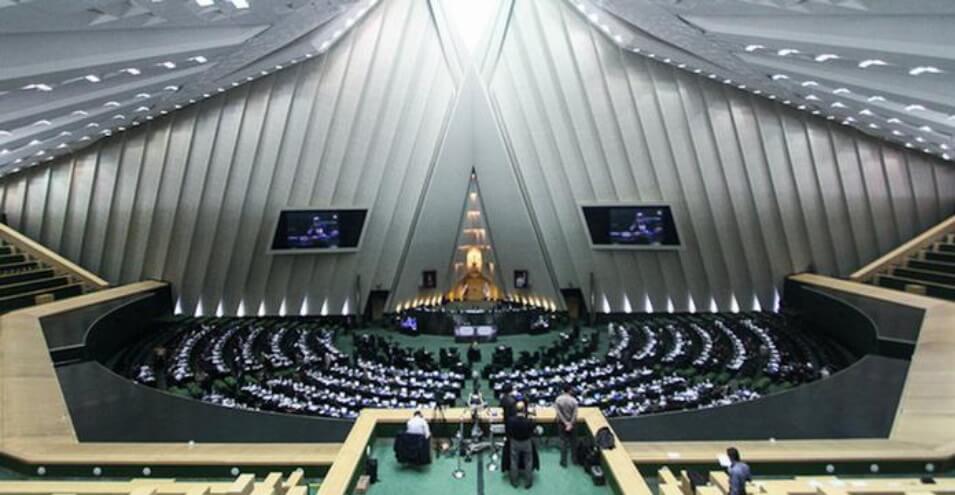
Members of the Islamic Consultative Assembly approved a bill in the final weeks of their term stipulating that “a final court ruling regarding financial or moral corruption of candidates” would be the criterion for confirming or rejecting their eligibility to participate in elections.
Members of the Islamic Consultative Assembly in their open session on Sunday, Ordibehesht 14 (May 3), approved Article 4 of a bill to add a provision to the electoral law for the presidency, the Assembly of Experts, and the Islamic Consultative Assembly.
According to this resolution, changes were made to sections 1 through 6 of Article 28 of the electoral law.
The first change concerns the criterion for determining “candidates’ practical commitment to the constitution and guardianship of the jurist.” According to the provision of this article, in reviewing candidates’ qualifications by the Interior Ministry and the Guardian Council, “a candidate’s disbelief in Islam or their admission of it and lack of practical commitment to Islam is proven by a final court ruling of the competent court regarding their financial or moral corruption.”
The second change concerns the criterion for evaluating candidates’ belief in “Islam.” According to Sunday’s parliamentary resolution, the criterion for determining “a parliamentary representative candidate’s disbelief in Islam” will be determined solely by the individual’s own admission.
The third change pertains to the sources of inquiry for the Interior Ministry and Guardian Council in reviewing candidates’ files for qualification approval. According to the new changes in the electoral law, sources of inquiry include the Ministry of Intelligence, the General Prosecutor’s Office, the Organization of Vital Statistics, and the Law Enforcement Force of the Islamic Republic of Iran.
In this way, the Islamic Revolutionary Guards Corps has been removed as one of the sources of inquiry.
Another change concerns candidates’ educational credentials. According to the parliamentary resolution, candidates must present a master’s degree or equivalent credential, provided they have seven years of executive service experience in private or government sectors or educational or research activities, and this credential must be verified by the relevant authorities.
Also, not having a bad reputation in the electoral district is among the matters approved by the representatives. However, a candidate’s “bad reputation” is also proven only by a final court ruling of the competent court.
Nevertheless, the parliamentary resolution can be implemented only when approved by the Guardian Council, and it does not appear that the Guardian Council will approve limiting and restricting its own authority.
Parliamentary Debates
In Sunday’s parliamentary debates to establish a legal framework for the Guardian Council’s authority in rejecting candidates’ qualifications, some representatives including Ali Motahari, representative of Tehran, described discretionary oversight as “arbitrary oversight.”
Motahari said: “Discretionary oversight means what is correct and based on documents and evidence, but what is happening today is taste-based and frivolous oversight and has harmed the country.” President Hassan Rouhani had also previously said regarding the rejection of qualifications that “the greatest danger to democracy and national sovereignty is when elections become a mere formality.”
Gholamreza Kateb, representative of Garmsar in parliament, also said: “People demand from us that justice and freedom not be slaughtered in our country; today our duty as representatives is to not allow anyone to harm the system and revolution based on their personal preference.”
Source: DW