Exiled Prisoners Deny Iran Judiciary Officials’ Claims: We Are All Serving Our Exile Sentences in Their Designated Cities
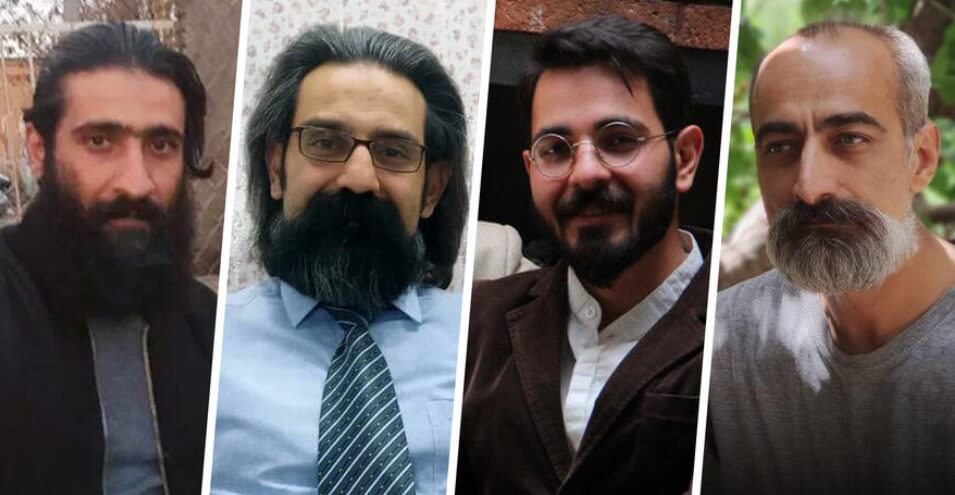
Dervishes of Gonabad, all of whom have been sentenced by Iran’s judiciary to exile in deprived Iranian cities, have responded to recent statements by the spokesman of Iran’s judiciary denying reports about designating certain Iranian cities as places of exile for those with court sentences.
Gholamhossein Ismaili, spokesman for Iran’s judiciary, stated on Wednesday, September 25, in a press interview that reports calling certain cities “places of exile” are “unrealistic and fabricated,” claiming that “based on the new Article 23 of the Islamic Penal Code, we no longer recognize any city as a place of exile.” This comes despite the fact that many political and religious prisoners are serving their exile sentences in deprived Iranian cities under orders from the judiciary.
Saeid Sultanpour, one of the Gonabad Dervishes who has been serving his exile sentence since early May alongside two other dervishes named Rasoul Hoveida and Akbar Biranvand in Zahedan city in Sistan and Baluchestan province, told Voice of America that the judiciary spokesman made these statements while Gonabad Dervishes are currently serving their exile sentences in various cities, especially in border regions, impoverished areas with limited resources, and their court sentences and written judicial orders explicitly state that the named location is designated as their place of exile or mandatory residence.
Reza Ansari, a former administrator of the Mojazouban-e Noor website and a Gonabad Dervish serving his exile in Khaf city, also told Voice of America that the judiciary spokesman’s statements were made under circumstances where Chapter Six of the executive regulations of the same Article 23 of the Islamic Penal Code define exile, exile conditions, and even exile locations, and have even specified whether certain locations meet or fail to meet the criteria given political, security, and social conditions suitable for exile. This shows that we have both exile and places of exile in these regulations.
Mr. Ansari continued, telling Voice of America: “If what the judiciary spokesman says is true, why aren’t those sentenced to exile sent to large and pleasant cities like Shiraz, Mashhad, or even Bushehr? Why do they specifically choose deprived locations? So one can say that what this law states contradicts their own enforcement and implementation of the law.”
Iranian judicial authorities over the past years, by issuing exile sentences for political and religious prisoners to remote and deprived cities, have aimed to prevent civil activities and separate critics and protesters of the government from their place of residence and families. According to Sina Ansari, who was exiled to Mirjaveh city in Sistan and Baluchestan province, “the authorities’ intention, despite what they claim, is not merely distance from a specific location to prevent a criminal act.”
Sina Ansari, referring to exile sentences issued for Gonabad Dervishes over the past years, told Voice of America: “I have heard many lies from Iran’s executive and judicial officials in the past; such denials have become a routine in our country. Otherwise, why are all the cities they send exiled individuals to characterized by bad weather, marginalization, border proximity, and deprivation? Cities whose selection, according to the executive regulations of Article 23 of the Islamic Penal Code, is the responsibility of the Ministry of Intelligence, and which have severe security situations due to the residence of Kurdish and Baluch ethnic groups and Sunni citizens.”
Saeid Durandish, another Gonabad Dervish who is serving his exile with Ehsan Malekmohamadi and Hadi Shahresa in Zabol city, told Voice of America that after five months of exile, this contradictory statement by the judiciary spokesman seems more like a performance in front of cameras than reality. He said: “Considering the judicial orders that were delivered to each exiled dervish, they insisted that we quickly report to the cities designated as our places of exile despite the spread of coronavirus in Iran; deprived cities that lack basic facilities and where people struggle to live.”
Previously, Voice of America reported in multiple reports that some political and religious prisoners, including Ibrahim Firouzi, Nokish Masih, and Reza Yavari, one of the Gonabad Dervishes who was arrested and imprisoned following the Golestan Haftom incident, were sent to deprived and border cities to serve their exile sentences.
The U.S. State Department has repeatedly and in various instances condemned violent confrontations and widespread suppression of protesters, as well as continuous and repeated violations of Iranian citizens’ rights by the ruling regime in that country.
Source: Voice of America