Guardian Council Disqualifies Dozens of Parliamentary Representatives
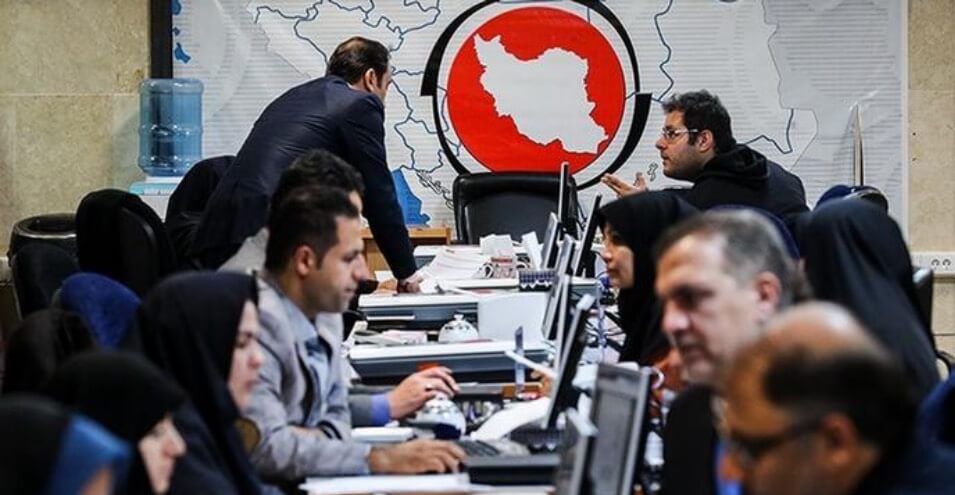
The Guardian Council’s screening of candidates for the eleventh parliamentary term has concluded. According to reports, the qualifications of dozens of current representatives who were approved by the same council four years ago have now been rejected.
Abbas Ali Kadkhodaei, spokesman for the Guardian Council, announced that the screening of candidates for the eleventh parliamentary elections concluded in the late hours of Saturday, December 21, with results sent to provincial governors and district administrators for notification of registrants.
According to Article 52, Clause 2 of the election law, those whose qualifications are not approved can file complaints with the Guardian Council. For this reason, the final statistics of approved and rejected candidates will be determined after complaints are reviewed, but experience from previous elections shows that the likelihood of reversing decisions is very low.
Typically, attention focuses on well-known figures disqualified, including current parliamentarians. Reports suggest that at least one-third of current Tehran representatives, who all ran on the “Hope” list in the tenth parliament, have been disqualified.
Unprecedented Disqualification of Parliamentarians
The News Online website reports that some sources indicate 135 current parliamentarians have been disqualified. If accurate, this could be the highest disqualification rate for parliamentarians in the next term and would be unprecedented.
Four years ago, although the Guardian Council did not approve approximately 60 percent of candidates, the number of ninth parliament representatives disqualified was around 50.
The six clerics of the Guardian Council, who are appointees of Islamic Republic Leader Ali Khamenei, play the primary role in approving or rejecting candidates’ qualifications for parliamentary elections.
Based on a chart published by the IRNA news agency, in provinces such as Alborz and Kermanshah, less than 40 percent of candidates’ qualifications have been approved. This rate is between 40 to 50 percent for Tehran, Isfahan, Bushehr, Hormozgan, Kurdistan, Ilam, Golestan, West Azerbaijan, and Sistan and Baluchestan provinces.
Among those disqualified in Tehran are figures such as Mahmoud Sadeghi, Ali Motahari, Tayebeh Siavashi, Fatemeh Saeedi, and Alireza Mahjoub. Sadeghi and Mahjoub have speculated that their disqualifications may be due to similar names, while Motahari stated he has not yet received notice from the governor’s office. Sadeghi later confirmed his disqualification in a tweet.
Among Tehran’s thirty representatives, some such as Parvaneh Salahshouri and Mohammad Reza Aref, head of the Hope faction representing the government reformist camp, did not register as candidates. Ali Larijani, the current parliament speaker, is another notable absence this term.
Disqualification of 25 Representatives from Khuzestan and Fars
According to IRNA, of 18 current representatives from Khuzestan province in the tenth parliament, 16 have been disqualified, and of the same number from Fars province, 9 have been disqualified. The report adds that in Ardabil, reformists and in East and West Azerbaijan, conservatives have received a larger share of disqualifications.
Based on the latest statistics announced by Interior Minister Abdolreza Rahmani Fazli, approximately 14,000 people nationwide have registered to participate in parliamentary elections. Reports indicate that close to 90 percent of registrants were men.
This competition involves 290 seats in the eleventh parliament across 208 electoral districts. The first round of elections will be held on February 21.
According to reports, in the tenth parliamentary elections, more than 12,000 people registered as candidates, but based on the Guardian Council’s official report, only 42 percent were approved.
Increase in Candidates Despite Khamenei’s Criticism
The increase of 2,000 candidates in this term comes despite the Islamic Republic Leader and Kadkhodaei having heavily criticized the large number before registration began.
Abbas Ali Kadkhodaei cites the increase in the number of registrants compared to the 1980s and 1990s as one reason for high disqualification rates in recent elections. He states that in recent years, “everyone sees themselves obliged to participate in elections” and expresses regret that “we are witnessing a festival of registration.”
The ninth-term Guardian Council spokesman stated to media managers on November 30 regarding qualification review procedures: “We have extracted three main principles from the current law and made them the basis and criteria for our work; economic corruption, moral corruption, and opposition to the system and revolution are the Guardian Council’s three main principles in reviewing qualifications, and we firmly stand by these three principles.”
Typically, “practical non-commitment” to Islam and the principle of absolute guardianship of the jurist is the primary reason for disqualifying candidates in parliamentary elections, and most current parliamentarians have been disqualified on this charge. One notable figure whose qualifications have been approved is Mohammad Baqer Qalibaf, former Tehran mayor, whom some expected would be disqualified due to municipal financial corruption cases. He is mentioned as a possible successor to Ali Larijani’s parliamentary seat.
Source: DW