Iran-China Cooperation Agreement: Document of Development or Betrayal of National Interests?
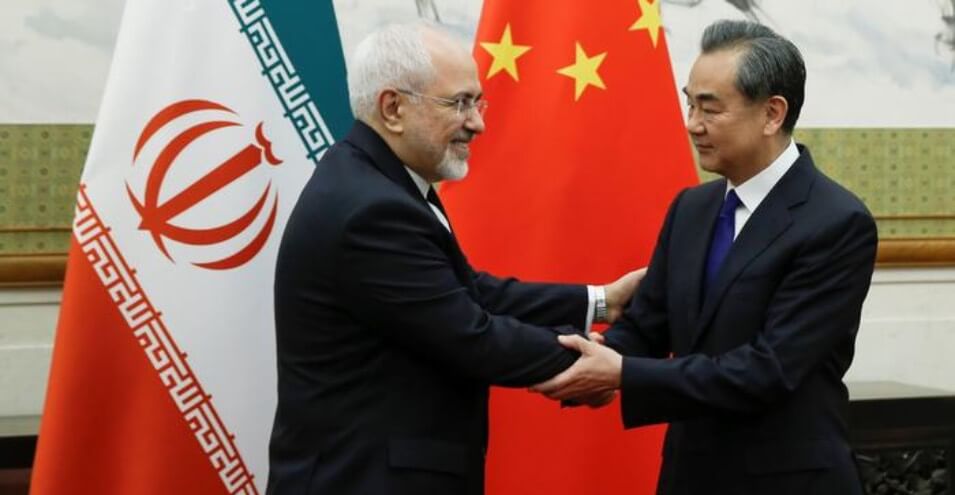
Some groups consider the 25-year Iran-China cooperation agreement a betrayal of national interests. Others say it is a document for development and should be defended with “courage,” but hidden from public view. Why don’t people have the right to know the details of this agreement?
Isak Jahangiri, First Vice President under Hassan Rouhani, President of Iran, said on Tuesday, July 17 in a meeting of the “Coordination Board of Foreign Economic Relations”: “We must courageously defend the development of our strategic relations with Beijing.” His reference was to a draft agreement covering various fields, from “economic planning, including oil and gas, electronic industries, knowledge-based sectors, and…” and according to some sources, it concerns China’s astronomical investment in Iran’s oil and gas industries in an amount equivalent to 280 billion dollars. Despite this astronomical sum and the broad scope of the agreement, official sources have not yet provided the public with necessary information about this document.
Fragmented information that has been published about this agreement has turned it into a subject of considerable speculation among supporters and opponents of the Islamic Republic both inside and outside the country, and has also led Islamic Republic officials into contradictions. Ali Rabiei, government spokesman, said on Tuesday, July 17 in a weekly press conference with media: “There is nothing confidential or secret about the 25-year cooperation agreement with China. And whenever an agreement is reached in this regard, it will be announced at that very time.”
Prioritizing Chinese Considerations Over Public Interest
However, Mohsen Baharoond, Deputy for Legal and International Affairs at the Ministry of Foreign Affairs, told Mizan news agency that since this agreement is still a matter of negotiation, we cannot disclose it. Why? Because according to him, “perhaps the other country (China) also does not wish, based on its own considerations, to have the negotiation matters disclosed, and such information leaks might undermine the trust between the two parties.”
Mohsen Baharoond, without naming anyone, said: “One gentleman came and said something that put everyone in trouble; usually whenever he speaks, he puts others in trouble and throws society into chaos.”
The “gentleman” Baharoond was referring to is Mahmoud Ahmadinejad, former President, who on the seventh of Tir in Gilan referred to negotiations over this agreement and asked the government: “Are you the owner of the country that you give away from the nation’s treasury without the knowledge of the people?”
“Why Are People Uninformed About the Details of This Agreement?”
The Jomhuri-ye Eslami newspaper in its editorial on Tuesday, July 17, criticizing the concealment of the agreement’s content from public opinion, wrote that China and Iran have been trying for a year to finalize the 25-year agreement and asked: “Why are people uninformed about the details of this agreement? Some people have claimed to be aware of the content of this agreement. If so, why shouldn’t the general public be informed about it?”
In response to officials who place Chinese “considerations” and “preferences” at the center, this newspaper wrote: “They have said China is concerned that public disclosure of this agreement’s content might invite American sabotage. If the Chinese really have such a strange concern, that alone is enough for us to conclude that they are not trustworthy. A country that claims to be a superpower, why is it concerned about American sabotage? Is it concerned about itself or about Iran?”
A Long-term Agreement with a Country That Has Left “Lasting Wounds” on Iran
The Jomhuri-ye Eslami editorial went further and referred to the history of the two countries’ relations and an “ally” that throughout its relations with Iran has only paid attention to its own one-sided interests. This newspaper wrote: “Precisely when discussions about the 25-year Iran-China agreement are being raised, China openly announces it has replaced Iranian oil with Saudi oil. While we still bear the wounds from China’s violations in the currency agreement during the Ahmadinejad administration, which was truly a “Turkmenchay of currency,” we should not accept another agreement, let alone a 25-year one with China.”
The Jomhuri-ye Eslami newspaper’s reference was to an agreement concluded with China in 1387 (2008) during the Ahmadinejad administration. An agreement that rightfully earned the title “Currency Turkmenchay.” Under this agreement, China did not pay money to Iran in exchange for Iran’s oil exports and used it as collateral for “letter of credit” purchases of Chinese goods. Moreover, the management of this money was not in Iran’s hands but China’s. An extremely burdensome agreement that made the Islamic Republic responsible for losses resulting from currency fluctuations and loss of money. An agreement that faced opposition and lack of follow-up from the eighth and ninth parliaments.
A Dispute Over Mullah Nasrudin’s Quilt
Amidst speculation about whether Mahmoud Ahmadinejad’s disclosure of the 25-year Iran agreement is aimed at the upcoming presidential elections, Majid Reza Hariri, head of the Iran-China Chamber of Commerce, in an exclusive note for the “Contemporary Strategy” website, referred to the history of this agreement (December 2015 when China’s president visited Iran) and asked: “Why has this comprehensive agreement not been a subject of cooperation between the two countries before that time?”
According to him, Mohammad Javad Zarif last summer “informed the Chinese side of the latest economic proposals desired by Iran and it was accepted by the Chinese. It was naturally expected that the government would present its proposals to the Chinese side in a more serious and coherent manner during this time.”
Majid Reza Hariri points out that only one year of the Rouhani administration remains, and the final signing and implementation of this agreement does not give credit to the Rouhani government, “therefore, currently there is a dispute over Mullah Nasrudin’s quilt”; a dispute between supporters and opponents of the government that according to Majid Reza Hariri “interpret the agreement as they wish” and speculates that “China is colonizing us or we are going to become a Chinese colony.”
“A Shameful Agreement” and From a “Position of Weakness”
Among Iranians abroad, the 25-year Iran-China agreement also has many opponents who compare it to the Turkmenchay agreement and consider it a betrayal of Iran’s national interests. Reza Pahlavi, Iran’s last prince, referred to the aforementioned agreement on his Twitter account as “a shameful agreement” whose purpose is “plundering the country’s resources and accepting foreign military in the homeland.”
Source: DW