Arrest of Hamid Nouri, One of the Perpetrators of 1988 Executions, Extended Again in Sweden
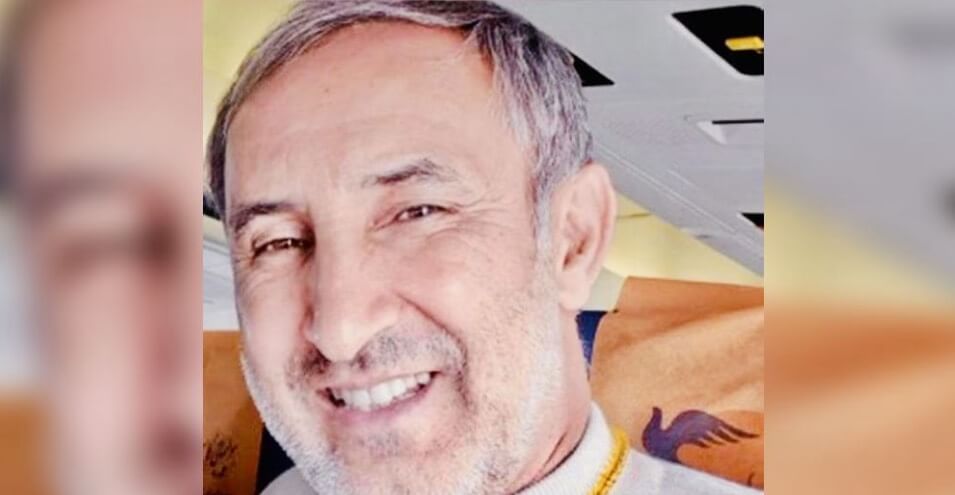
Following a court order in Sweden, the detention period of Hamid Nouri, a former judicial officer in the Islamic Republic’s justice system in connection with the 1988 executions case, has been extended for the third time in Sweden.
Iraj Mesdaghi, a former political prisoner and human rights activist, announced on Wednesday, December 9, through a post on his Twitter account that the prosecutor of Sweden’s central court has extended the detention of Hamid Nouri, suspected of participating in mass killings, for the third time, and he will remain in detention until Wednesday, February 5.
This former political prisoner also called on individuals who wish to file complaints against the former judicial officer in the Islamic Republic’s justice system to seize the opportunity and contact the police or the case’s lawyer to pursue their complaints.
Previously, Voice of America had reported that Hamid Nouri, under the alias “Hamid Abbasi,” a former judicial officer in Iran’s justice system who, based on available documents and evidence, is known as “a member of the execution committee at Gohardasht Prison” in Karaj in 1988, was arrested in Sweden on Saturday, November 9.
Kaveh Mousavi, a lawyer and private complainant in Mr. Nouri’s case, had previously told Radio Farda that he has requested the prosecutor in Sweden to keep Mr. Nouri “in detention for at least one year to complete the case file.”
According to him, Hamid Nouri, who held the position of judicial officer in 1988 in both Evin Prison in Tehran and Gohardasht Prison in Karaj, was arrested based on documents and evidence that Iraj Mesdaghi, a former political prisoner and human rights activist, has collected over the years.
Nouri’s arrest in Sweden was welcomed by some human rights organizations, including Amnesty International; this human rights organization described the arrest of the accused by the Swedish government as “a historic step” in a statement.
The U.S. State Department’s Persian Twitter account also posted on Thursday, November 14, stating that Mr. Nouri will face justice due to his role in the execution of thousands of prisoners in the summer of 1988, many of whom were political and ideological prisoners.
The Islamic Republic, in 1988 under the order of Ayatollah Khomeini, reviewed the cases of several thousand political prisoners, many of whom had previously been tried, and sentenced many of them to death.
The executions of these prisoners, who were members of political organizations such as the People’s Mujahedin, People’s Fadaiyan, Tudeh Party, and others, took place without informing their families. The time and place of burial of many of them remain unknown.
Islamic Republic officials have refrained from providing accurate statistics on executions, but Ayatollah Hosseinali Montazeri wrote in his memoirs that the number of those executed was between 2,800 and 3,800 people.
Opponents of the Islamic Republic, however, say the number of those executed is far greater than this figure.
Source: Voice of America