Wave of Criticism Continues Over Insulting Remarks on Iran’s State Television
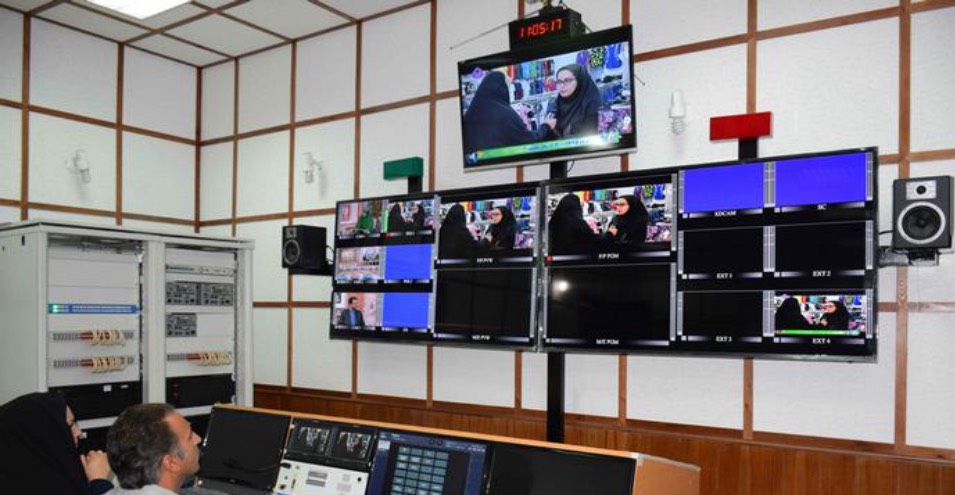
Following abusive language used by a “fundamentalist” university professor on state television toward Rakhshan Bani-Etemad, a wave of criticism from cinematographers’ professional organizations and supporters of cinema is expanding. Two government officials have also taken positions.
On Tuesday, December 24 (January 14), the House of Cinema, the Association of Iranian Cinema Documentarians, the Directors’ Association, and numerous cultural and artistic workers and cinema supporters responded to insulting remarks made by Mohammad Sadegh Koushki, a university professor, writer, and “fundamentalist” researcher, toward Rakhshan Bani-Etemad, one of Iran’s prominent screenwriters and directors.
Koushki in a television session currently circulating rapidly on Persian-language social networks tells the Iranian director that she should not have issued a call. Without connecting the call to Iranian border guards, while stating that Revolutionary Guards border personnel sacrifice their lives so that the hands of “people like Abdolmalek Rigi” do not reach Rakhshan Bani-Etemad and her daughter Baran Kosari and “her business,” he says: “Maybe you would have liked it, maybe you would have wanted it!”
Bani-Etemad had previously issued a call on Instagram to show sympathy with the families of victims of the Ukrainian plane disaster and had asked people to gather in Azadi Square to “end warmongering.” This gathering did not take place, as the Iranian director withdrew her call due to warnings from security institutions and “to protect the security and lives of people.”
Insult in the Name of “Defending Values”
In a statement published by the House of Cinema, it is stated that Islamic Republic of Iran Broadcasting has a long history of “transgressing moral and human boundaries” and does this “under the pretext of defending values.”
According to the directors of this Iranian cinema center, “the recent and shameless insult by IRIB” to Bani-Etemad is considered a “deliberate” act of “creating division and destroying artists.”
The House of Cinema, while expressing regret for “the management of an organization that apparently has no intelligent oversight of its media productions’ content,” promised that “in line with people’s civil and justice-seeking demands,” it “will not turn a blind eye to such insults and the national media’s conduct.”
The House of Cinema further proposed that cinematographers refrain from appearing in the state television’s “so-called cinema and analytical” programs.
“Shame Floods the Faces of Our Nation’s Guardians”
The Association of Iranian Cinema Documentarians, in response to the insulting remarks of Mohammad Sadegh Koushki, has written an open letter to Abdolali Aliaskari, the head of Islamic Republic of Iran Broadcasting Organization.
In this letter, the statements of the “fundamentalist” political analyst and university professor are described as “shameless,” an “insult” that “floods shame on the faces of our nation’s guardians.”
Iran’s Directors’ Association has also referred to the disrespect shown to “greats and assets of Iranian cinema,” Rakhshan Bani-Etemad and Masoud Kimiai, and written that it “will not remain silent in the face of destruction of cinematographers.”
In a television program, Masoud Kimiai was also insulted because he is determined not to participate in the Fajr Festival due to the large number of people killed in the airplane crash incident.
Iran’s Directors’ Association also requested that all cinema directors not participate in any television programs as guests and experts without an official apology from IRIB.
Hosein Entezami, head of Iran’s Cinema Organization, also responded and tweeted: “Do they give airtime to those who do not respect society’s moral norms and shamelessly insult the nation’s sanctities and artists?! Shouldn’t the host respond?”
Official Reactions
Aliرeza Moezi, deputy for communications and information at the office of the president, also responded in a tweet to Koushki’s remarks and to a television host named Zeinab Abutalebi. Abutalebi had also asked on television those dissatisfied with Islamic Republic policies to leave Iran.
Moezi criticized the fact that these two people “freely draw lines from the national media for citizens.”
Hossam-aldin Ashna, the president’s representative on the Council for Supervision of IRIB, has also written a letter to Gholamhossein Mohseni-Eje’i, the council’s head, stating that Islamic Republic of Iran Broadcasting behaves “politically and factionally” and is not a national media outlet.
He said that he has repeatedly warned “about the unprofessional, politicized conduct, and biased analyses of some IRIB broadcasters.”
Ashna further reminded that Iranians following the airplane crash are in “shock” and “suspicions of cover-ups and lies have formed in public opinion.” He recommends that under these circumstances, state television should not “add to the already complicated situation with thoughtless and insulting remarks” and “deepen the created rifts.”
Following the airplane crash, Hossam-aldin Ashna had warned “Iranian-origin managers of Persian-language media” who had scrutinized ambiguities regarding the initial official narrative of the airplane crash to “refrain from participating in the psychological warfare related” to the airplane disaster and “collaborating with Iran-haters.”
“Mud-Pit” Remarks
Naser Fakouhi, a Tehran University professor, has also responded to Koushki’s verbal attack on Rakhshan Bani-Etemad and written that the insult by the Islamist researcher to the prominent Iranian cinema director, even if made by people who have “descended into lumpenism and thuggery” and were speaking in “the former mud pit,” would still be a matter of regret.
Fakouhi asks: “How can it be accepted that the country’s official platforms are placed in the hands of such people who make these absurd statements about women and girls of this country. Is this defending values or insulting and trampling on everything we have regarded as honor, values, respect, morality, and Islamic and Iranian traditional ethics throughout our thousands of years of history?”
Source: DW