Mojtaba Khamenei’s Succession in the Shadow of Khatami’s Denial and Trump’s Warning
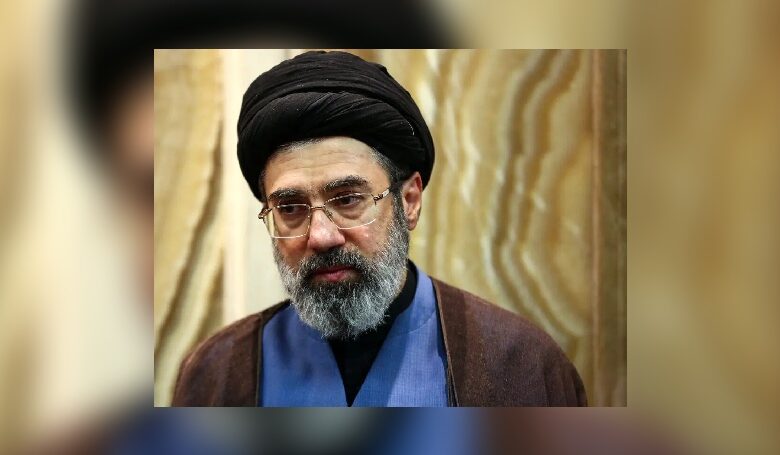
Reports indicate the selection of Mojtaba Khamenei as the new leader, but Ahmad Khatami has denied this, and Donald Trump has warned that the “worst scenario” would be the repetition of leadership “as bad as” the past.
As Iran faces fire from tensions with global powers and internal crisis, international media have reported that the interim leadership council is set to introduce Mojtaba Khamenei, the second son of the former leader of the Islamic Republic, as the “system leader.” These developments occur while complete internet shutdown for the Iranian people and fears of attacks and war conditions have placed the selection of a leader behind closed doors and away from the eyes of ordinary citizens, which is a clear sign of a legitimacy and control crisis in the Islamic Republic.
According to reports from the New York Times citing unidentified sources, the interim leadership council, which includes members of the Assembly of Experts, the head of the judiciary, and the president, is expected to introduce Mojtaba Khamenei as the future leader, but due to concerns that such action would make him a greater target for attacks, this introduction may not be announced formally.
These events occurred following joint attacks by the United States and Israel on the facilities and institutions of the Islamic Republic; in these attacks, Ali Khamenei, the usurper leader of the Islamic Republic of Iran, was killed, and this very issue has turned the process of determining a successor into a deep crisis.
These occurrences are in the context of an unprecedented crackdown on the Iranian people, who due to widespread protests by the Islamic Republic have faced severe violence, arrests, torture, and the killing of thousands of innocent protesters, behaviors that human rights organizations have described as “crimes against humanity,” and consider the government lacking in moral and political legitimacy due to serious human rights violations, elimination of freedom of speech, and suppression of domestic opposition.
While generals and security institutions of the Islamic Republic maintain complete control over the selection of a leader, the Iranian people are deprived not only of participation in political decision-making, but even from understanding what awaits their country’s future.
In response to foreign reports, some government figures have attempted to present the situation as calm. For example, Ahmad Khatami, a member of the Assembly of Experts, in a telephone conversation with domestic media said: “We are close to a conclusion and the leader will be determined at the first opportunity.”
He also emphasized that the reason for the delay in selecting a leader is “the country’s war situation.” This implicit and vague response indicates that even among Islamic Republic officials there is no real confidence and consensus.
While the Islamic Republic seeks to proceed with the selection of a successor in a controlled manner, Israel’s defense minister has warned that any leader who continues the policy of threatening to “destroy Israel” will be a certain target for elimination, a position that shows Iran’s crisis extends beyond domestic borders and regional and international rivalries could place Iran on a path toward more severe violence.
Donald Trump, the president of the United States, also in a joint meeting with “Friedrich Merz,” the German chancellor, at the White House, while referring to the fact that the joint attacks by America and Israel have largely destroyed the Islamic Republic’s naval and air capabilities, and emphasizing that even potential leaders of the Islamic Republic have been killed, said: “The worst scenario for Iran would be the rise to power of someone as bad as Ayatollah Ali Khamenei, and we do not want such a thing to happen.” He again repeated that Iran’s government is the embodiment of absolute evil.
Ultimately, Iran’s current crisis shows that the Islamic Republic has not only been leading in continuous human rights violations, but even now in controlling the process of determining a leader without actual public participation, it has suffered deep discreditation. The possible selection of Mojtaba Khamenei as the system leader under such circumstances not only places Iran’s future in the shadow of military and elite power, but also further challenges the protests and demands of the Iranian people for freedom, democracy, and human dignity.