Release of ‘Afrin Mohajer’, Iranian-American Dual Citizen

The release of ‘Afrin Mohajer’, an Iranian-American dual citizen, proves that pressure on dual nationals has been a perpetual tool, yet justice remains shrouded in ambiguity.
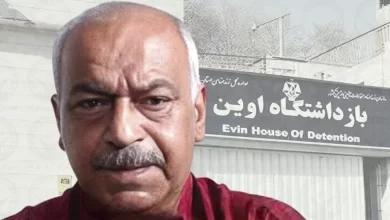
According to published reports, Afrin Mohajer, an Iranian-American dual citizen, was released from Evin Prison on Saturday, December 6, 2025, under a conditional bail. She had been detained after returning to Iran and entering through Imam Khomeini International Airport on September 28, 2024; however, despite her release, many questions remain unanswered: why has no specific and substantiated charge been formally announced against her.
Mohajer’s detention continues a recognized pattern that has been criticized for years by human rights groups, Western governments, and international organizations: the use of dual nationals as leverage or a diplomatic tool.
In a statement by the Hengaw Organization for Human Rights, it stated that she spent more than seven weeks in detention without any legal access or proper notification, and her legal status remained unclear. Organizations that have examined similar cases consider this type of detention part of ‘hostage diplomacy’; that is, pressure tactics in foreign policy to achieve concessions.
According to reports, ‘Reza Zarabi’, Ms. Mohajer’s son, stated that his mother faced five charges: ‘forming an opposition group’, ‘membership in opposition groups’, ‘propaganda against the system’, ‘insulting the leadership’, and ‘insulting sanctities’, but no evidence or official information about these charges has been released. While detention was based on these charges, release under bail conditions is a clear sign of judicial weakness or insufficient evidence.
This situation is not only a violation of the right to fair trial, but also demonstrates that judicial functions in such cases are primarily political and pressure-driven.
According to Reza Zarabi, for some time after the detention, there was no news about his mother’s condition in the media or among human rights organizations. Some even claimed ‘victimization’. This media silence, coupled with the lack of information about the charges, intensified an atmosphere of fear and judicial isolation.
Airport detention, rapid transfer to prison, detention in solitary confinement or in women’s wards, and deprivation of legal rights are all components repeatedly seen in dual national cases, indicating the use of detention as a tool of fear and control.
The release of Afrin Mohajer is certainly good news and may have been effective in the short term as pressure and international scrutiny. However, release under conditional bail (rather than acquittal or dismissal of charges) suggests that the case may still remain open, meaning her actual security has no guarantee.
The experience of past years with cases like Nazanin Zaghari and other dual nationals has proven that such detentions and releases are often within the framework of political games, pressure, and exchange, not justice and transparency.
While Afrin Mohajer’s release may be a sign of the impact of public opinion and human rights pressure, true justice is realized when charges are made transparent, a fair trial is ensured, and the right to due process is respected.
Until then, this case will be neither a guarantee of her security nor a wake-up call for the regime, but rather a sign of the continuation of a pattern of repression, political detention, and the use of humans as bargaining chips.