How Did Iran’s Two Billion Dollars Reach America During Ahmadinejad’s Administration?
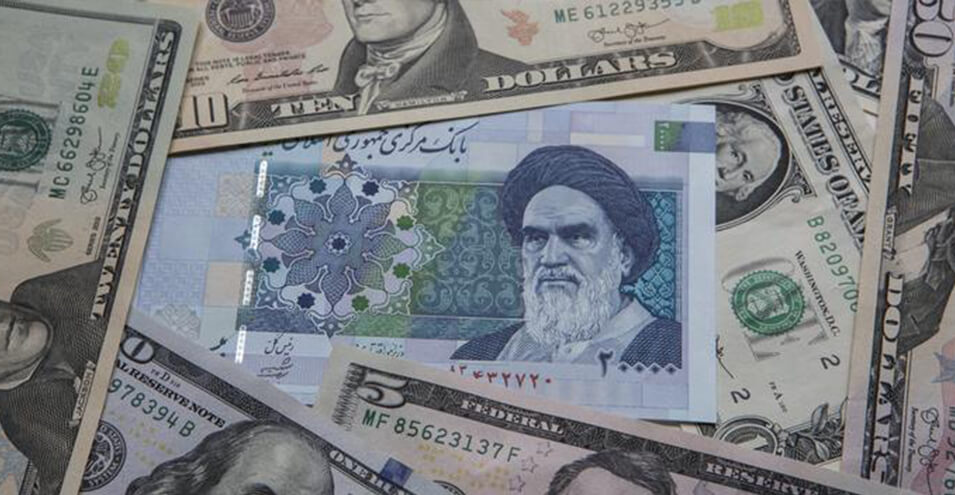
Hassan Rouhani has called on the judiciary to clarify the matter of two billion dollars in Iranian funds that, according to him, were confiscated by the United States due to the inactivity of the Ahmadinejad government. What money is Iran’s president referring to, and what is the story behind its confiscation?
Hassan Rouhani, Iran’s president, in his remarks today, called for the judiciary to take action and clarify the status of a two-billion-dollar case that, according to him, reached America during Mahmoud Ahmadinejad’s second term and was confiscated by the United States.
Rouhani, speaking in Yazd on Sunday, November 10, on one hand called on the judiciary to explain “billion-dollar corruption” in Iran, including determining the fate of the Babak Zanjani case, and on the other hand responded to claims of “18 billion dollars” going missing in 1397 during his own administration, calling those making such accusations “immoral.”
Iran’s president, referring to the Central Bank’s report denying the accusation, said: “Know that in this administration, not a single rial or dollar will go missing. It was in other periods that billions disappeared and have still not been found; therefore, do not go astray.”
Hassan Rouhani also referred in another part of his remarks to the confiscation of two billion dollars from Iran’s blocked assets in America in spring 1395, and asked all responsible institutions to take action regarding this enormous sum of money that, according to him, left Iran’s hands due to the inactivity of the Ahmadinejad administration and was seized by the United States.
Iran’s president asked “all officials” to take action regarding “the two billion dollars that went down America’s throat and the previous administration had 10 months to recover this money but did nothing.” According to Rouhani: “The Supreme National Security Council approved that the judiciary should quickly investigate this case, but nothing has happened to this day.”
Hassan Rouhani added: “We want this two-billion-dollar case to be clarified for the people; today, if it is a day of fighting corruption, explain billion-dollar corruption to the people so they will be happy and know.”
Two Billion Dollar Confiscation Due to “Mismanagement”
Members of Rouhani’s administration had previously repeatedly criticized “the delay by Ahmadinejad administration officials in returning two billion dollars of the Islamic Republic of Iran’s assets into the country.” For instance, Ishaq Jahangiri, referring to “the seizure of two billion dollars of our country’s assets by order of the U.S. Supreme Court in the course of a civil case against Iran,” attributed the reason to “the previous government’s mismanagement.”
The first vice president of Iran’s administration absolved Rouhani’s government of responsibility in early spring 1395 regarding this case and said: “In the previous administration, it was decided in a certain period to manage part of the central bank’s resources in Europe. Therefore, with complete mismanagement, two billion dollars in American securities were purchased and kept in a European bank; America was also able to easily first freeze these securities and then confiscate them.”
The ISNA news agency on Sunday explained the story of the seizure of two billion dollars of Iran’s assets during the previous administration and wrote: “In 1386, from the proceeds of Iran’s oil sales, Mahmoud Ahmadinejad’s government purchased certain securities through a Luxembourg broker called ‘Clearstream’; this broker stored part of these securities in Europe and another part physically at ‘Citibank’ in New York.”
According to this report: “Since, based on U.S. domestic laws, any use of dollars in the banking system anywhere in the world requires obtaining the necessary permits from the American banking system, at that time Iranian banks, through a type of cooperation called ‘U-Turn’ with non-American international banks, without having direct contact with the American banking system, benefited from dollar services. After new restrictions were imposed by the U.S. government against the Islamic Republic of Iran in November 1387 and based on a decree by the U.S. Treasury Department, the use of this service by Iranian banks was prohibited.”
According to Ali Tayebnia, the first minister of economy and finance in Rouhani’s administration, from late autumn 1386, the Luxembourg broker warned Iran and announced that “I can no longer provide security for your resources and it would be better to transfer these resources from my organization.” According to ISNA’s report, at that time approximately 220 million dollars of these bonds were sold and the resources were transferred into Iran.
Based on the same report, Iranian officials also had approximately 10 months after the Luxembourg broker’s warning to transfer the remaining bonds into the country after selling them, but for “reasons including unfavorable market conditions,” no action was taken to sell the remaining bonds.
Ali Tayebnia, a few months before the end of his tenure as minister in Rouhani’s administration, on March 9, 1396, had said: “Apparently, as I have been told, there was also this interpretation that since these resources belonged to the central bank and not to the government, therefore they could not be seized.”
Compensation to Americans from Iran’s Seized Assets
ISNA writes: “With the implementation of the U.S. Treasury Department’s decision regarding the prohibition of dollar transactions (U-Turn) with Iran after November 1387, American banks were prohibited from transferring dollar funds and conducting dollar transactions with Iran. In 1391, the U.S. Treasury also declared all of Iran’s assets public and issued an executive order to seize Iran’s assets in America with the cooperation of the U.S. government and Congress.”
In December 1394, the U.S. Supreme Court, while accusing the Islamic Republic of involvement in two bombings—one at the U.S. Marines headquarters in Beirut in 1983 and another at the Khobar Towers in Saudi Arabia in 1996—authorized Congress and the U.S. government to pay a total of two billion dollars from the seized Iranian assets in the United States as compensation to 1,300 Americans.
On October 23, 1983, a bomb explosion at the U.S. military headquarters in Beirut killed 241 American soldiers and 58 French soldiers. The American soldiers killed and wounded in this attack were part of the international peacekeeping forces in Lebanon. On June 25, 1996, as a result of a truck bombing at a U.S. military base in Khobar city, Saudi Arabia, 19 American soldiers were killed and approximately 400 were wounded.
Although U.S. courts found Iran responsible for these two terrorist attacks and the U.S. Supreme Court confirmed the ruling in spring 1395, Iran did not accept responsibility for these attacks. After Iran’s role in these attacks was raised, the families of victims of these terrorist incidents had requested compensation from Iran.
Source: DW