“Women’s Opposition to Discrimination Embedded in Iranian Society is Growing”
More than 200 women activists and other civil society figures have issued a statement addressing the “repression and hypocrisy” of Islamic Republic officials in dealing with grassroots movements in society, and have expressed support for the protest movements of women and other civil and political activists.
The statement signed by more than 200 Iranian civil, political, and cultural activists is titled “Let us unite against government crimes and repression in Iran!” The statement begins with the death of Sohrab Khodayari, the “Blue Girl” who resorted to self-immolation after facing judicial persecution for protesting women’s ban from entering sports stadiums. The statement notes that Sohrab Khodayari’s death has reopened old wounds, including “arrests and extremely harsh sentences, torture and forced confessions, whipping punishments and imposition of heavy bail for civil activists, workers and teachers, closure of associations and raids on gatherings.”
The statement’s authors further address “the horrifying dimensions of repression and intimidation on one hand and hypocrisy and deception” in the Islamic Republic on the other.
The statement expresses a complete lack of confidence in Ibrahim Raisi, the current head of the judiciary who was one of the members of the death committee during the summer 1988 massacre, noting that he has now entered the scene under the banner of “fighting corruption” and is talking about “reviewing and fair investigation of certain recent cases.” The statement references the case in which Ibrahim Raisi, on September 8, following increased criticism of sentences totaling 110 years of imprisonment for several civil and labor activists, ordered a review of sentences issued in Branch 28 of the Revolutionary Court.
The statement reminds that Ibrahim Raisi spent years in the judicial apparatus and served as deputy head of it for ten years, and consequently was complicit in the corruption he claims to be fighting.
The signatories of the statement say: “Yesterday’s partners have overnight become rivals. In power struggles they accuse each other, they drag each other down to shirk responsibility for the crisis. They have resumed the game of ‘arbitrariness’ to once again, through staging and deception, conceal structural repression and corruption in the governing system with ‘extremism,’ ‘deviation,’ and ‘individual abuse of power.'”
According to them, the various reactions shown by Islamic Republic officials to Sohrab Khodayari’s self-immolation is an example of a “shameless spectacle” that has compelled people to watch it. On one hand they threaten Sohrab Khodayari’s family and on the other they “enter the scene in the guise of demanding justice.”
In the view of the statement’s authors, the spectacle being performed for the people is intended to divert their attention from the reality unfolding in the depths of Iranian society—the spread of discontent and protest, the struggle against the repression of women and the questioning of sexual discrimination, the presence in declared forbidden spaces, the demand for legal change, civil disobedience, and the challenge to the structure of political and cultural power.
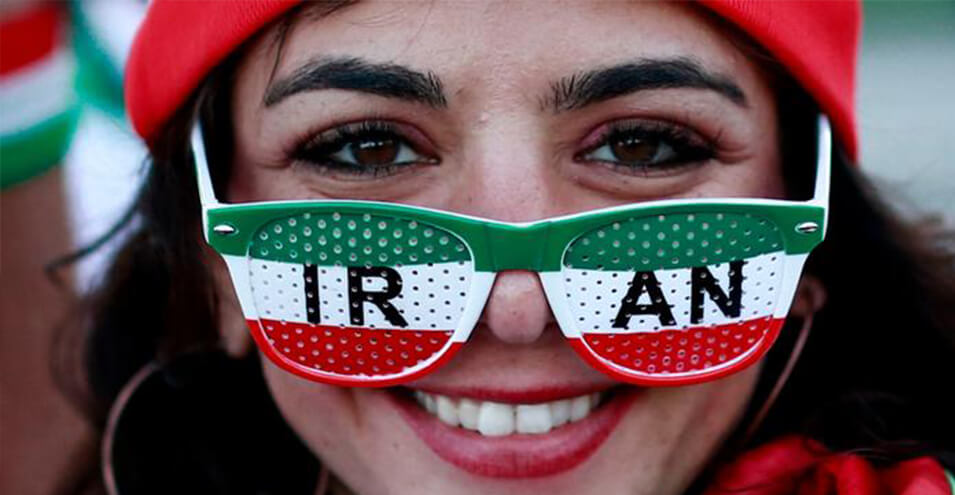
The statement focuses above all on women’s protest movements and the fact that they stand at the forefront of civil protests: “Women have risen to establish the right to equality based on their own strength and creativity. The daughters of Revolution Street have given speed and clarity to the denial of mandatory hijab. Women through singing and even dancing in public places have trampled on the prohibition of women singing alone. Women continue their protest against the prohibition of entry into stadiums, which they began years ago with protest sit-ins in front of stadiums, through disguised clothing or other forms.”
We further read that women have also exposed torture, forced confessions, and other pressures on prisoners, and women and men together, by issuing a statement, have denied the structure of religious governance.
Among the signatories of this statement are Mehrangiz Kar, Ahmad Karimi Hakkak, Iraj Mesdaghi, Behman Nirumand, Parasto Forouhar, Parveen Ardalan, Reza Alem-zadeh, Roqiyyeh Daneshgari, Shirin Ebadi, Abdii Kalantari, Ladan Boroumand, Mehrnaz Parachand, Naser Pakdaman, Nilofar Bayza’i, and Mihan Rusta. These are only a few of the well-established and well-known civil activists’ names.
The signatories conclude their statement by calling for the abolition of executions and torture, the freedom of all political and trade union prisoners, the abolition of mandatory hijab and laws of gender discrimination, and the dismantling of the mechanism of persecution and security intimidation and unfair trials.
Source: DW