Rouhani in New York: Will Something Happen?
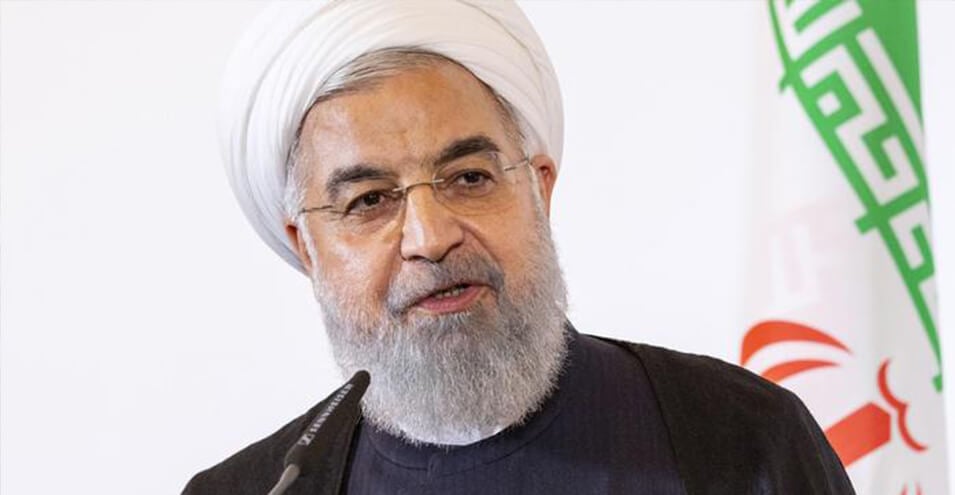
Rouhani’s participation in the UN General Assembly has sparked speculation about the outcomes of this trip. Many are asking whether the system sent Rouhani to New York with serious motivation to reduce tensions with America? How willing is Trump to back down?
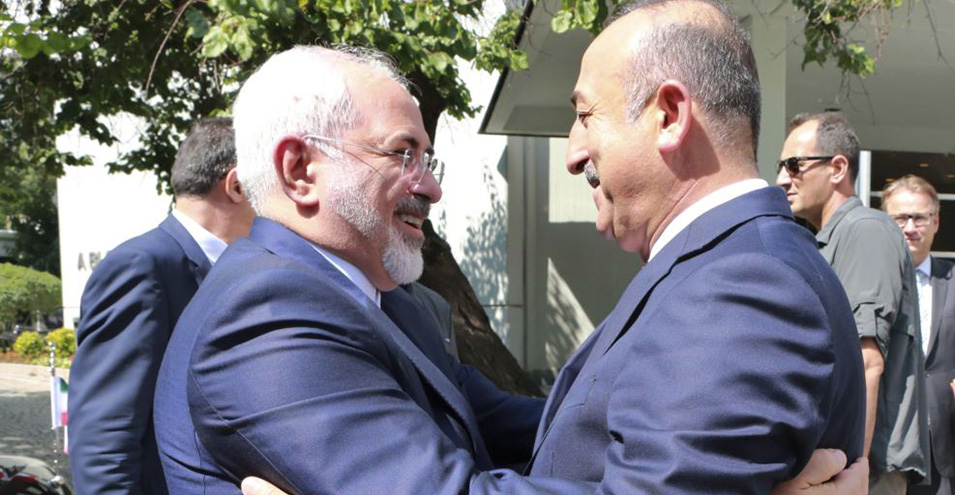
In recent days, Iranian and international media have speculated extensively about Hassan Rouhani’s trip to New York to participate in the 74th session of the UN General Assembly. Attention has been focused less on Rouhani’s recent speech about the “Hormuz Peace Initiative” and more on multiple interviews given by Mohammad Javad Zarif to various American media outlets. In particular, the points he raised in his conversation with CNN’s veteran presenter Christiane Amanpour.
Ms. Amanpour wrote on Twitter quoting Zarif: “Rouhani is willing to meet with Trump on the condition that Trump creates the conditions for all sanctions to be lifted in exchange for comprehensive inspections (Iran’s nuclear policy).” Mohammad Javad Zarif, in clarifying this tweet, wrote that his proposal was Iran’s acceptance of the Additional Protocol by the Iranian Parliament “in exchange for lifting sanctions from the U.S. Congress.” He also explained to site Alef that “Iran has proposed (faster implementation of) two reciprocal commitments from 2023 in the JCPOA.” Zarif also said in his conversation with Amanpour that “if the United States immediately fulfills its commitments, a meeting will take place within the 5+1 framework.”
“On the Brink of a Very Bad Deal?”
Statements by Araghchi to the Independent also drew media attention, saying: “If Trump returns to the nuclear agreement, we will meet with America within the 1+5 framework.” Meanwhile, another statement drew attention: a tweet from Hossam al-Din Ashna, Rouhani’s advisor: “The President is on the brink of carrying out a difficult mission assigned by the Iranian people.”
Where does the difficulty of Rouhani’s mission stem from? What is this mission and how likely is it to succeed? Will some positive signals in Zarif and Rouhani’s statements be rendered ineffective in the shadow of statements and hard-line nuclear positions of power? Ibrahim Raisi, the head of the judiciary, said shortly after Zarif’s remarks: “The strategy is resistance and there will be no negotiations at any level.” And Mehdi Mohammadi, who is recognized among the principalist faction as a nuclear expert and is not unaware of the behind-the-scenes discussions of hard-line nuclear power, tweeted: “We are on the brink of a very bad deal; unless Mr. Rouhani has learned something from the JCPOA experience.”
Thus, the mission referred to by Rouhani’s advisor resembles an equation with multiple unknowns, which from the perspective of experts, has one end in the leadership and the Islamic Revolutionary Guard Corps and the hard core of power in Iran, who have so far been staunchly opposed to negotiations with America, and especially with the Trump administration. The other end of the equation is Donald Trump, the President of the United States, and policymaking institutions in this country, which also do not necessarily speak with one voice.
Will Trump Back Down?
But to what extent does Trump’s behavior so far leave room for hope for the Islamic Republic? He has shown that America is not seeking a military option against Iran and in the future may no longer seek to become involved in the Middle East. However, at the same time, he has intensified pressure on Iran. The sanctioning of the Central Bank was among the latest of America’s maximum pressure moves. But whether the intensification of sanctions will be effective in the short term and will move the hard core of power in the Islamic Republic toward flexibility remains a question. Is Trump’s motivation to stand before the cameras with Hassan Rouhani strong enough that he is willing to give a positive response to Iran’s Foreign Minister’s message and take a step back?
If Trump actually backs down and at least lifts some sanctions, will Ayatollah Khamenei give the green light to Rouhani to, for example, exchange more than a few sentences with Trump at one of the corridors of the United Nations beyond his “conversation” phone call with Obama? Does the faction that holds power in Iran really want to give the initiative to start negotiations with America to the Rouhani government?
Along with these, other questions are raised. If Western countries collectively come to the conclusion that Iran is responsible for the attack on Aramco facilities, how much can Iran’s President and Foreign Minister maneuver at the UN with the slogan “Hormuz Peace”? So far, alongside America and Saudi Arabia and some analysts in Germany, British Prime Minister Boris Johnson has formally stated that there is a high probability that Iran is responsible for this attack.
An Opportunity That Will Be Lost?
French President Emmanuel Macron, while not directly pointing the finger of accusation at Iran, has said that the September 14 attack on Saudi oil facilities has created more instability in the region and has not only not helped a meeting between Iran and American leaders, but has “made the matter worse.” Nevertheless, he, who has taken the initiative to “resolve” the crisis between Iran and America, has expressed hope that “something might happen.” He is pursuing intensive negotiations separately with Trump and Rouhani.
Hassan Rouhani has said about his activities in New York that he intends to “hold a meeting at the level of foreign ministers between Iran and the 1+4 countries to review “nuclear issues and reduction of JCPOA commitments.” He also intends to give several speeches and interviews with major American media outlets. Meetings with the UN Secretary-General and leaders of France, Britain, Japan, Switzerland, Spain, Iraq, Sweden, and Pakistan are also among his plans.
Will the world witness Iran and America’s initiative and flexibility in reducing tensions and moving toward achieving at least some agreement in these meetings and interviews? Or will it be an opportunity that, like previous opportunities, will be lost?