Dog Killings in Kahrizak: From Denial to Threats
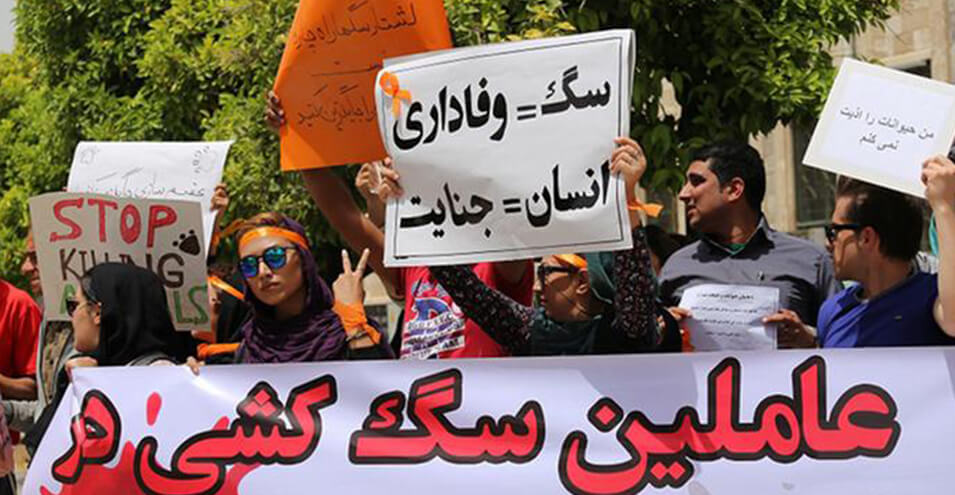
Denials, justifications, and explanations regarding animal cruelty continue. Police have called themselves responsible for animal care and said they will arrest the person who published the video of dog killings. Animal rights supporters have submitted a petition calling for humane population control of dogs.
Protests by animal welfare groups against the killing of dogs with acid injections in Kahrizak continue, but officials continue to deny the issue. Hossein Rahimi, Tehran’s police chief, says the person who published images of dog killings and wounded public opinion will soon be arrested. He simultaneously announced that police will deal with any form of animal cruelty and “causing disturbance to animals” and asked the public to report any instances of animal abuse to police.
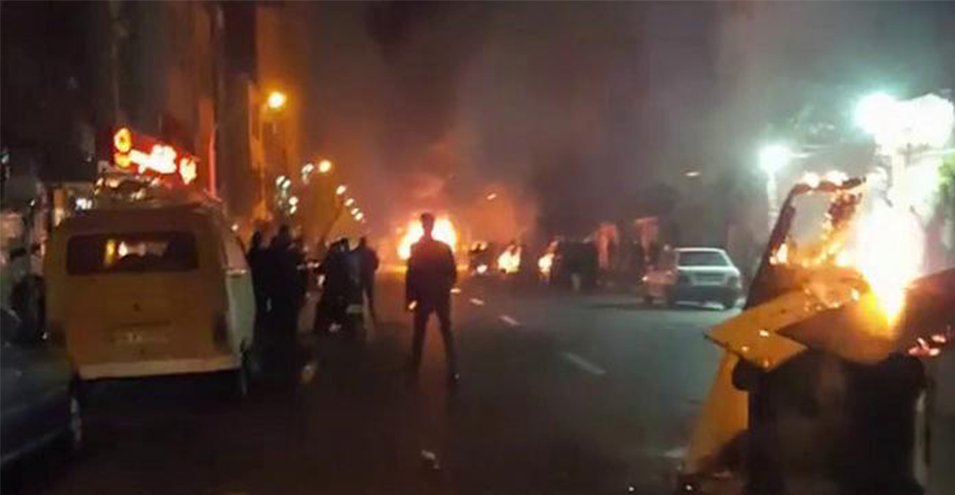
This occurred while a gathering of those protesting animal cruelty in front of Tehran City Hall was accompanied by the arrest of several protesters. Police said the gatherers did not have permission and also chanted insulting slogans against officers. Protesters held another gathering in front of the Kahrizak City Hall that ended peacefully.
Shahrbanu Amani, a member of Tehran City Council, writes that this gathering was the right of protesters because citizens’ feelings have been wounded by animal killings. She also called for identifying those who attacked the peaceful gathering of people.
In a video published on August 15 on the internet, officials are seen injecting acid into stray dogs and killing them. It is said the incident took place in Kahrizak.
Mohammad Reza Tabesh, head of the parliament’s environmental faction, referring to the recurrence of dog killings in Iranian cities, has complained about government and judiciary delays in presenting a bill to prevent animal cruelty. According to this bill, prepared a year and a half ago, torture and animal cruelty, assault and battery, confinement, mutilation, sexual abuse, abandonment of animals, conducting scientific experiments without permission, training for display use, and several other cases are prohibited and considered crimes.
Petition Against Dog Killings
Meanwhile, a group of animal rights supporters have prepared a petition addressed to environmental officials in Tehran Province and the capital’s municipality. The signatories of this petition have described the organized killing of stray dogs as deeply distressing to conscientious people and written: “We urge you to end these killings as soon as possible and use a more humane and appropriate method consistent with the nature and ethics of controlling the population of these loyal animals.”
The petition signatories, by proposing methods such as building more shelters, providing more assistance, and sterilizing stray animals, have declared their readiness to serve in improving the living conditions of dogs.
However, Ismail Nematollahi, mayor of Kahrizak, has denied animal cruelty and sterilization, saying: “We are not upset about the municipal collection that has been accused, but rather we complain about playing with the feelings of pure-hearted people and the delicate sentiments of the public whose viewing of the video has caused them disgust and distress.” Nematollahi has threatened to file a complaint against film actor Parviz Parastui for commenting on Kahrizak municipality.
Parastui had written among other things: “…if this animal is disturbing peace and comfort, the solution is to kill it? … I don’t know whose foot is on this animal’s neck, but I can only say it bears no scent of humanity.”
Pirouz Hanachi, mayor of the capital, says the dog killing video in Kahrizak is from two years ago and the relevant contractor has been dealt with. However, Elham Fakhari, a member of Tehran City Council, wrote on Twitter: “Whatever the date of the violation, the public’s and activists’ response to it is justified because killing animals is a crime.”
Arash Milani, head of the Urban Services Committee of Tehran City Council, also said: “Certainly I will pursue this matter to the end and those responsible for this tragedy within the municipal organization and its contractors will face serious organizational action.”
Critical Responses
On social media, the gathering for dogs has been viewed from another angle. Some have viewed the wave of protest against animal cruelty with suspicion and considered the issue as a distraction of public opinion from other societal realities. A citizen writes on Twitter: “If you cared about the killing of dogs in Kahrizak as much as you care about the killing of people in Kahrizak, maybe things would be very different now.”
Another user writes: “In this country nothing is in its right place. Some people went to protest for dog rights while the system itself treats them like dogs.”
One person wrote to the protesters: “…How many of you are unemployed, how many of you have been eating soup without meat for a while, how many of you know about your family’s debt?”
Another user, pointing to injustice and corruption in city management and poverty and hunger in corners of the capital, says: “Where are those who chant like this for dogs in support of humans? Where does this protest relate to civility?”
Nader Fattourechee, journalist and writer, has also called the protesters “pet lovers.” He says keeping dogs and cats in major cities is a “trend or gesture of modernization” of a small class and does not lead to changing society’s overall priorities or redefining animals. He addresses “those who prioritize humans over nature” in a tweet: “If your love for animals is not a gesture, you must also condemn industrial slaughter of animals for electricity and glitter of a luxury life rather than be enamored with a lifestyle stemming from the dimensions of industrial slaughter.”
Source: DW