Letter from a Imprisoned Female Activist in Iran on the Occasion of the International Day Against the Death Penalty
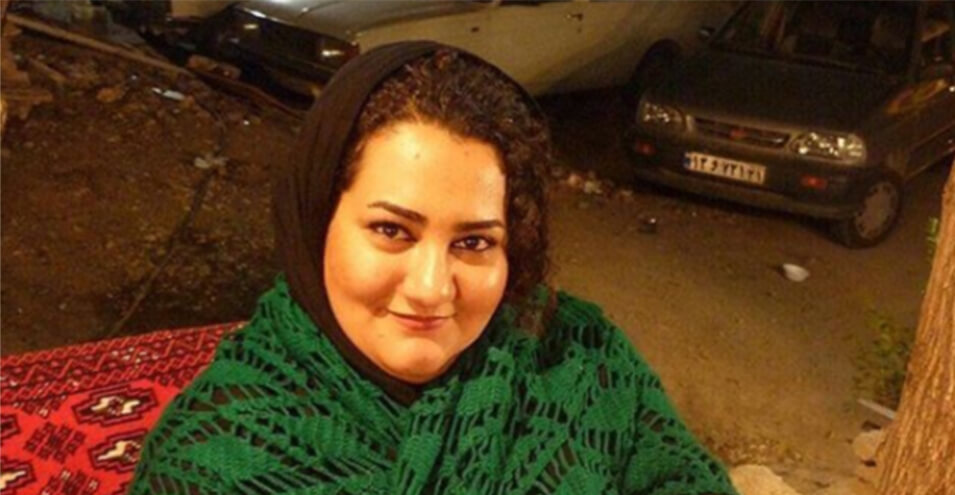
Atena Daemi, a human rights activist serving her sentence in Evin Prison, has written an open letter on the occasion of October 10, the “International Day Against the Death Penalty,” which corresponds to October 18 in the Persian calendar.
In a letter published on Wednesday, October 17 on social media, the human rights activist refers to her 25-day research on the Shargh newspaper and states: “There is certainly a deep connection between a government that has permitted retaliatory execution and people like me who have opposed these verdicts and have been summoned for questioning under the pretext of insulting sacred values and threatening national security, and the increase in the number of retaliatory executions.”
She, who according to her own account is concerned about the rights and welfare of human beings, writes in this letter that she has no affiliation with any political faction and is imprisoned solely due to her opposition to execution, retaliatory killing, violence, and her insistence on human rights. Atena Daemi states: “Whenever I become discouraged by the current conditions, I think to myself that perhaps this is part of the labor pains we are waiting for, but I wish we would not resort to every remedy to ease this pain, only to later mourn the birth of something unhealthy.”
During these 25 days of research and investigation into the Shargh newspaper, Atena Daemi encountered 66 reports of retaliatory executions and 26 reports of death sentences solely regarding common crimes. These news reports are published in the official and semi-official media of the Islamic Republic, while according to Atena Daemi, the statistics of secret executions of ethnic and religious minorities are not officially announced in any media.
In this letter, she also refers to the case of Mohammad Ali Najafi, the former mayor of Tehran, and states: “There is a deep connection between a government that uses the tools of suppression at its disposal and an official who commits murder due to personal and perhaps partisan interests, and who ultimately, under the pretext of the victim’s different religion or his relationships, justifies the killing and quickly becomes transformed into a hero.”
Ten October, seventeen years ago, the “World Coalition Against the Death Penalty” declared this day as the “International Day Against the Death Penalty.” The purpose of this action was to raise awareness among the world’s people about issues related to capital punishment and ultimately to abolish this punishment. Since then, a continuous process of abolishing this punishment has taken place in some parts of the world.
According to the latest report from Amnesty International, Iran has been among five countries with the highest number of death sentence executions in 2018, and it has been announced that in the last calendar year, a total of 253 executions were carried out in Iran, which is more than one-third of all recorded executions worldwide.
This human rights organization has stated in another report that Iran has been solely responsible for 97 executions of children under 18 years of age since 1990, which is equivalent to two-thirds of all such executions worldwide.