Resignation and Arrest of Head of Privatization Organization
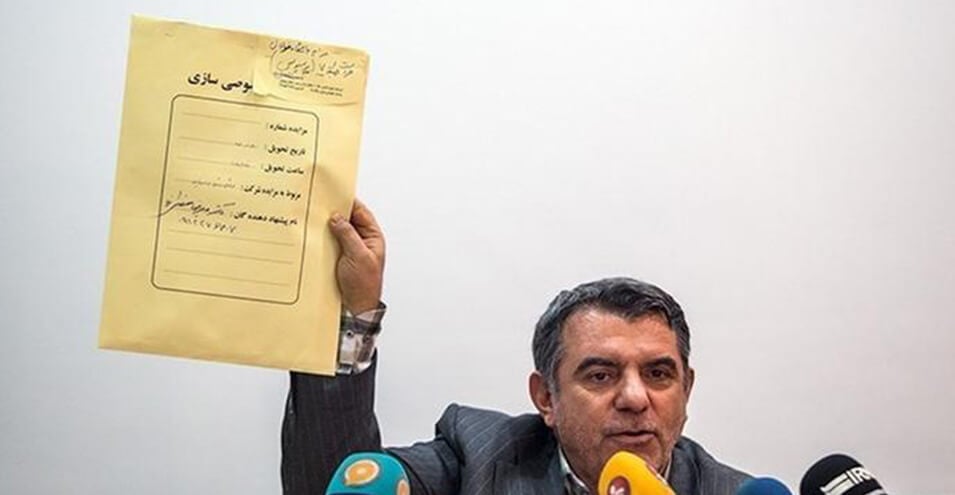
Abdullah Pouri Hosseini, head of Iran’s Privatization Organization, was arrested by judicial order just hours after being summoned to the country’s inspector general office and after news of his resignation was announced. Hosseini was accused of fictitious dealings and underpriced transfer of state companies.
Ali Ashraf Abdullah Pouri Hosseini, former head of Iran’s Privatization Organization, resigned on Wednesday, the 23rd of Mordad after being summoned to the inspector general’s office. Hours after his resignation was accepted by the minister of economy and finance, news agencies close to the Revolutionary Guards reported his arrest. Farsi News Agency, which covered the resignation with the headline “dismissal,” quoted Jafar Sobhani, an advisor to the Privatization Organization, saying: “Mr. Pouri Hosseini had resigned 18 days earlier.”
Nasser Saraj, head of the inspector general’s office, told media that the performance report of the Privatization Organization would be sent to competent authorities as soon as it was completed. Mohammad Javad Montazeri, Iran’s chief prosecutor, said in winter 2018 that Pouri Hosseini had been banned from leaving the country.
Abbas Jafari Dolatabad, former prosecutor of Tehran, told media in December 2018 that the judiciary would soon investigate the violations and corruption of the Privatization Organization. The head of the inspector general’s office also announced in February of the same year the creation of heavy cases regarding privatization, citing the transfer of “Dasht-e Moghan Agriculture and Industry” to an individual who had 1,350 billion tomans in bank debts as an example.
Pouri Hosseini was also accused by parliament representatives of abuse of power. Among them, Ahmad Alireza Bighi, representative of Tabriz, said he transferred the Ardabil meat complex to the private sector fictitiously while he himself was the real buyer.
Among the controversial actions of the Privatization Organization was the transfer of Haft Tappeh sugar company with a down payment of 6 billion tomans to two companies, Zeus and Aryak. Following this transfer at ten percent of the price, payment of workers’ wages and insurance premiums fell further behind, and their strikes and protests were answered with arrests and dismissals.
The transfer of Hepco Industrial Company in Arak and Ahvaz Steel to the private sector was also accompanied by workers’ gatherings and protest reactions against workforce reductions and layoffs, resulting in employee arrests.
Abdullah Pouri Hosseini previously stated that he implemented Article 44 of the Constitution carefully and seriously and had no violation in this matter.
According to this article, Iran’s economic system is divided into three sectors: public, cooperative, and private. Ayatollah Khamenei announced the general policies of Article 44 in 2005, and a year later, ordered the government to transfer 80 percent of state sector shares to the private sector.
Pouri Hosseini was the head of Hassan Rouhani’s election campaign staff in East Azerbaijan during the 2013 presidential election.
Source: DW