Sanctions Punish the Sick
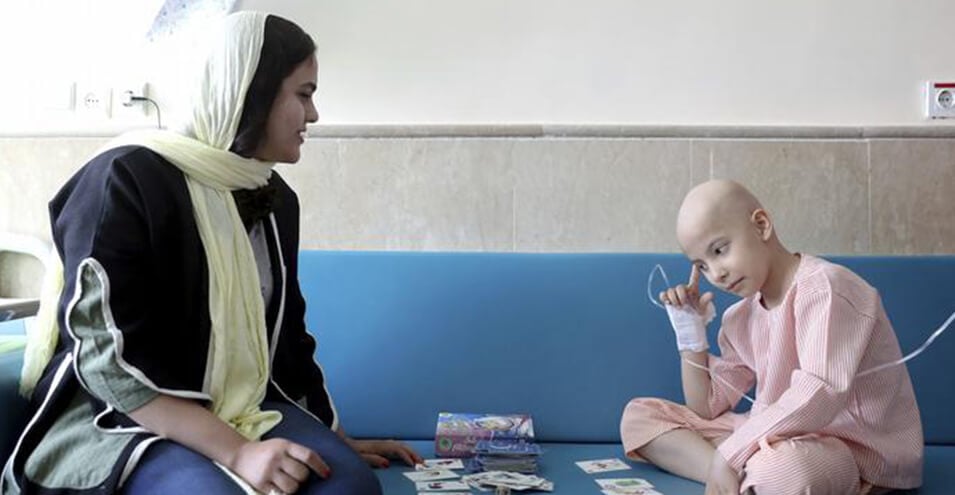
Taha Shokouri is playing in the playground of Tehran’s Children’s Cancer Hospital. He doesn’t know that his treating physicians at Mahak Hospital need medicines required for his chemotherapy. Mohammad is eight years old. “AP reporter Mohammad Naseeri’s report on drug shortages in Iran begins this way.
Iran’s economic situation has become dire following the United States’ unilateral withdrawal from the nuclear agreement and the reimposition of sanctions against the country.
With the collapse of the rial’s value, the cost of imported medicines has skyrocketed. Domestically produced drugs have also become more expensive. Paying for treatment has become a serious challenge for many Iranians.
United Nations data shows the average income of Iranians is $450 per month. However, this figure was calculated using the 4,600 toman exchange rate for the dollar. Over the past year and several months, the dollar rate has increased more than threefold, and the average income of Iranians has decreased by two-thirds.
The Associated Press has written that many Iranians hold Donald Trump and his maximum pressure policy on the Islamic Republic responsible for this situation.
In this situation, the healthcare system lacks the capacity to support low-income and disadvantaged segments of society.
Taha’s mother, Leila Taghizadeh, told an AP reporter that a single chemotherapy session for her son costs more than one thousand dollars at a private hospital.
Mahak Charitable Hospital has become this family’s saving grace. Mahak has covered all of Taha’s medical expenses. His 30-year-old mother said the Taha family is indebted to the doctors and staff of this hospital. Leila Taghizadeh told the AP reporter: “Without their help, we couldn’t have afforded the cost of my son’s treatment. My husband is a simple worker and my son’s illness is a serious and very expensive disease.”
Mahak Hospital is run with charitable donations and currently provides treatment for 32,000 children and adolescents under 16 years old from across Iran.
Dr. Arasb Ahmadian, CEO of the Mahak Charitable Foundation, told the Associated Press: “Our biggest concern is the cutting off of financial channels with the world. With America’s financial sanctions against Iran, there is no way to even pay aid to Iranian charities. Ahmadian acknowledged that he is gradually losing hope. He said: “Medicine must be accessible to everyone. There must be a solution in the banking system for purchasing medicine.”
After the signing of the nuclear agreement between Iran and the West and the lifting of international sanctions against the country, many Iranians expected to have a better life ahead. However, now, despite the emphasis of U.S. government officials that food and medicine are not on America’s sanctions list against Iran, U.S. financial sanctions on the Islamic Republic have in practice made trade with the outside world—even for purchasing medicine or raw materials for drug production—impossible.
Iran emphasizes that it produces approximately 95 percent of its required medicines domestically and even exports some of its products to neighboring countries. However, this country needs medicines for specific illnesses.
Now these medicines have become scarce. Many prefer not to visit state hospitals because they don’t have the ability to stand in long queues. State hospitals are not in good condition. Last week, Iran’s Health Minister Saeed Namaki announced that the ministry under his supervision “has no money at all and is going through a very difficult year.” Namaki said: “When we don’t sell oil, we who depend on it run out of money.”
Long queues can be seen every day in front of the 13 Aban pharmacy. This pharmacy on Karim Khan street is the hope of those looking for rare medicines for sick family members.
HamidReza Mohammadi, who is 53 years old, is looking for medicines for his wife and daughter, both of whom suffer from muscular dystrophy. He told an AP reporter that the situation wasn’t as bad as this two or three months ago.
Peiman Kiavanfar, who is an arbiter, says the purchasing power of many Iranians has decreased and they can no longer buy foreign medicines because the price of foreign drugs has sometimes increased three to four times, so many now buy domestically produced medicines.
Those who still have the ability to pay for foreign medicine prices mostly turn to the black market. Like 23-year-old student Mahmoud Alizadeh, who is searching for his mother’s medicines on Nasser Khosrow Street. His 24-year-old mother has MS. He told an AP reporter that without medicine, his young mother would be paralyzed. He, who paid three times more than last spring’s price for his mother’s medicine, said: “I don’t understand who Donald Trump imposed these sanctions against. These sanctions punish the sick.”
Source: DW