Death Toll from Protests in Shahr-e Rey “Reaches 100 People”
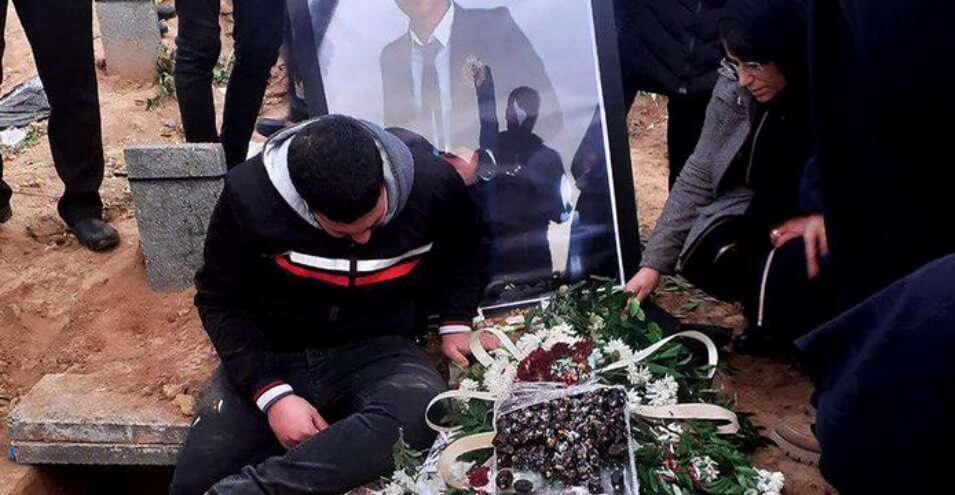
Iranian authorities’ silence regarding the number of deaths in recent protests continues. Nevertheless, details have emerged suggesting that over 100 people were killed in Shahr-e Rey alone, with 156 bodies taken to the Behesht-e Zahra mortuary.
The Kaleme website, close to Mir Hossein Mousavi, has learned from Behesht-e Zahra officials that 156 bodies of victims from Iran’s recent protests have been transferred to the cemetery mortuary and another 80 bodies have been sent to provincial cities.
The Kaleme website reported on Saturday, December 9 (November 30) that from reliable sources it learned that the extent and severity of suppression by Revolutionary Guards and plainclothes security forces in Shahr-e Rey was very widespread. According to this report, the total number of deaths in Shahr-e Rey alone is approximately 100 people.
Regarding details of the death toll, the website writes: “In Shahr-e Rey at least 5 people, in Kahnz district 17 or 20 people, in Ferdowsieh Amiriyeh and Vahidieh districts 10 or 13 people, in Malard district 8 people, in Qal’eh Hassan Khan 8 or 10 people, in Yousef-Abad Sarafi 6 people, on Saveh Road 10 or 12 people, in Islamshahr 8 or 10 people, between Malard and Shahr-e Rey including villages of Lam-Abad, Esfand-Abad and Bekeh approximately 12 or 14 people, and in Akbar-Abad and Vojah-Abad more than 20 of our fellow citizens lost their lives from direct fire by military forces or the use of automatic fire, bringing the total death toll from people’s protests in Shahr-e Rey to at least over one hundred people.”
According to the Kaleme report, 16 protesters were also killed in Rudehen by gunfire from military forces.
Kaleme concluded its report by calling on all responsible bodies, especially representatives of parliament from these regions, to “persistently and seriously pursue the punishment of commanders and perpetrators of direct shooting at people and the killing of our fellow citizens and hold them accountable to the nation.”
The Kaleme website’s Telegram channel reported on Thursday, December 6 (November 28), citing statements from “an informed source,” that the recorded number of victims from Iran’s recent protests was 366 people.
Absence of Official Statistics
Iranian Islamic Republic authorities have not announced the number of deaths in protests two weeks after Iranians took to the streets over gasoline price increases. These officials also do not accept statistics released by international bodies. Some officials have said that 7,000 protesters have been arrested.
Amnesty International has so far released three reports on the death toll from recent protests.
In its third report, Amnesty International stated that the death toll from Iran’s protests is at least 161 people. According to the organization’s estimates, the actual number of deaths is higher than this figure. Amnesty International told Deutsche Welle that this number will be updated in coming weeks.
Amnesty International also called on the international community to hold Iranian authorities accountable regarding these events.
Gradual Increase in Death Toll from Iran’s Protests
Raha Bahreini, a human rights lawyer and researcher at Amnesty International, told Deutsche Welle that the number of deaths is considerably higher than the 161 people announced by Amnesty International.
To complete its information and advance the process of fact-finding and justice, Amnesty International has published appeals on its Telegram, Twitter, and Instagram accounts, inviting families of victims and all those with information about the deaths and arrests of protesters to contact this international human rights organization.
The Amnesty International human rights lawyer added that in addition to victims’ relatives, eyewitnesses, neighbors, hospital staff and employees of forensic medicine offices, civil registration offices and cemeteries can all assist this organization “in fact-finding.” Raha Bahreini further emphasized from Amnesty International that “Amnesty International always protects the identity of its sources.”
Source: DW