Unprecedented Warning Over Strait of Hormuz and Threat to Completely Close Persian Gulf with Mines Amid Rising US Tensions
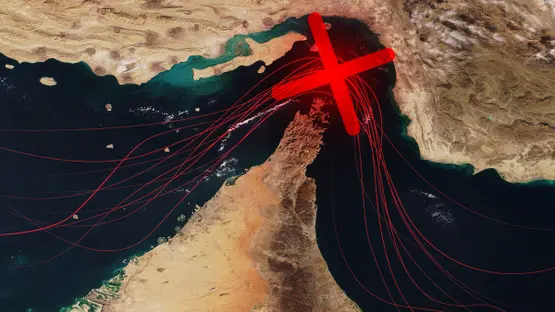
An unprecedented warning regarding the Strait of Hormuz has been issued as threats to completely seal off the Persian Gulf with naval mines, coinciding with escalating tensions between Iran and the United States, have intensified global concerns.
With the deadline set by Donald Trump for the complete reopening of the Strait of Hormuz approaching, tensions between Tehran and Washington have entered a more sensitive phase; a phase that could have consequences beyond a bilateral confrontation and could also affect global energy security.
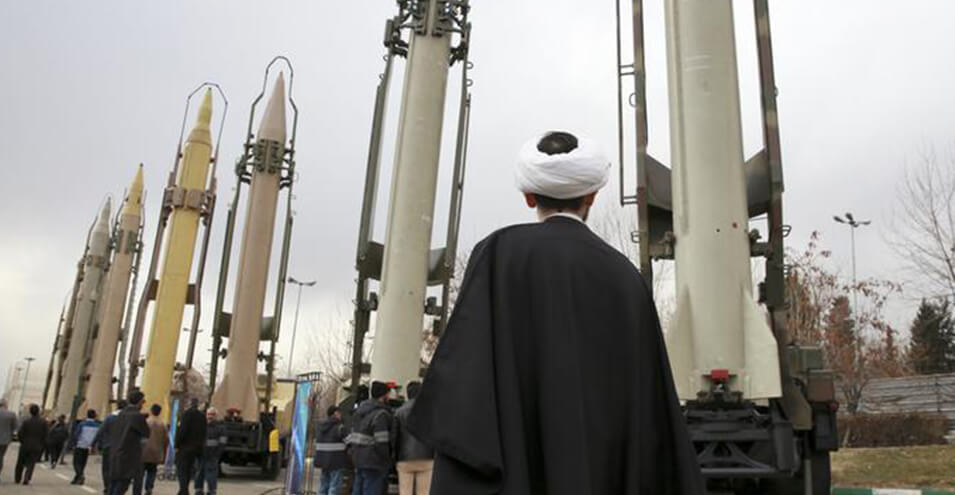
Trump warned early Sunday, March 22, corresponding to Farvardin 2, that if Iran does not completely and without threat open the Strait of Hormuz within 48 hours, the United States will target this country’s critical infrastructure and even spoke of destroying power plants. These statements quickly prompted reactions from Iran’s security institutions.
In response to this warning, Iran’s Supreme National Security Council issued a strongly worded statement declaring: “Any attempt by the enemy to attack Iranian coasts or islands will result in all entry passages and communication lines in the Persian Gulf and coastal areas being mined with various types of naval mines, including swimmer-deliverable mines that can be deployed from shores.”
The council also warned of the consequences of such action, adding: “In that case, the entire Persian Gulf will effectively experience a situation similar to the Strait of Hormuz for extended periods, and this time, alongside the Strait of Hormuz, the entire Persian Gulf will be practically closed.”
Such a threat, if realized, could seriously disrupt one of the world’s most vital energy transit routes. Another section of the statement reads: “The only way to pass through the Strait of Hormuz for non-hostile countries is through coordination with Iran.”
This positioning demonstrates Tehran’s effort to exert greater control over this strategic waterway; a passage through which a significant portion of the world’s oil transits daily, and any disruption would quickly affect global markets.
Simultaneously, reports have emerged regarding increased military attention to Kharg Island; an island known as one of Iran’s most important oil export terminals.
Following heavy attacks on military targets in the region, speculation has emerged about the possibility of direct military action to seize or blockade the island. In this regard, “Lindsey Graham” said in a television program: “I tell President Trump: continue this path for a few more weeks. Take control of Kharg Island, where all of their resources for oil production are located. Take control of that island and let this regime gradually collapse.”
Alongside these developments, some reports suggest that the United States is considering options to increase pressure on Iran, including naval blockade or control of key oil export points. These measures, if implemented, could raise tensions to unprecedented levels.
On the other hand, the Supreme National Security Council’s reference to past experiences, including extensive failures in clearing naval mines in the 1980s, demonstrates that if a naval confrontation occurs, its consequences could be long-term and costly.
International experts warn that any disruption to the Strait of Hormuz or expansion of conflict to the entire Persian Gulf will affect not only regional security but also the global economy. Rising energy prices, supply chain disruptions, and market instability are just some of the potential consequences of this crisis.
As both sides remain firm in their positions, the future of these tensions remains uncertain. However, what appears clear is that the Strait of Hormuz has once again become one of the world’s most sensitive points; a point where every decision could have consequences extending beyond regional boundaries.