Protests; Journalists Under Threat of Summons from Guidance and Intelligence Ministries
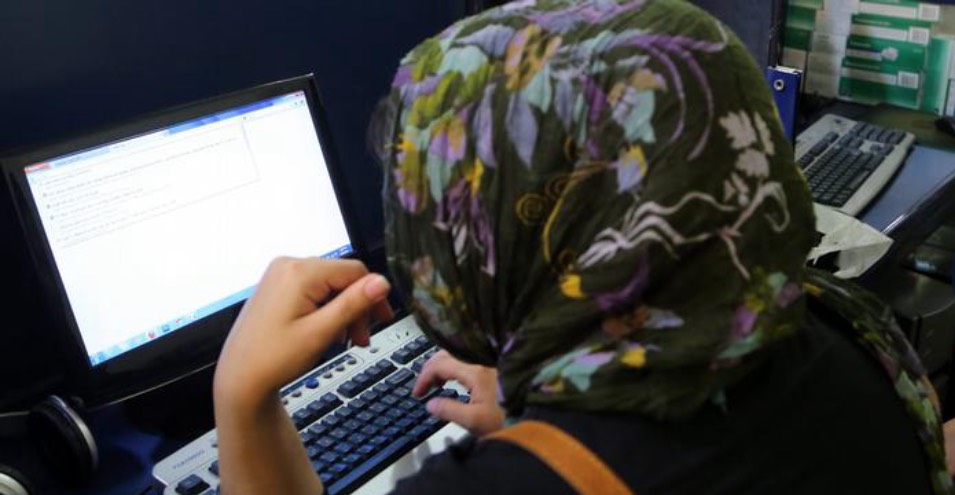
Human Rights Campaign in Iran reports that more than eight journalists have been summoned to the Ministry of Intelligence during recent public protests, and the Ministry of Guidance has also warned several journalists about their reports and tweets.
Media professionals inside Iran have faced summons, threats, and warnings since nationwide protests began in November. One journalist told the “Human Rights Campaign in Iran”: “Over eight journalists have been summoned to the Ministry of Intelligence’s follow-up office in the past week, and at the same time, the Press Deputy of the Ministry of Guidance has warned several journalists about how they publish articles, reports, and even brief tweets on Twitter.”
The aforementioned campaign writes, quoting the same source: “The journalists who were summoned were made to commit that they would ‘not be active on social networks about internet shutdowns, protests, and gasoline price increases, and would write in their own media within the framework of recommendations sent to the media. They threatened that any blackening and negative portrayal would be considered collusion with the enemy and is a crime.'”
Another source also told the Human Rights Campaign in Iran that before the protests began, representatives from the National Security Council held briefing sessions with newspaper officials: “…a one-sided session with no room for discussion, and in this session they talked about gasoline price increases and the possibility of protests in some areas, and that media should operate within the framework of the national information system and provided recommendations of this kind. During this time, they constantly call from the Press Deputy saying don’t use provocative headlines and write within the framework of the system, and most of the discussion is about headlines that need to be coordinated.”
The campaign obtained a memorandum issued by the Press Deputy of the Ministry of Guidance to media and newspaper managers, asking them to “not publish reactions from unrelated institutions and individuals to the gasoline issue and refrain from extending the topic of people’s gatherings to other subjects.” Media managers are called upon under this circular to avoid any analysis that would create a bipolar atmosphere in the country.
This is while the Ministry of Guidance, at the end of this same memorandum, has requested information dissemination about government predictions regarding addressing concerns about price increases of other goods.
One journalist told the campaign that media colleagues mostly don’t have internet access and can only open IRNA and ISNA news agencies: “What we see on the streets, like the highly securitized atmosphere of Revolution Square, has no place in our newspapers. Our observations and what is happening differs from what we are able and permitted to write. With the smallest thing, either the Ministry of Intelligence or the Press Deputy of the Ministry of Guidance contacts us…”
He added that they are not allowed to write anything about the deaths unless the officials themselves agree to interview: “…we are not allowed to go to hospitals and write about the injured, rumors, and information that exists these days. Now the internet may become free, but we journalists are never free when we cannot work and write.”
Mahdi Ahmadian, cartoonist for Arman Melli newspaper, also shared a cartoon on Twitter on Saturday, November 25, and wrote that the newspaper has received orders that no designs focused on gasoline prices will be published.
Mohammad Mosaed, an economic journalist who was arrested during the protests, on the second day of the protests examined the amount of front-page headlines and reports of 25 national newspapers and tweeted: “The extent to which the voice of a large section of society is reflected in media outlets that all receive paper subsidies, government advertising quotas, traffic projects, and dozens of other direct and indirect support from people’s pockets says a lot …”
Mosaed’s account was blocked after his arrest.
In the Ministry of Guidance’s memorandum to media outlets, it included: “Refrain from the manner of protests that creates consensus and imitation. News about protests should not be headline news… Don’t suggest the spread of gatherings… Instead of publishing multiple urgent news, news should be covered only in one report and the end of gatherings must be stated in every news item…”
A person named Sheikhzadeh, as a representative of the Ministry of Intelligence, made recommendations to media outlets in seven areas on how to cover protest news and what hashtags to use for news.
Mezgan Jamshidi, an environmental journalist, wrote on Twitter on November 20: “Don’t write, don’t design, don’t tweet, don’t ask, don’t speak, don’t gather, don’t sit, don’t stand, don’t block roads, neither streets nor deserts nor anywhere, don’t shout slogans, don’t hold placards, don’t strike, don’t demand, and mind the time and place which we never announce anyway, now go protest. If you did, then you’re a rioter…”
The Journalists Union of Tehran Province previously criticized briefing sessions and news coverage policies in a statement, writing: “Monitoring domestic media in recent days shows why there is no interest in them, because the audience rightfully perceives that written media have closed their eyes to societal events and bury news between pages so deeply that they are accused of censoring and covering up the truth…”
Yashar Soltani, a journalist, after internet reconnection, explained the current situation in a meaningful tweet: “There is a story that Molla Nasreddin beat his wife every day. They asked him why he beats her for no reason. He said I cannot bring her food, take her traveling, buy her clothes or fulfill my marital duties, so I beat her so she doesn’t forget I am her husband…”
Source: DW