Possibility of Bread Price Increase Coinciding with Dairy Price Hike
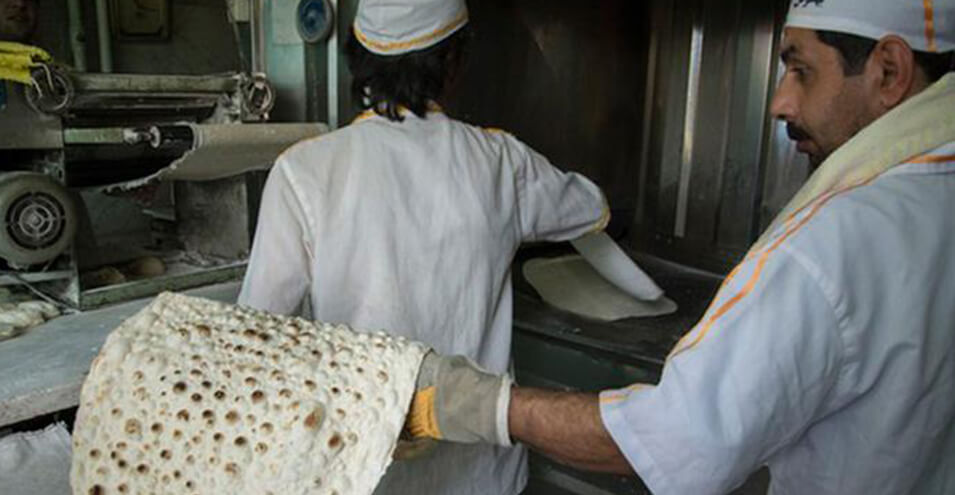
The secretary of the Market Regulation Headquarters announced “three scenarios” for a 25 percent increase in bread prices in Iran. However, the government spokesperson assured that such an event will not occur. It was also stated that the government has approved a 15 percent price increase for widely consumed dairy products.
Contradictory reports are circulating about price increases for everyday bread consumed by Iranians. Today, people are complaining about the poor quality of bread from bakeries, and bakery owners are protesting rising electricity and fuel prices. There are discussions about scenarios regarding bread price increases, which the government spokesperson is denying. In any case, a bread price increase could spark widespread protests.
On Sunday, July 14, Tasnim News Agency, citing Abbas Qobadi, secretary of the Market Regulation Headquarters, reported that “three scenarios” exist regarding a possible 25 percent bread price increase, which are “agreed upon and this plan will be presented to the cabinet for approval in the near future”.
Yedallah Sadeqi, head of the Tehran Province Industry, Mines and Trade Organization, also referring to these scenarios in a press conference, said: “The government is reviewing these scenarios to reach a conclusion on bread prices.”
According to him, one scenario is that “flour prices have increased and this would cause a change in bread prices”. Another scenario, according to him, is that the government itself directly subsidizes wheat and flour, and as a result, bread prices would not increase.
However, he added: “Overall, no clear conclusion has been reached in the government regarding changing bread prices, and flour pricing and the final prices of various types of bread have not been finalized.”
Yedallah Sadeqi also announced the government’s approval of a 15 percent price increase for widely consumed dairy products.
Simultaneously with this news, Ali Rabiei, government spokesperson, denied these reports in a meeting with the media. According to ISNA News Agency’s report from him, bread subsidies have not been eliminated in any way and “will not be eliminated”.
Bread is a staple food on the Iranian people’s table. In conditions of sanctions and the increasing inflation of essential goods, the price increase of this single item could add to the intensity of public dissatisfaction with the current situation.
In 2015, the Chamber of Guilds announced that bread prices would increase by up to 15 percent from the first of December. This news was met with widespread protests, and shortly thereafter, the head of the Chamber of Guilds reversed it. He said that on the order of the Minister of Industry, the bread price increase across Iran was temporarily suspended.
Ali Fazeli, head of the Chamber of Guilds, had said that following “protests by consumers and producers, the increase in bread prices and any changes have been suspended pending further review by the Market Regulation Headquarters work group (Flour and Bread Council).”
At that time, this apparent retreat was met with criticism from some officials. Khodamrad Safaei, head of the Islamic Association of Baker Workers, accused officials of not telling the public the realities of bread price increases. He said: “Given the reduction in bread dough weight in the new circular, bread prices have increased by at least 32 percent”.
Some officials also pointed out that consumers almost never buy bread at the approved prices, and bakeries increase prices up to double using various pretexts, and shortchanging and poor bread quality are problems that people complain about.
Removing Any Subsidy: A Serious Challenge for Iranian Governments
Bread prices increased significantly once again in the early days of Hassan Rouhani’s government coming to power. The head of the bread producers and exporters union announced a 30 percent bread price increase in December 2014. Farsi News Agency even assessed the increase at 40 percent.
ILNA News Agency reported on this, writing that the bread price increase is a consequence of the implementation of the “plan to reform the flour and bread production and supply process”. This news agency also pointed out another matter: “This price increase was implemented after a delay of 30 months, and the bread price increase should have taken place during Mahmoud Ahmadinejad’s government”. In Iran’s ailing economy, removing any subsidy related to essential goods such as bread, electricity, and fuel can become a major challenge.
However, bread inflation has another side; the business situation of bakeries. They are accused of shortchanging, but in response they complain that costs have increased and prices should increase accordingly.
Source: DW