Achaemenid Cuneiform Tablets Unveiled After 84 Years Away
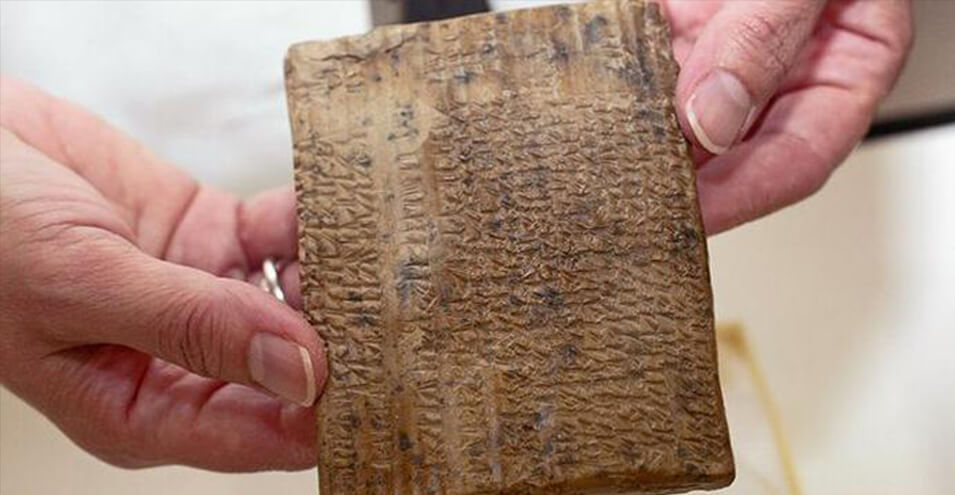
More than 1700 Achaemenid cuneiform tablets that had been entrusted to the Oriental Institute of the University of Chicago in the United States for study and decryption have been returned to Iran. Researchers consider the inscriptions to contain important information from the written history of the Achaemenids.
1783 Achaemenid cuneiform tablets have been returned to Iran after 84 years and, according to the director general of the National Museum of Iran, have been entrusted to the museum. According to ISNA news agency, these tablets arrived in Iran on the evening of the 8th of Mehr and will be unveiled at the National Museum of Iran on Wednesday, the 10th of Mehr.
Gabriel Nokhandeh, director of the National Museum of Iran, stated that to return the Achaemenid cuneiform tablets, Professor Christopher Woods, the head of the Oriental Institute at the University of Chicago, personally traveled to Tehran to hand over this deposit to Iran’s museum.
Researchers consider these inscriptions to be valuable documents for decrypting an important section of the written history of the Achaemenids.
How did the stone inscriptions end up in America?
In the years 1312-1313, the Oriental Institute of the University of Chicago was conducting archaeological excavations at Persepolis. During the excavations by this group, among other items, tablets were found which, with the approval of the Iranian government, were transferred to the Oriental Institute of the University of Chicago in 1316, though on loan. The agreement was that after completing studies on tens of thousands of tablets, they would be returned to Iran.
Experts date these inscriptions to the reign of Darius I and approximately 500 years before the birth of Christ.
After the Iranian Islamic Revolution, the first consignment of these tablets was returned to Iran. The second consignment, which arrived in Iran about 13 years ago, made headlines. Two Jewish families who viewed these tablets from a commercial perspective and believed they were Iranian assets in America that should be auctioned, sought their confiscation. According to the plaintiffs, millions of dollars in proceeds should have been paid to the families of victims of the bombing of the Holy Temple (Jerusalem) in 1997.
In Esfand 1394, the fourth American court ruled in favor of Iran in the case of the Achaemenid tablets.
Valuable Historical Information in the Achaemenid Cuneiform Tablets
Dr. Abdolmajid Orfai, a researcher and specialist in ancient Akkadian and Elamite languages who has followed the Achaemenid tablets since his student days until the court ruled in Iran’s favor, explained the history of these cuneiform tablets in an interview with “Hamshahri Online” and highlighted their subject and significance.
From a scientific perspective, this researcher considers the tablets to contain valuable information; ranging from references to Iranian, Babylonian, and Egyptian names to religious ceremonies, the Achaemenid payment system, and financial documents. Orfai points in this interview, for example, to “two categories of inscriptions in which ‘annual reports’ are written,” “just like a daily ledger.” This researcher mentions, for example, the subject of women in that period and says: “There are interesting topics regarding the payment of wages or rewards to them. Women are workers who, due to their specializations, even earn higher wages than men. There are also 10 women who are heads of work groups and receive high wages.” Dr. Orfai also mentions the name of a prisoner who “receives a wage, because he too needs to eat.”
Iranian officials have expressed hope that other tablets will also be returned to Iran soon.
Last Mehr, coinciding with Hassan Rouhani’s return from the United Nations headquarters, an Achaemenid soldier who had left Iran about 80 years ago was also returned to Iran.
Source: DW