Sri Lanka Revises Death Toll from Terrorist Attacks
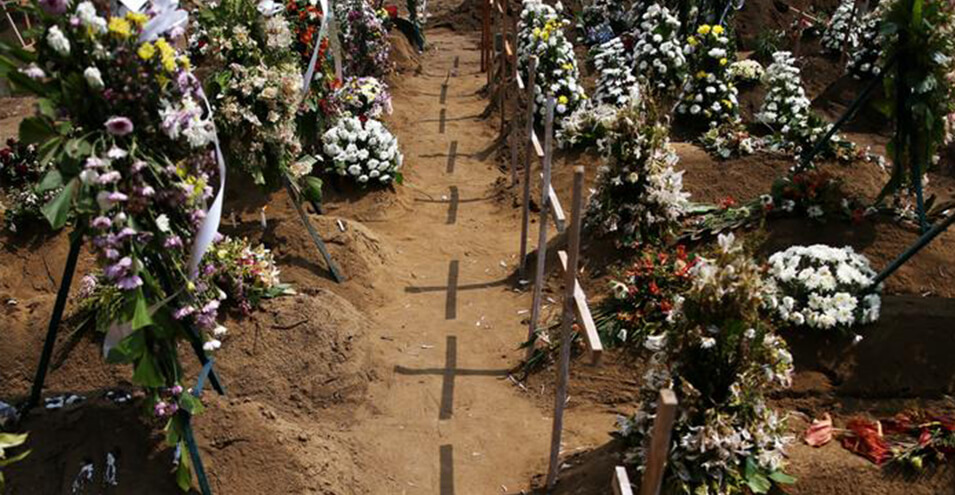
Sri Lankan authorities say the number of victims from Sunday’s Easter terrorist attacks is approximately 100 fewer than previously reported figures. In suicide bombing attacks on several hotels and churches in two Sri Lankan cities, at least 250 people have lost their lives.
According to Sri Lankan government officials, the examination of victims’ bodies from the Easter terrorist attacks, completed Thursday evening on April 25, has revealed that the number of victims is at least 100 fewer than previously announced figures.
The death toll from suicide bombing attacks on four churches and three hotels in Colombo, Sri Lanka’s capital, and in Batticaloa in the eastern part of the country had previously been reported at 360 people.
Sri Lanka’s Director General of Medical Services said it is now confirmed that the number of deaths from these terrorist attacks, which occurred almost simultaneously, was between 250 and 260 people.
According to “Tagesthau,” the website of German television network One, Sri Lanka’s Ministry of Health stated that the error in reporting the death toll from Sunday’s explosions was due to many of the bodies being dismembered and fragmented.
Most of the victims of the Easter suicide attacks were Sri Lankan citizens, but as a result of the explosion at one of the capital’s luxury hotels, at least 38 foreign tourists also lost their lives.
Following Sunday’s events that also left at least 500 wounded, Sri Lankan security forces have faced considerable criticism and are accused of ignoring security warnings from several countries about the occurrence of terrorist attacks.
Accepting Responsibility and Defense Minister’s Resignation
Vipulananda Fernando, Sri Lanka’s Defense Minister, said Indian security forces had warned the country several days before the suicide bombings, and ministry personnel were following up on these warnings when the explosions occurred. He nonetheless accepted responsibility for his ministry’s negligence and resigned from his position.
The terrorist group Islamic State (ISIS) claimed responsibility for the attacks by releasing a video of eight people, seven of whom are masked. The news site “Amaq,” affiliated with the group, stated that the target of Sunday’s suicide attacks were “citizens of anti-ISIS coalition countries and Christians.”
The Sri Lankan government announced that at least 9 people, including one woman, were involved in the Easter suicide bombings, of whom eight have been identified so far.
Persecution of Muslim Minority
Following Sunday’s terrorist attacks, Sri Lanka’s Muslim minority has faced severe pressure. Muslims living in Sri Lanka are predominantly followers of the Ahmadiyya sect, and many Shiites and Sunnis consider them apostates.
According to reports, many Muslims living in Sri Lanka have been targeted by angry citizens in recent days and forced to leave their residences. Many Ahmadi sect followers are migrants from Pakistan, Afghanistan, Yemen, and Iran, countries where they have not been safe from persecution and harassment.
Sri Lankan police say that not all individuals suspected of involvement or complicity in Sunday’s terrorist bombings have been arrested. This has caused concern among citizens about further attacks.
Security forces have released the profiles of three men and three women as suspects for complicity in the Easter terrorist operation and have asked the public to provide information about them. However, no details have been published regarding the role and nature of these individuals’ connection to the bombings.
Sri Lankan police have arrested 76 people on suspicion of involvement in recent terrorist bombings. One of these individuals was apparently the father of two suicide bombers and may have aided his sons.
Warnings from the United States and Israel
The U.S. Ambassador to Sri Lanka warned of new terrorist attacks in a Twitter message and asked citizens to refrain from attending churches and participating in large gatherings over the weekend.
The Israeli government has also taken the threat of terrorist operations in Sri Lanka seriously and asked Israeli citizens to leave the country as soon as possible.
The Catholic Church in Sri Lanka has canceled all religious ceremonies in Colombo until April 29. Sunday’s terrorist attacks will have a negative impact on Sri Lanka’s growing tourism industry, although the extent of this impact is not yet clear.
Last year, 2.3 million tourists visited Sri Lanka, and this figure is said to be four times the number of tourists a decade ago.
Source: DW