Death Sentence Overturned by Supreme Court, ‘Varisha Moradi’ Under the Blade of Justice
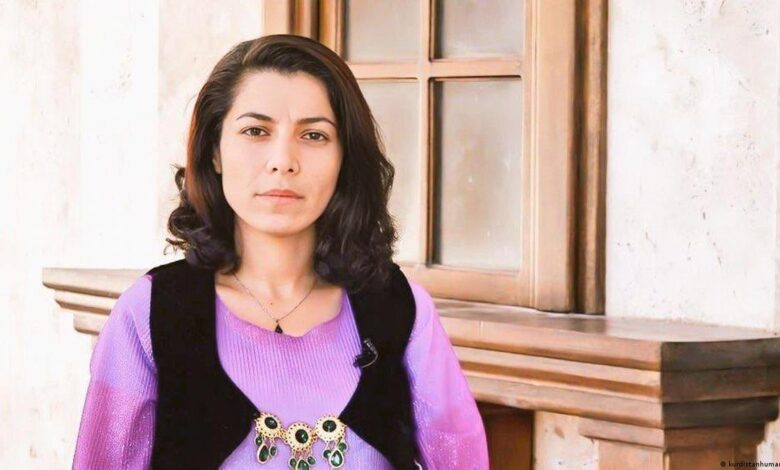
The Supreme Court, while overturning the death sentence of ‘Varisha Moradi’, emphasized that the investigation was incomplete, yet her fate remains shrouded in ambiguity.
Today, December 10, corresponding to Azar 19, 1404, the Supreme Court of the country annulled the death sentence issued against Varisha Moradi, a Kurdish political prisoner, due to deficiencies in the investigation and failure to observe legal procedures. According to statements by ‘Mustafa Nili’, Varisha’s defense counsel, the charges that formed the basis for the death sentence were never formally communicated to the client during the proceedings, and for this reason, the judgment was annulled and the case was returned to Branch 15 of the Revolutionary Court for re-examination.
Varisha Moradi, a native of Sanandaj and member of the Free Women’s Society of Eastern Kurdistan (Kejari), was arrested by security forces in August 2023. According to human rights organizations’ reports, after arrest she was initially held at a local security facility and subsequently transferred to Ward 209 of Evin Prison. During that period, she was held in solitary confinement for several months and, according to human rights defenders’ sources, subjected to torture and pressure to ‘confess’ to possible charges.
Her lawyers and international organizations had previously emphasized that her trial lacked proper access to her file, without effective defense capability, and based on ‘confessions obtained under torture’, was completely unjust.
The Supreme Court’s annulment of Varisha Moradi’s death sentence is not merely a temporary legal victory, but rather demonstrates the depth of structural problems in how political and security prosecutions of individuals are conducted in Iran. In the absence of documented evidence, the death sentence was issued solely on the basis of ‘rebellion’ and ‘security crimes’; however, the charges were never formally communicated to her, an issue that constitutes a clear violation of fair trial principles.
Torture and prolonged solitary confinement to extract confessions, deprivation of effective defense, and transfer to security prisons are all indicators of a process aimed at repression and violence against the life and rights of the accused. Referring the case for ‘re-examination’ to the same court that previously issued the death sentence against her (Branch 15 of the Revolutionary Court), if conducted within the same judicial and security structure, provides no guarantee for the establishment of justice.
In other words, the annulment of Varisha Moradi’s death sentence is not the end of the journey, but rather an opportunity to reflect on past violations and the necessity of rebuilding the proceedings, not repeating the same process with the appearance of justice.
Her case is not merely a personal matter; she is a Kurdish woman, civil activist, and women’s rights defender who was sentenced to death; and this in a country where ethnic minorities and social activists have repeatedly faced ‘security’ charges.
International organizations and human rights defenders had previously warned that death sentences against opponents and minority activists are largely issued based on confessions extracted under torture and unfair trials. In this sense, opposing her execution is not merely the defense of one life, but a protest against a judicial and security system that disregards the right to defense, the right to freedom, and the right to life.
It remains unclear whether in the re-examination, independent lawyers will be allowed to be present in the case, whether actual documents and evidence will be presented, and whether charges will be reviewed fairly. As long as torture, solitary confinement, and security pressures are used as investigative tools, no judicial ruling, even if annulled or reconsidered, can ensure justice.
The international community and human rights organizations must monitor the proceedings of this case; because merely ‘annulling’ the ruling is not sufficient, it must be ensured that the right to defense and fair trial are guaranteed for political activists and minorities.