Hook: Iranian People Suffer Daily from Terror and Hardship Due to Their Religious Beliefs
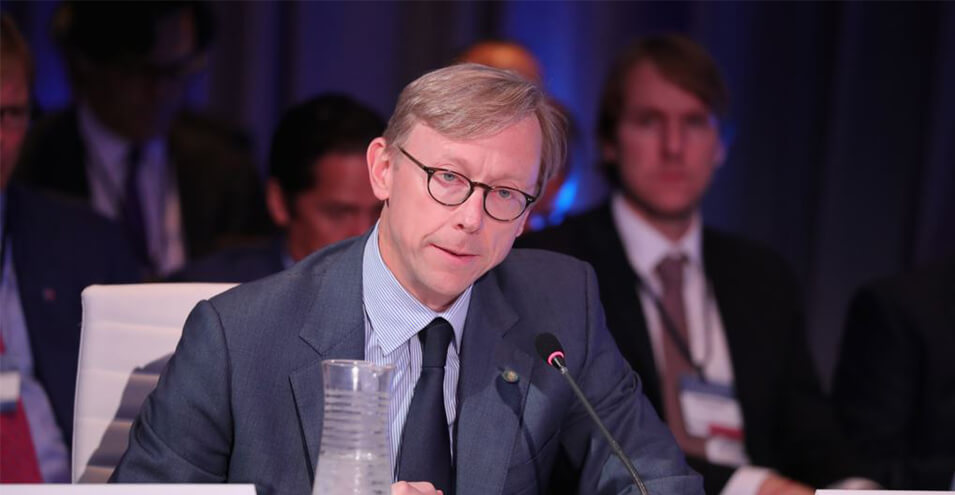
Brian Hook, U.S. Special Representative for Iran Affairs, said during a session titled “International Roundtable on Religious Freedom” that “every day in Iran, men and women suffer tremendous unspeakable horrors because of their religious beliefs”.
Excerpts from Mr. Hook’s speech on December 27 were published on the “U.S. State Department in Persian” website on social media.
The U.S. Special Representative for Iran Affairs said that Baha’is, Christians, Jews, Zoroastrians, Sunni Muslims, and Dervishes are specifically “targeted by this regime”.
Mr. Hook stated that “Sunni Muslims are also subject to government repression, including arbitrary killings, arbitrary arrests, and torture in detention. They are regularly denied permission to build places of worship, particularly in Tehran”.
According to the U.S. Special Representative for Iran Affairs, this situation reflects the “deceptive hypocrisy” of government leaders who consider themselves the vanguards of Islam.
The situation of religious freedom in Iran has repeatedly faced criticism from non-governmental organizations and human rights defenders. The United Nations Special Rapporteur on Human Rights in Iran has also criticized the restrictions and discrimination against religious minorities and women by the Iranian government.
In the U.S. State Department’s annual reports, Iran is typically described, alongside countries such as Saudi Arabia, as a violator of religious freedom.
Iran’s Foreign Ministry describes these reports as “undocumented, unrealistic, exaggerated, and unconstructive” and characterizes their preparation as being “based on political motives”. The Islamic Republic says the American government “should pay attention to the grave violations of the rights of its own Muslims instead of lecturing other countries”.
Brian Hook stated in the “International Roundtable on Religious Freedom” that the Iranian government “could learn lessons from the founder of the Persian Empire, Cyrus the Great, who is renowned above all for his religious tolerance. The Iranian regime repeatedly prevents Iranians from visiting his tomb. One must ask what this weakened regime fears”.
It appears Mr. Hook’s reference is to objections and prevention of ceremonies at the tomb of Cyrus in Iran. In Iran, November 29 is not officially observed but is called “Cyrus Day” by citizens, and a group of citizens typically holds ceremonies on this day.
In another part of his speech, Brian Hook again criticized the spending of money by the Iranian government outside the country’s borders, stating that “while billions [of tomans] are spent on foreign adventures, public services are in severe decline”.
Mr. Hook also stated that the “maximum pressure” campaign of the U.S. government will continue until the Islamic Republic “changes its destructive policies”.
“Maximum pressure” is a term that Washington officials have repeatedly used since the U.S. government withdrew from the nuclear agreement and restored sanctions against Iran. The Trump administration says the nuclear agreement from Barack Obama’s presidency did not end other “destructive” Iranian activities and has time limitations.
Tehran, on the other hand, has accused the United States of violating its multilateral commitments and rejects allegations of “destructive activities” or “support for terrorism”. Officials of the Islamic Republic have described recent U.S. government actions as “psychological warfare”.
Source: Radio Farda