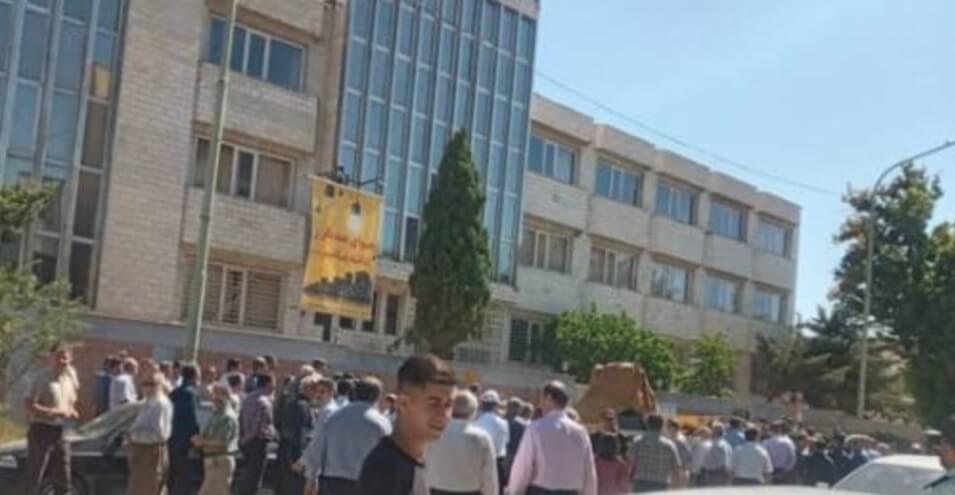
A Legal Expert in Conversation with Voice of America: The Islamic Republic Wants to Make Advocacy Meaningless in Iran
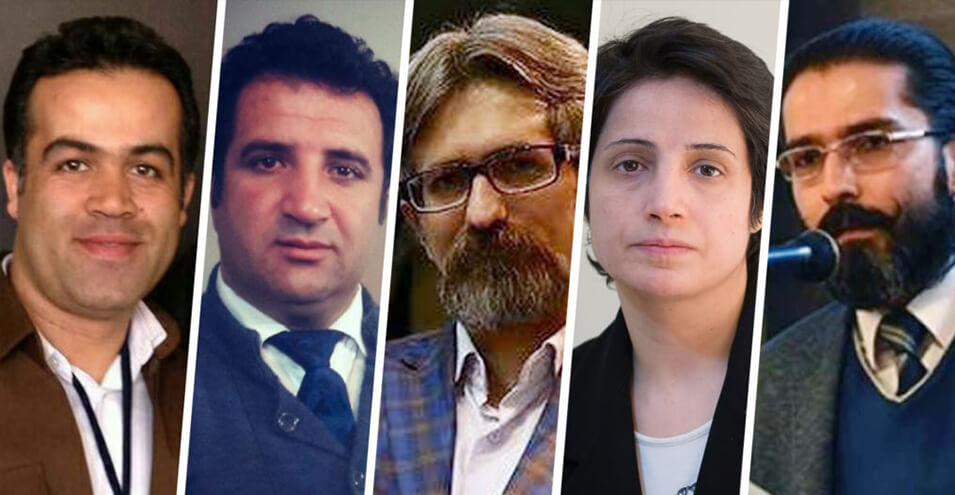
March 28, Iran’s Lawyer’s Day and the sixty-sixth anniversary of the Bar Association’s independence arrived at a time when at least 5 lawyers are imprisoned in Iran.
Hossein Raisi, a lawyer and professor at Carleton University in Canada, said in an interview with Voice of America that the Islamic Republic’s first action against lawyers after the 1979 revolution was measures taken against the Bar Association. Purges and imprisonment of Bar Association presidents, prevention of Bar Association board elections for 18 years, and ultimately imposing numerous constraints on lawyers and bar associations in Iran have been an ongoing process of the government since the 1979 revolution.
According to Mr. Raisi, the structure of the Islamic Republic views lawyers as opponents and obstacles, and as long as there is no independent and powerful judicial system in Iran, this process of suppressing lawyers will continue.
Nasrin Sotoudeh is one of the lawyers who has been detained and imprisoned multiple times. Ms. Sotoudeh was arrested at her home on June 13, 2018, tried in absentia by Branch 28 of the Revolutionary Court, and sentenced to five years in prison on charges of espionage. Later, in the seventh investigation branch of Evin Prosecutor’s Office, based on the complaint of the Kashan Prosecutor’s investigator regarding her defense of someone who opposed mandatory hijab, a bail of 650 million tomans was issued for her.
Mr. Raisi also said regarding court-appointed lawyers of the judiciary that according to the new criminal procedure code, all individuals have the right to access a lawyer immediately after being summoned or arrested. However, based on Article 48 of the criminal procedure code, lawyers defending clients in important and security cases are not allowed to be present during the preliminary investigation phase unless they are lawyers selected through a circular by the head of the judiciary.
He explained: Recently, the head of the judiciary issued a circular announcing the names of lawyers that people can access in political and security cases, all of whom are lawyers approved by the judiciary. In a large city like Tehran, only 20 lawyers, and in other cities, a limited number of lawyers are permitted to enter such cases. These individuals are mostly retired revolutionary court judges or people with a history of cooperation with the Revolutionary Guards or the judiciary system.
According to Mr. Raisi, by doing this, the judiciary has severely limited the right to access a lawyer, the right to fair trial in important security cases, and therefore, proceedings cannot be fair unless both parties in the lawsuit, including the prosecutor and the defendant, have equal access to legal resources and understanding of legal matters.
According to this legal expert, the Iranian government and judiciary are trying to make the legal profession empty and meaningless through actions such as establishing an institution parallel to the Bar Association, imprisoning lawyers, or preventing people from accessing lawyers in security cases.
He also added: The securitization of the prevailing environment and filing cases against lawyers has made them fear entering security cases. This behavior is precisely an example of conduct that disrupts the legal profession and effectively undermines people’s right to be informed, access documents, evidence, and fair proceedings.
Mohammad Najafi, an imprisoned lawyer, is one of the lawyers who was accused of “disturbing public opinion” after writing a letter to the leader of the Islamic Republic of Iran. This June, Mr. Najafi published a letter on his Facebook page criticizing the policies of the Islamic Republic, addressed to Ayatollah Khamenei, saying: “Mr. Khamenei, our generation is willing to sacrifice for you.”
This imprisoned lawyer has been charged with the repeated accusation of “disturbing public opinion” in his fourth case, having previously been sentenced to four years in prison. In his third case, he was also sentenced to 10 years in prison on charges of “propaganda activity in favor of groups and organizations opposed to the system, insult to the leadership, and cooperation with hostile states through interviews with foreign media and transmission of news and information.”
According to Mr. Raisi, widespread corruption in the judiciary has prevented a group of lawyers from carrying out their legal duties with full competence and away from prevailing corruption as “a wing of the angel of justice,” and this has caused reputable, honest, and honorable lawyers to be marginalized and have fewer accurate and professional activities.
Amirsalar Davudi, a first-rank lawyer, is one of the lawyers who in recent years has defended a number of political and ideological prisoners, including “Soheil Arabi.” He was arrested in December of the current year by judicial police at his office and transferred to Evin Prison.
Payam Derfshan, Arash Keykhosravi, Ghasem Shaoleh Saedi, Farrokh Forouzan, and Hadi Omid are also among the lawyers who have been arrested and imprisoned this year.
Amnesty International in a report last year called last year a “year of shame” regarding the human rights situation in Iran and said that Iranian officials in 2018 launched a shameful campaign in suppressing protesters and widespread arrests of critics. In part of this report, it was stated that 11 lawyers in Iran were arrested last year.
Source: Voice of America