Tehran and Riyadh Competing for China’s Support
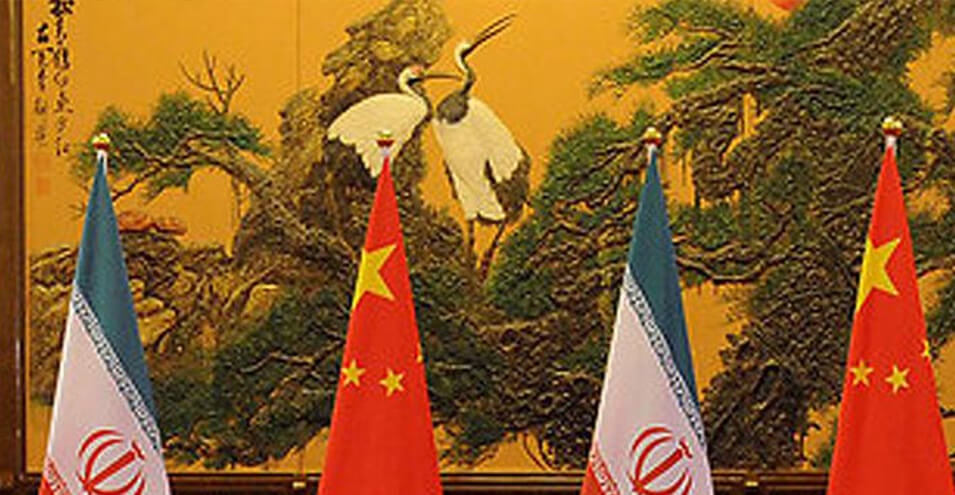
Iran’s parliament speaker traveled to China. Following him, Saudi Arabia’s crown prince also arrived in Beijing. Observers assess bin Salman’s Asian trip as aimed at isolating Iran. China’s president, however, announced Beijing’s commitment to continuing “strategic cooperation” with Tehran.
Xi Jinping, China’s president, during his meeting with Ali Larijani, speaker of Iran’s Islamic Consultative Assembly, announced his country’s determination to expand close ties with Iran regardless of any potential changes in international circumstances. China’s highest-ranking government official made these remarks shortly before Muhammad bin Salman, Saudi Arabia’s crown prince, entered Beijing.
China’s president said: “Regardless of how regional and international circumstances change, China is committed to expanding comprehensive strategic cooperation with Iran.”
According to Reuters, although China lacks a strong tradition of diplomatic maneuvering and role-playing in Middle Eastern disputes, and despite Iran’s significant share as the region’s fourth-largest oil exporter last year, Beijing has sought to increase its presence in the Arab world.
Last Tuesday, Ali Larijani, accompanied by a high-ranking delegation consisting of Mohammad Javad Zarif, foreign minister; Bijan Zangeneh, oil minister; Farhad Dejpasand, economy and finance minister; Abdolnasser Hemmati, central bank governor, and several other Iranian officials, began their two-day visit to China. During this visit, Iran’s foreign minister met with his Chinese counterpart last Tuesday.
Today, Muhammad bin Salman, Saudi Arabia’s crown prince, arrived in China for a two-day visit. King Salman’s last visit to China dates back to 2017.
China Treading a “Thin Line”
According to Reuters, China is treading a thin line during these meetings, as it also maintains close ties with Saudi Arabia, the Islamic Republic’s regional rival.
According to a statement issued by China’s Foreign Ministry on Thursday, February 21, Xi Jinping, after meeting with Iran’s parliament speaker, said the two countries have ancient friendship and long-standing mutual trust. China’s president also emphasized deepening “strategic mutual trust” and the necessity of Beijing and Tehran’s support for each other in pursuing “fundamental interests and core concerns.”
China’s highest-ranking People’s Republic official added that his country supports regional and international parties’ cooperation in bringing the Middle East onto the path of stability and development. Xi Jinping added: “We support Iran’s constructive role in preserving peace and stability in the region and are ready for close coordination and communication on regional issues.”
However, China also needs to maintain its close ties with Saudi Arabia and has its interests on both sides in view. Saudi Arabia, besides being one of China’s most important oil suppliers, is itself a market of interest to Beijing and an importer of Chinese goods, including the country’s military drones.
Muhammad bin Salman, who is scheduled to meet Xi Jinping tomorrow Friday, has shown during his two previous stops in Pakistan and India that he did not embark on his Asian visit empty-handed. Agreements worth 20 billion dollars with Pakistan, promises of over 100 billion dollars in investment in India over the next two years, and promises of freeing thousands of Indian and Pakistani prisoners in Saudi Arabia were among the gifts Riyadh offered during bin Salman’s Asian visit.
This is while India is a major buyer of Iran’s oil and Pakistan is a customer of Iran’s gas. Saudi Arabia intends to expand its oil exports to Asian countries, including China and India, to replace Iran’s oil, whose exports have become severely limited due to American sanctions. Iran’s foreign minister stated in an interview with German newspaper “Süddeutsche Zeitung” that Iran’s oil exports have now dropped even below the levels when the previous round of sanctions against the Islamic Republic was implemented.
“Comprehensive Strategic Cooperation” Between Tehran and Beijing
Zarif tweeted yesterday about the Iranian delegation’s visit to Beijing: “Accompanied by Ali Larijani, speaker [of the Islamic Consultative Assembly], we have come to Beijing for important talks with President Xi and China’s leadership regarding comprehensive strategic cooperation between our nations. Main agenda: Iran’s role in the Belt and Road Initiative and continuation of political, security, and economic cooperation.”
The “New Silk Road” project or “Belt and Road Initiative” is a plan related to investment in transportation corridors that was presented by China in 2013 with the participation of more than 60 countries worldwide. This initiative aims to increase China’s dominance in East Asia and help the country reach “global superpower” status.
Before leaving Beijing, Ali Larijani, referring to the opposition of “some adventurous countries” to the New Silk Road project, said: “The Islamic Republic of Iran is ready to place its unique capacities in various fields such as roads, infrastructure, and energy at China’s disposal.”
According to IRNA, Iran’s parliament speaker also added that “in our meetings with Chinese officials, we had constructive discussions on regional political issues, counterterrorism, and consultations necessary for establishing peace in the region.” According to Ali Larijani, in this visit, in addition to some government members and chairs of parliament’s budget and energy commissions, “other sectors such as military and security” were also present.
Islamic Republic officials speak of the parliament speaker’s visit and the accompanying high-ranking delegation’s visit to China as an important trip. Ali Larijani, upon his arrival at Mehrabad Airport Wednesday evening, was received by Masoud Pezeshkian, parliament’s vice speaker; Hosseinali Amiri, the president’s parliamentary deputy; and some other Iranian managers and officials.
Thursday, the Islamic Consultative Assembly also witnessed Larijani’s report on his trip in an informal session. Fateme Zolghadr, Tehran’s representative in parliament, stated regarding this session that Ali Larijani described his diplomatic meetings as “important” and “successful.” Behram Ghasemi, spokesman of Iran’s Foreign Ministry, had previously expressed hope that Ali Larijani’s visit to Beijing “could help further facilitate” the Islamic Republic’s cooperation with China.
China Mediating Between Iran and Saudi Arabia?
Regarding Saudi Arabia’s crown prince’s visit to Beijing, which occurs immediately following the Iranian delegation’s visit to China, other discussions are also raised. Some have even raised the possibility of Beijing mediating between Riyadh and Tehran.
Jamil al-Dhiyabi, editor-in-chief of Saudi newspaper “Okaz,” in response to bin Salman’s visit, said: “It is not unlikely that China will again mediate to resolve differences between Iran and Saudi Arabia.” Al-Dhiyabi told Sputnik news agency in a phone conversation that if China becomes certain of the will of Saudi Arabia and Iran to resolve their differences, it is not unlikely that it would accept mediation between them.
According to this Saudi journalist, Beijing is aware of Saudi Arabia’s “important role” in establishing security and stability in the region and also of what he called Iran’s “behaviors and interventions in other countries’ affairs.” The editor-in-chief of “Okaz” newspaper, however, considered the effect of Beijing’s possible mediation between Tehran and Riyadh as “unlikely.”
Some other observers and analysts have also assessed Muhammad bin Salman’s Asian trip as aimed at Saudi Arabia’s effort to emerge from the pressure resulting from the killing of Jamal Khashoggi, a Saudi dissident journalist. According to Mohammad Reza Farghani, Iran’s former ambassador to Turkmenistan, bin Salman’s Asian trip was undertaken to escape from the “political coma” surrounding him.
According to ILNA, Farghani, on the other hand, accused Riyadh of attempting to launch an “oil war.” Iran’s former ambassador to Turkmenistan said: “They [Saudi Arabia] have concluded huge oil agreements with India and Pakistan for building refineries and seem to be seeking to target Iran in the medium term, especially in the energy sector.”
Source: DW