Dire Conditions in Sepidар Ahvaz Prison Women’s Ward: “Better to Die Than Stay in This Prison for Years”
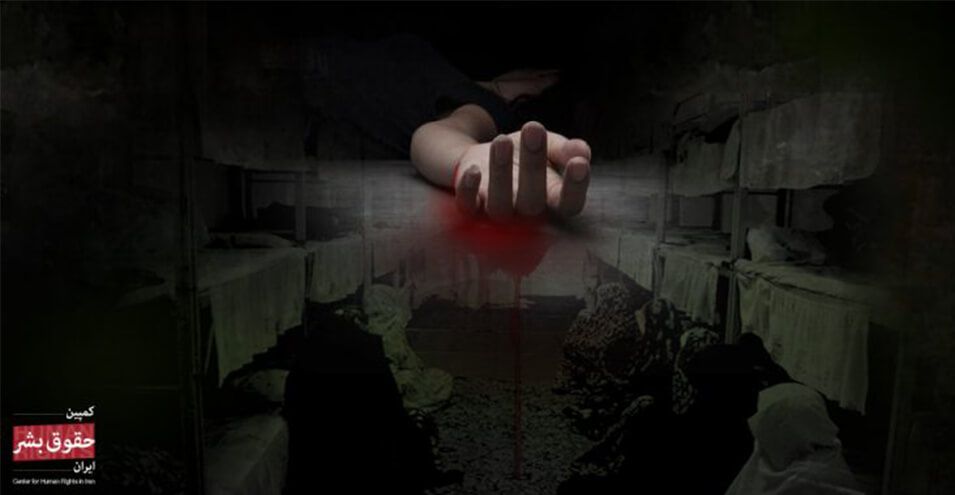
A former prisoner who spent several days recently in the women’s ward of Sepidar Prison in Ahvaz told Iran’s Human Rights Campaign that the prison is deprived of the most basic necessities of a dignified life and inmates turn day into night in “hell”. This source, who requested anonymity for security reasons, said that self-harm and suicide are widespread among women in the prison to the point that, as the inmates themselves put it, “after self-harm, they are transferred to the prison clinic to spend a few days in better conditions or ultimately die.”
Referring to the abundance of “lice, bedbugs and cockroaches in the prison wards,” this source said: “The floor of the ward, in supplies and in beds, is full of lice, bedbugs and cockroaches. They live alongside inmates and conditions are worse for those forced to sleep on the floor. On the other hand, the sewage pit of the ward’s sanitary facilities had problems. Inmates had to defecate on previous waste. You cannot see this image anywhere else in life. The prison food rations are meager and extremely poor in quality. You constantly saw garbage in the food.”
Speaking about his few days in this prison, he said: “On the first night they gave us two blankets, one to use as a mattress and the other as a blanket. But the blankets were extremely dirty. The previous inmate’s vomit was still on one of the blankets. It smelled so bad that I couldn’t use it and slept on the floor where bedbugs and cockroaches were moving around next to me. Finally, one of the inmates was kind enough to give me a clean blanket that her family had brought for her.”
Regarding the prevalence of suicide and self-harm in Sepidar Ahvaz women’s prison, this former inmate told the campaign: “During the few days I was there, I witnessed two failed suicide attempts. Most inmates did this because of the prison’s bad conditions because they couldn’t endure being there. They said it’s better to die than to stay in this prison for years. One inmate said this way at least I go to the clinic for a few days which is cleaner than this place, or I die and get relief. One of them broke a mirror she had and cut her neck with it. But the matter didn’t end there. Contrary to her expectation, she wasn’t quickly taken to the clinic. Only after many inmates screamed and banged on the doors did the guards come and tell them to bandage her neck. We said she would die, she’s bleeding heavily. It seemed like they didn’t care at all. Eventually after some time they took her out.”
According to her, the clinic of the women’s ward is also without a doctor and even a nurse on many days of the week: “One day a girl had a severe seizure and collapsed with her head on the bathroom floor. Maybe inmates banged on the door for ten minutes before finally a woman who was neither a doctor nor a nurse came in. She just looked at the girl who had fallen on the bathroom floor for a few minutes and ultimately just splashed water on her face. We screamed, we pleaded to have her transferred to the clinic. Her head was swollen from hitting the floor, I said this definitely needs an X-ray but she told me not to worry, she won’t die, she’ll live, and left. The inmates themselves made sugar water for her and gave it to her. Death in that prison is a normal and even insignificant occurrence.”
This former inmate, also noting that she herself needed to take several pills during the day due to her illness, told the campaign: “Although the prison authorities had even my treating doctor’s letter and were medically convinced that I needed to take my medications, during those few days I was in prison, they didn’t give me a single pill. A prison official said I needed to see the prison doctor who would confirm the prescription and that would take a month. I didn’t take my pills during those days, which of course was nothing compared to the conditions around me.”
According to her, most women in this prison were there for drug-related crimes: “Many of these women had no one outside prison to follow up on their cases. They said many of them, despite their sentences ending, remain in prison because they have no one outside to get their release documents. I myself met a girl who had a one-year sentence but three months had passed since her sentence ended and she was still in prison because she had no one outside to follow up on her release and even the prison counselor wouldn’t do anything.”
The Sepidar Women’s Prison in Ahvaz started operating in 2009. The General Director of Khuzestan Prisons said in an interview with FARS News Agency in December 2009 that the prison covers 7,000 square meters and with a standard capacity of 150 inmates has an equipped and independent medical clinic and counseling clinic, a technical and vocational site and employment within the prison, a cultural and educational complex and necessary service facilities and a covered sports complex built in suitable space.
In December 2018, Massoumeh Ebtekar, Vice President for Women and Family Affairs, visited the women’s ward of Sepidar Ahvaz Prison. She had “face-to-face” meetings with inmates and visited “employment and vocational training workshops”. However, no mention was made of the health, welfare and basic needs of the women in this prison. In photos published by the General Administration website of prisons and security and educational measures of Khuzestan Province, Ms. Ebtekar is present in the kitchen with a group of women and men who accompanied her on this visit, or in the prison’s prayer room and hallway, all under normal conditions. But there are no photos of visits to the women’s ward, their beds, the ward floor and bathrooms.
In recent months, reports have also been published about unsuitable conditions in Tehran’s Great Prison (Fashafuyeh) by some Gonabadi dervishes and also by Nader Fatorechie, a journalist who was arrested due to the “Shahrzad” series producer’s complaint and spent one day in August 2018 in this prison.
Journalist Nader Fatorechie, after leaving the prison, compared the prison to “hell” in a critical piece. In his article, this journalist considered “attention to the living and welfare conditions of ‘ordinary inmates’ in Fashafuyeh” “an urgent, immediate and pressing necessity”. He wrote: “They are in the precise sense of the word ‘under inhumane conditions’ and experience a double rejection whose tolerance is beyond human capacity even for a single day and undoubtedly leaves irreparable harm to their body and soul forever and the number increases day by day.”
In another report, an informed source in November 2017 regarding the condition of block (type) one of this prison, known as the methadone ward, told the campaign: “In the hall of block one which has a capacity of 100 people, 400 people are held. Every day there is only a three-hour window from 11 am to 1 pm to shower with cold water. Even in this season, not everyone has access to hot water, of course, except for a small number of people, the ward chiefs and veterans, who have the right to use hot water.”
This source referred to the abundance of “pills” in the methadone ward and said: “This hall, which is recently known as the cleanest hall in block one of the prison, although drug trafficking is prevented, all kinds of pills are readily available and it’s unclear why when guards prevent drugs from entering the hall, they have left pills, and in abundance, freely accessible. Some inmates in this hall are mostly not in a normal state most of the time.”
Source: Iran Human Rights