Commemoration of Homa Darabi’s Death on Social Networks; A Woman Who Set Herself on Fire in Protest Against Mandatory Hijab
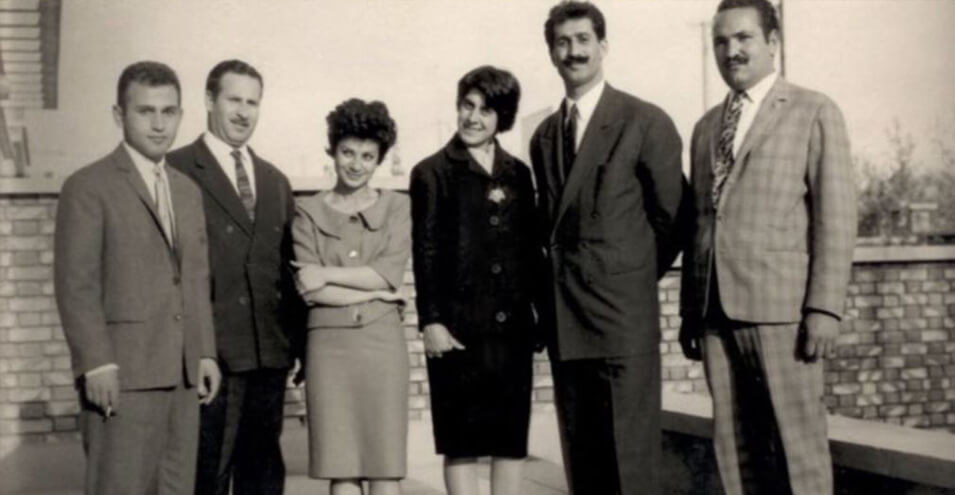
As a weekend in which clashes between citizens and law enforcement over preventing the arrest of two women became a trending topic on social networks, some users have recalled the anniversary of Homa Darabi’s self-immolation in protest against mandatory hijab.
Homa Darabi, on the second day of Esfand in 1372 [solar calendar], removed her hijab in Tajrish Square in Tehran and set herself on fire. She was a member of the Iran Nation Party and had earned her doctorate in psychiatry and pediatric medicine from the United States.
Ms. Darabi returned to Iran in the 1970s [solar calendar] and engaged in medical practice and university teaching. In 1369 [solar calendar], she was expelled from the university on charges of improper hijab and failure to observe Islamic principles, and her medical clinic was also closed.
Parastoo Forouhar, daughter of Dariush and Parvaneh Forouhar, shared a portion of Parvaneh Forouhar’s speech on the occasion of Homa Darabi’s self-immolation on Twitter.
Ms. Forouhar said about Homa Darabi and her protest action in this speech: After extensive struggles for women’s rights, when “all paths were closed,” she did not succumb to force; “not in bed, not quietly and silently, but blazing and angry, she demanded back the life that had been denied to her, and took it from her feet.”
Parastoo Forouhar and Dariush Forouhar, the secretary general of the Iran Nation Party, were killed shortly after in Azar 1377 [solar calendar] by the security forces of the Islamic Republic with multiple knife wounds.
Farshte Ghazi, a journalist, also shared a link to her interview with Bahram Namazi, a member of the Iran Nation Party, who talks about Homa Darabi: “She was greatly tormented by these obscenities done in the name of religion and faith and saw no way out. She wanted to do this symbolically so that everyone would understand what the situation was and what was happening. But people were so busy with their own lives that nothing happened except that her friends were all sorry. Many paid no attention to themselves, and the government didn’t pay any attention to itself either.”
Open protests by women opposed to “mandatory hijab” in Iran began on the sixth of Dey in 1396 [solar calendar] when “Vida Movahed” climbed on an electrical box on Enqelab Street and tied her white scarf to a stick, which led other women in various Iranian cities to take to the streets to show civil protest.
Protesting women who silently protested in various parts of Iranian cities while holding their scarves became known as “Girls of Enqelab Street.”
Girls of Enqelab Street such as “Shaparak Shajari-Zadeh,” “Vida Movahed,” “Narges Hosseini,” “Shima Babaei,” and “Maryam Shariatmadari” were arrested by police and security authorities with inappropriate conduct by law enforcement, and the Iranian government has issued prison sentences for some of these protesters.
On Saturday, the 27th of Bahman of this year, at the intersection of Karim Khan and Hafez streets in Tehran, another protesting girl tied her black scarf to a stick, and on the same day, people’s intervention to prevent the arrest of two women by the Guidance Patrol in the Narmak neighborhood of Tehran resulted in the firing of warning shots.
Masih Alinejad, a journalist and founder of campaigns against mandatory hijab, also published a video on her Twitter on Thursday, the 2nd of Esfand, in which one of the government’s supporters attacks a woman with pepper spray. She wrote: “Why is this mere violence not shown in our country’s media?”
The U.S. State Department and human rights organizations have repeatedly protested the harsh treatment of protesters against mandatory hijab in Iran in recent years.
Earlier, Mike Pompeo, the U.S. Secretary of State, in protesting the arrest of 30 women opposed to mandatory hijab, stated that “the people of Iran deserve to have their human rights respected.”
Source: Voice of America