New Claims About ‘Planning of Mahsa Amini’s Murder’ and Government Response
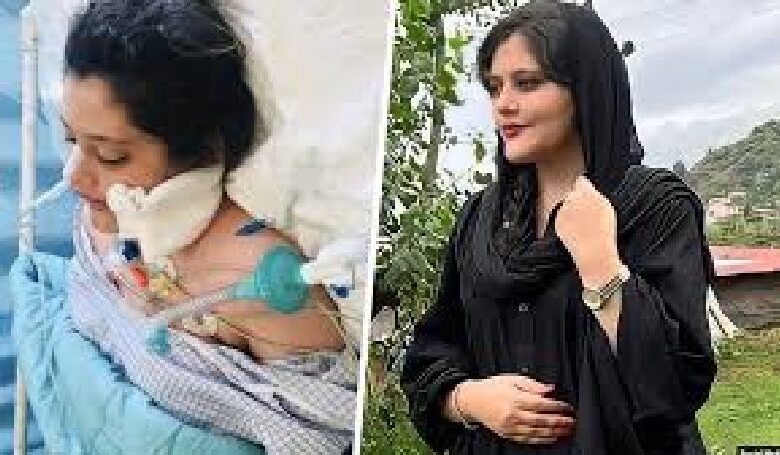
New claims have emerged about the “planning of Mahsa Amini’s death,” suggesting that the government is attempting to portray other individuals as culprits.
In a new and controversial report, the Kayhan newspaper claimed that Mahsa Amini’s death was part of a conscious, led, and organized project. In its report, the newspaper wrote: “The fundamental difference between this movement (the riots and unrest following Mahsa Amini’s death) and other protests we have witnessed across Iran in recent years is that this movement was conscious, led, and organized, with a predetermined time and date, and predetermined consequences.”
Such narratives, combined with what Kayhan and aligned media outlets have published, attempt to link events to “foreign planning” and downplay the role of domestic actors and people’s suffering.
In a published report, reference was made to unprecedented interviews and confessions by the leader of “Komala,” which were unprecedented and highly unusual. Subsequently, documents were inadvertently released showing that Mahsa Amini’s cousin named “Erfan Mortazaei” was a member of the Komala party, with his photos and interviews being published.
Erfan Mortazaei, by releasing videos of himself wearing Komala clothing and flag from Iraqi Kurdistan, was the first person to publicize Mahsa Amini’s death in the media and claimed it was a result of police beatings. Based on his statements, other chained foreign and domestic media outlets also spoke and wrote about Mahsa Amini’s planned death. Presumably, Erfan Mortazaei was also sent to the field at the direction of certain circles and attempted to signal the start of unrest by announcing Mahsa Amini’s killing by police.
Simultaneously, the destructive incident that began with Mahsa’s death triggered widespread reactions inside and outside Iran. Mahsa’s death in September 2022 (September 16, 2022) sparked nationwide protests that echoed the slogan “Woman, Life, Freedom” in various parts of the country, leading to demonstrations, strikes, and turbulent days in cities. International bodies and media outlets also published numerous reports on the reasons and effects of this killing.
Documents that some groups and analysts have published about the role of networks and armed or foreign opposition groups (to which newspapers have also referred) remain disputed, and many questions exist about the origin and credibility of some reports.
Definitively linking everything that happened to a “pre-designed project” requires clear and credible evidence. Major claims must be supported by reasoned and independent evidence—something that the official narrative and some aligned reports have not yet fully presented.
One of the recurring mechanisms in official responses is the attempt to distort reality: suggesting that “people” are the cause of the crisis, so the government and suppressive forces can evade accountability. Narratives that present deaths and protests as “foreign-designed projects” do exactly this. Domestic structural factors of social anger, poverty, discrimination, corruption, and lack of accountability remain hidden, and blame is shifted to foreign actors or “troublemakers.” This tactic serves two purposes: 1) legitimizing suppression and security measures, 2) exonerating elites and responsible institutions from actual responsibility for the country’s governance failures.
Contemporary history is full of examples where governments, instead of reforms, have sought external or internal scapegoating to maintain their legitimacy. This strategy is not only ineffective but also weakens society’s ability to dialogue and resolve real economic, legal, and cultural crises. Therefore, exposing such narratives and demanding transparency and accountability from officials is of vital importance.
Following Mahsa’s death, a wave of protests emerged that, according to reports, led to widespread violence and suppression; human rights organizations and international reports have documented hundreds of deaths, thousands of arrests, and dozens of human rights violation allegations. International bodies and official reports have also concluded that Mahsa’s death and subsequent governmental responses require independent investigation. These facts show that pressure and suppression have not only continued but have intensified in certain periods.
Mahsa Amini’s death was a point that brought out suppressed emotions and hidden anger in society. This anger is rooted: economic hardships, poverty, unemployment, social restrictions, and political suppression are intertwined. When youth, women, and workers took to the streets, they stood not only to protest an incident but to end a series of injustices.
Subsequent suppressions showed that when faced with widespread social demands, the government uses violence and mass arrests to break the movement, but while each suppression faced with violence may temporarily push the movement back, it can never erase the roots of its emergence.
If peaceful and sustained protests, organized from below and based on economic and rights demands, continue, the chances of real change will increase. Contemporary history shows that persistent resistance, solidarity among different social groups, and clear articulation of demands (livelihood, social justice, civil freedoms) can transform asymmetrical power balances. Therefore, the message is simple: continue, remain united, organize demands clearly and peacefully, and then victory will be within reach.