Tehran Prosecutor Clarifies Environmental Activists’ Case: Judicial System Can Change Charges Anytime
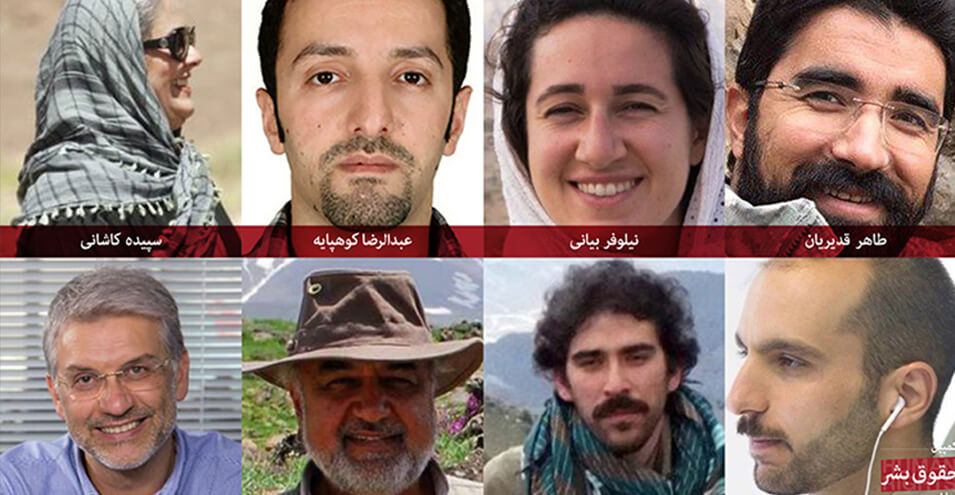
The Tehran prosecutor, announcing the issuance of an indictment for eight environmental activists who have been in temporary detention since Bahman, stated that the charge against four of them has been changed from espionage to the serious charge of “corruption on earth” (Fasad Fi-l-Arz). According to the Tehran prosecutor, indictments have been issued for all eight individuals and are ready to be sent to court. The charge of corruption on earth, if proven, can carry the death penalty.
Abbas Jafari Dolatabadi, Tehran prosecutor, in his press conference on the second of Aban month, responding to criticism from some officials including parliamentary representatives and the head of the Environmental Protection Organization regarding the change of charges from espionage to the serious charge of “corruption on earth” after 9 months of temporary detention, said: “No one can criticize the prosecutor or investigator in this matter.” He stated that the judicial system and investigator can change charges and accusations at any time.
Mohammad Hossein Aghassi, lawyer for two of the eight detained environmental activists, was the first to announce the change of charges for some of the detained environmental activists in interviews with media outlets. On the 30th of Mehr month, Aghassi had told the Campaign that the Tehran prosecutor, due to a letter from the “military,” changed the espionage charge to the charge of corruption on earth and sent it to the investigator. This lawyer also stated that this charge change occurred for “five” of the detained activists named Nilufar Bayani, Houman Jokkar, Morad Tahbaz, Sepideh Kashani, and Taher Ghadirian.
Although Mohammad Hossein Aghassi simultaneously on the same day, the second of Aban month, in an interview with the state news agency IRNA, denied the military’s letter to the Tehran prosecutor and said: “I absolutely did not state that the military sent a letter in this regard or had any involvement in this matter. The military had absolutely no involvement throughout the case. The investigator in this case is another organization.”
Jafari Dolatabadi, Tehran prosecutor, said the investigator received a letter from “competent authorities related to military affairs” which “based on it, it became clear that the actions taken by a number of the accused in this case involved approaching military facilities under the guise of environmental activities and obtaining military information from these locations. Therefore, the charges against four of the accused were changed by the investigator due to completion of investigations.” However, the Tehran prosecutor did not specifically name these four individuals.
Jafari Dolatabadi, in objecting to the criticism regarding the change of charges, linked it to Article 286 of the Islamic Penal Code and said “whoever in a manner that causes severe disruption to public order in the country, insecurity, or causes major damage to the bodily integrity of individuals or public and private property, or causes the spread of corruption or obscenity on a wide scale, according to the law should be prosecuted on the charge of corruption on earth.”
However, the Tehran prosecutor provided no explanation regarding how these four individuals caused such severe disruption and only said that all their cases would soon be reviewed in a “impartial” court.
After the publicization of Kavous Seyed Amami’s death and the detention of environmental activists, judicial officials repeatedly claimed that these environmental activists, under the guise of environmental activities, engaged in espionage of military areas, but suddenly these same arguments and reasons for detention changed from the charge of espionage to corruption on earth.
Previously, one of the espionage allegations against them announced by judicial authorities was the use of 50-meter cameras by these environmental activists, but Isa Kalantari, head of the Environmental Protection Organization, on the 25th of Bahman month of 1396, said: “These cameras are for monitoring leopards and their range does not exceed 50 meters, with a maximum range of 50 meters.”
On the other hand, a source close to the family of one of the three environmental activists whose charges are still unclear told the Campaign: “We only learned today from the Tehran prosecutor’s statements about the issuance of indictments for the children, and we have no information about the content of the indictment and the charges.”
Amir Hossein Khaleqi, Sam Rajabi, Abdulreza Koohpaye, Nilufar Bayani, Houman Jokkar, Morad Tahbaz, Sepideh Kashani, and Taher Ghadirian are eight environmental activists who were arrested by the IRGC Intelligence Organization during the fourth and fifth days of Bahman month and have since been held in Ward 2A of Evin Prison. After 9 months of temporary detention, according to the prosecutor’s statements, their indictments have been issued.
Isa Kalantari, head of the Environmental Protection Organization, on the second of Aban month, simultaneously with the Tehran prosecutor’s statements, called the new charge of corruption on earth against a number of detained environmental activists an “allegation” that should be investigated.
Mr. Kalantari said that even the four-member government committee formed to review the situation of environmental activists and the cause of Kavous Seyed Amami’s death has no information about the reason for the change of charges: “This matter was raised in the four-member committee that the government had appointed and where Leila Jeanidi, legal advisor to the President, was also present, and everyone declared that they had not been notified about this matter.” Previously, Isa Kalantari had repeatedly stated that there was no evidence for these individuals’ espionage and they remained imprisoned without cause.
Mohammad Reza Tabesh, head of the Parliament’s Environmental Faction, on the 30th of Mehr month, expressing that he was “shocked” by the new charges against the environmental activists, said that an explanation should be provided for the change of charges. This parliamentary representative said: “We were following up on sending the case of the detained environmental activists to court. We also visited Mr. Larijani with a group of representatives last week, and he negotiated with Mr. Dolatabadi, and ultimately Mr. Dolatabadi promised that the case would be referred to court. We hope this happens as soon as possible so that these individuals can enjoy their right to have a lawyer and other legal rights.”
Mahmoud Sadeghi, parliamentary representative, also wrote on the 18th of Ordibehesht of 1397 on his Twitter regarding the statements of the Minister of Intelligence in Parliament that the Minister of Intelligence “clearly, substantively, and with evidence declared that they found no evidence of their espionage.”
The families of these eight detained environmental activists, after writing a letter to the heads of the three branches which went unanswered, wrote a letter to Ali Khamenei, Iran’s Supreme Leader on the 27th of Shahrivar 1397, and demanded their quick release, fair trial without restrictions, and access to a lawyer. However, this letter also remained unanswered.
Source: Iran Human Rights Campaign