Accounts Blocked for Prominent Figures Collecting Public Aid for Earthquake Victims
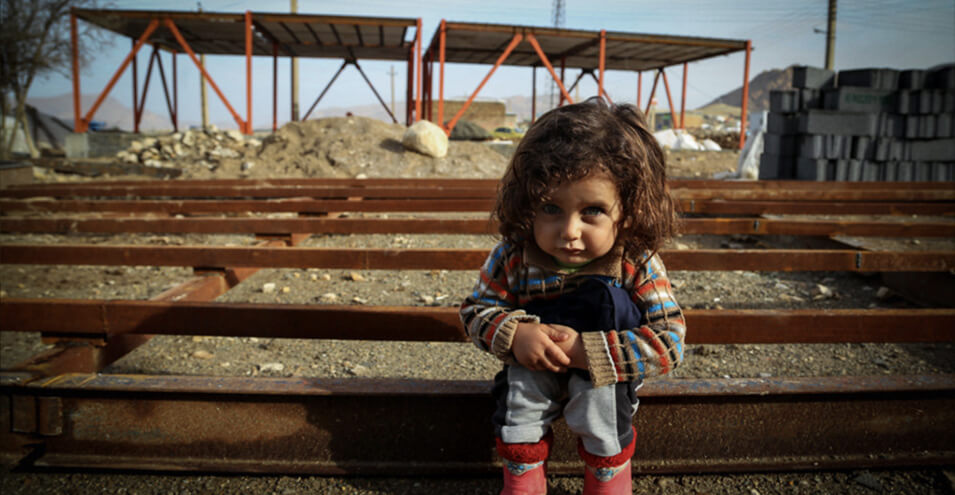
As the anniversary of the Kermanshah earthquake approaches, the Iranian government’s treatment of prominent figures attempting to aid earthquake victims has taken on a new dimension. Iran’s judicial system has summoned some of these individuals and even frozen their bank accounts.
The 7.3 magnitude earthquake that struck western Iran in November 2017 revealed, beyond the destruction and deaths of over 500 people, another image of the Iranian people’s lack of trust in their government even during critical times. People’s distrust of state relief agencies had become so pronounced that they preferred to transfer money to the personal accounts of prominent individuals rather than to any official government account.
Now, a year after this incident, officials who have failed to play an effective role in the eyes of the people in rebuilding earthquake-damaged areas are attempting to assume the role of inspectors over the people.
The summons of Ali Daei, a prominent figure in Iranian football, regarding bank accounts collecting aid for Kermanshah earthquake victims, has once again raised the issue of judicial action against prominent figures who intended to help earthquake victims.
Iranian police have recently issued summonses to prominent figures including Ali Daei to provide explanations about the money deposited into their accounts.
These summonses generated considerable reactions, examples of which were videos that Ali Daei posted on his Instagram page showing the construction process and public aid to children, writing: “The construction of people’s homes is also proceeding with even greater determination. If the gentlemen allow, before winter arrives we will reach our goals in the earthquake-stricken villages of Kermanshah. If there are no obstructions and interference, soon all loved ones will be settled in their own homes.”
Sadegh Zibakalam, a political science professor, was another prominent figure who announced on his Instagram page that his bank account related to collecting aid for earthquake victims had been frozen.
He wrote about this: “I am personally very pleased with this action by the judiciary and had previously said I made a vow that the prosecutor would close my account, but because I defend the people of Hope Village and fellow citizens who deposited money into this account, I will both lodge a protest with the respected head of the judiciary and file a complaint against the judiciary with the Parliamentary Article 90 Commission.”
Zibakalam also issued an open letter addressed to Sadegh Larijani, the head of Iran’s judiciary, writing: “Suppose there was a complaint against me based on the misuse of collected funds, in which court has this complaint been reviewed and a judgment issued condemning me and freezing my account? The result of having power and authority while not being accountable is worse than anything else.”
People Distrust the Government
Zibakalam had previously stated in an interview with Deutsche Welle about people’s distrust of the government that “The Kermanshah earthquake from a sociological perspective showed that people’s distrust of the government has deepened compared to 2013. We saw signs of this distrust in that year, but officials were unwilling to see these signs. Now people are willing to trust individuals like ‘Sadegh Zibakalam’ and say they will deposit money into your personal account, but they will not give money to the Red Crescent, the Imam Khomeini Committee, or the local mosque and Friday prayer leader.”
Gholamali Jafarzadeh, one of Rasht’s representatives in the Islamic Consultative Assembly, had also expressed regret that after 39 years people say they have no trust in the institutions of the government and want to provide aid to affected areas themselves.
Majid Rafiee Zadeh, a Middle East affairs analyst, also wrote in an article in “The Huffington Post”: “The Iranian government, given its history of multiple earthquakes including the Bam and Rudbar earthquakes, should have sufficient competence and experience in dealing with such natural disasters, but the Islamic Republic places its own security and survival above the welfare of the Iranian people. The officials of the Islamic Republic spend most of their time intimidating and executing people, plundering the country’s wealth, and giving it to the Revolutionary Guards to fund their regional plans and proxy terrorist groups.”
The recent treatment of prominent figures by judicial authorities has occurred at a time when using the potential of such individuals to collect public aid with government support is not rare in the world, but in Iran, people’s distrust of the government on the one hand and the lack of transparency in the judiciary’s performance on the other have been reasons for the government to pursue the course of obstruction and judicial action against these individuals.
A look at the recent summonses that have been made public shows that contrary to the judiciary’s claims of transparency, the action and summonses have been against those who actually reported to the people about their aid.
Source: Voice of America