Amnesty International: Human Rights Situation in Iran Has Deteriorated
According to Amnesty International’s report, the human rights situation in Iran has severely deteriorated over the past year. The report references public protests against increasing poverty and corruption, suppression of demonstrations, arrest and torture of numerous critics.
Amnesty International has issued a comprehensive report reviewing the overall human rights situation in Iran in 2018. The report emphasizes through multiple cases that human rights conditions in the country have undergone a severe downward trend.
Amnesty International has cited numerous cases of deteriorating conditions in Iran, including severe public protests against rising prices and widespread corruption in the country, harsh treatment by security forces against peaceful demonstrations, arrest, torture and unfair trials of critics.
The report states that in 2018 “torture and other cruel practices were widely applied and perpetrators and commanders remained immune from punishment. Flogging, amputation and other cruel and inhumane punishments were carried out. Throughout the year, authorities continued to commit discrimination and widespread violence based on gender, political opinions, religious beliefs, ethnicity, sexual orientation, gender identity and disability”.
In its report, Amnesty International has documented multiple and systematic restrictions on freedom of religion and belief in legal and practical dimensions, the issuance of a high number of death sentences and unfair trials, execution of sentences in public and executions of those who were under 18 years of age at the time of the crime.
Restrictions on Freedom of Expression, Assembly and Association
According to Amnesty International’s report, in the past year “Iranian authorities increasingly suppressed the right to freedom of expression, association and peaceful gatherings, and kept hundreds of people in prisons on baseless charges of threatening national security”.
This human rights organization lists those imprisoned in Iran on various charges, including “peaceful political opponents, journalists, social media activists, students, filmmakers, musicians and writers, and human rights defenders including lawyers, women’s rights activists, minority rights activists, labor rights activists, environmental activists, campaigners against executions, and individuals seeking truth, justice and reparations in connection with the widespread executions and forced disappearances of the 1980s”.
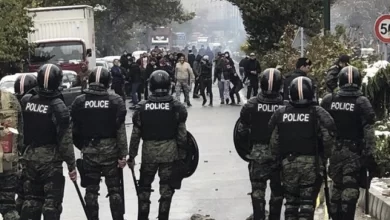
Amnesty International has examined cases of excessive use of force over the past year in connection with suppressing protests against poverty and corruption in the country and documented arbitrary arrests and detentions.
According to the organization, many detainees in Iran have been deprived of the opportunity to choose and access a lawyer. The report continues by citing multiple examples of the continued detention of Nasrin Sotoudeh and her husband Reza Khandan for supporting women who protested against the hijab, and the detention of other lawyers including Amir Salar Davoudi, Arash Keykhosravi, Qasem Shela Saadi, Farokh Forouzan, Mohammad Naji, Mostafa Daneshju, Mostafa Turk Hamadani, Payam Darfshan and Zeinab Taheri.
Media Suppression
Amnesty International’s annual report documents the imposition of work restrictions and the arrest and detention of media activists. The report states that in the past year “managers of some Telegram channels that enjoy high popularity in Iran faced severe prison sentences”. Last spring, Telegram was filtered and Facebook, Twitter and YouTube remained filtered. Millions of Iranians continued to use Telegram by using filter-breaking software.
The report continues: “Media censorship and disruption of foreign satellite television networks continued. A number of journalists and online media activists were arbitrarily arrested and detained; some were tried and sentenced to imprisonment and flogging. The journalists’ professional association remained suspended”.
Torture of Prisoners
Amnesty International, in its latest report, documents numerous detailed examples of “torture and other cruel practices, including prolonged solitary confinement especially during interrogation, on a systematic basis” and notes that violations of prisoners’ rights continued throughout the past year. The report states that “prisoners were forced to endure cruel and inhumane prison conditions, such as overcrowded cells, inadequate food, lack of beds, poor ventilation and the prevalence of pests”.
Amnesty International also referenced house arrest of leaders who opposed the 2009 elections in Iran.
Restrictions on Freedom of Religion and Belief
According to Amnesty International’s report, in the past year, freedom of religion and belief was systematically violated both in law and in practice. The report notes that “Iranian authorities continued to force believers of other religions and atheists to comply with regulations and religious principles derived from strict interpretations of Shiite Islam. The comprehensive violation of the right to change or abandon religious beliefs continued”.
The report further documents the situation of Gonabadi Dervishes and the suppression of their demonstrations and the arrest of hundreds of people, stating that “more than 200 of them, through unfair trials, were sentenced to four months to 26 years imprisonment, subjected to flogging, internal exile, banned from leaving the country and banned from membership in social and political groups”.
The report also addresses restrictions on religious minorities, including Christian converts and continued harassment and arbitrary arrests of these individuals, as well as cases of long-term prison sentences for some Assyrian minorities and widespread and systematic attacks on the Bahai minority and their arrest, imprisonment, forced business closures, asset seizures, bans on employment in the public sector, denial of access to higher education, and desecration and disrespect of their cemeteries, as well as discrimination and deprivation of Sunni Muslims.
Discrimination Against Women and Girls
Amnesty International’s report highlights that in the past year women continued to face deep-rooted discrimination in family and penal laws, including in matters of divorce rights, employment, inheritance and access to political positions. Iran’s civil law continued to deprive women who married non-Iranian men of the right to transfer Iranian nationality to their children, and the bill to ensure women’s security against violence remained unresolved as in previous years. Amnesty International states that Iranian authorities continued to refuse to recognize gender-based violence, including domestic violence and marital rape, as a crime and violence against women and girls, including domestic violence and forced and early marriages, was widespread.
The report continues: “At the same time, millions of women were harassed, subjected to various forms of violence and discrimination by Guidance Patrol forces for not complying with strict Islamic dress codes. Women were prevented from singing and in some cases even playing musical instruments in public, and authorities continued to prevent women from entering football stadiums.”
Suppression of Labor Struggles
In the past year, the prohibition on forming independent trade unions continued.
Thousands of workers protested against unpaid wages, poor working conditions and other problems through peaceful demonstrations and strikes. Authorities arrested hundreds of them and sentenced many to imprisonment and flogging. Amnesty International’s report also documents the arrest of dozens of striking workers at Haft Tapeh Sugar Company and violent detentions following a several-week strike by dozens of Ahvaz Steel Company workers.
At the end of this report, Amnesty International, while referring to the continued “issuance of death sentences following unfair trials and execution of sentences sometimes even in public,” recalls that despite amendments to the drug law, several individuals who were under 18 years of age at the time of the crime were executed and many other juvenile offenders remain on death row”.
The report also states that the Islamic Penal Code “continued to recognize stoning as one of the execution methods. Some consensual same-sex sexual acts that should not be defined as crimes and ambiguous crimes such as ‘insulting the Prophet’, ‘corruption on earth’ and ‘warfare against God’ remained subject to the death penalty”.
Source: DW