Iran’s Central Insurance: Ukrainian Plane Damages Not Our Responsibility
The head of Iran’s Central Insurance says paying compensation for the downed Ukrainian plane is not the responsibility of Iranian insurance companies, but rather falls to European and Ukrainian reinsurance companies that covered the Boeing.
As Iran and Ukraine negotiate compensation for the families of victims of Flight 752, the head of Iran’s Central Insurance has stressed that aircraft damages are not Iran’s responsibility.
On Monday, August 20th, Gholamreza Soleimani told reporters in a virtual meeting: “This aircraft was covered by insurance companies in Ukraine and European reinsurers, and if any payment is to be made, it should be done by these companies.”
Ten days earlier, Abbas Mousavi, spokesperson for Iran’s Foreign Ministry, had stated that the Islamic Republic considers itself responsible for this “unintentional act” and has accepted paying aircraft compensation.
The head of Iran’s Central Insurance had also said in the first week following the plane crash: “Since the Ukrainian aircraft was insured by non-Iranian or Ukrainian companies and definitely had reinsurance, Ukrainian companies or other insurance providers should handle insurance claims for the passengers and the aircraft itself. However, since this aircraft crashed on Iranian territory and the error was from our air defense, the government will negotiate with the Ukrainian government to pay compensation for the aircraft and passengers.”
Tehran-Kyiv Negotiations
Five days earlier, Iranian media reported on a phone conversation between the foreign ministers of the Islamic Republic and Ukraine, announcing Iran’s readiness to pay compensation to the families and relatives of victims, noting that a Ukrainian delegation would travel to Tehran in September to continue negotiations.
The negotiations took place following the analysis of Flight 752’s black boxes, with representatives from Canada, Sweden, Afghanistan, and Britain also present.
The details of preliminary negotiations between the parties remain unclear, but Dmytro Kuleba, Ukraine’s Foreign Minister, after the first round of talks with the Iranian delegation, emphasized that Tehran’s proposed amount for survivors is unsatisfactory and Kyiv is seeking the “maximum level of compensation” from the Islamic Republic.
ISNA news agency reported on December 12th, citing the deputy head of Iran’s Central Insurance: “Insurance coverage of 100,000 to 250,000 SDR per passenger is envisioned, which should be specified in the Ukrainian insurance policy for how much coverage this aircraft had for passengers… We estimate approximately 24 million dollars in damages for passengers, crew and cargo, and 70 million dollars for hull damage, totaling at least 100 million dollars, which may change according to the Ukrainian insurance policy and could reach up to 150 million dollars.”
The Association of Families of Flight 752 Victims has repeatedly stated that any compensation agreement without comprehensive, transparent, and impartial investigation into the downing of the passenger aircraft would be invalid.
The association particularly emphasizes that the Islamic Republic lacks the authority to investigate this matter, as it is the perpetrator of the crime and independent investigations contradict its interests: “…We have repeatedly reminded and explained that the ‘Aircraft Accident Investigation Commission’ in Iran is not an independent body and lacks the authority to investigate this crime.”
During negotiations between the Iranian delegation and the Ukrainian side, Hamed Esmailian, a writer and dentist who lost his wife and 9-year-old son in the Flight 752 downing, wrote on Facebook: “They are about to set a price for our loved ones. No government has the right to reach an agreement with the Islamic Republic of Iran without our presence. None of us have spoken or will speak about compensation without conducting investigations and delivering justice. Instead of negotiating compensation, first clarify who is responsible for this crime.”
Immunity for Officials of the Catastrophe
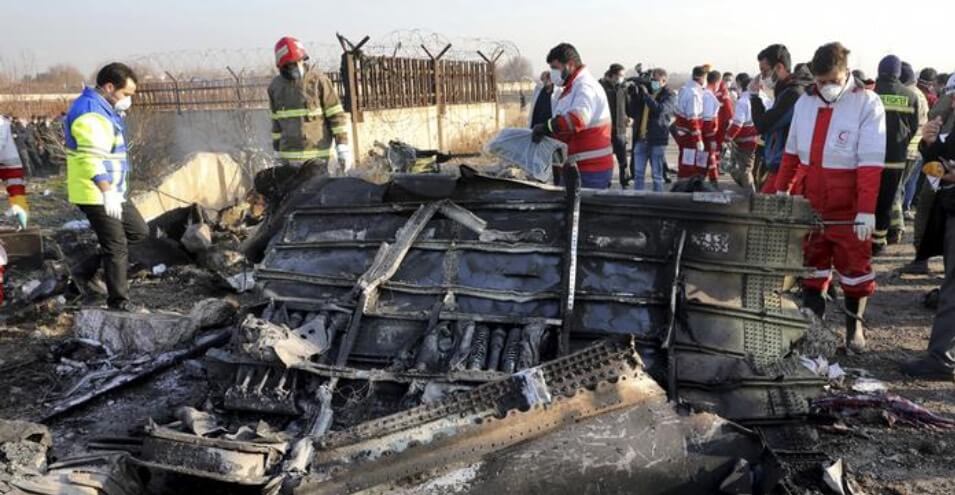
The Tehran-Kyiv flight crashed early morning on December 9th, minutes after takeoff, when it was struck by missiles from the Islamic Revolutionary Guard Corps’ air defense system. All 176 passengers and crew members, including 29 children, were killed. The Islamic Republic concealed the truth for three days, and after admitting it, called the issue a result of “human error.”
Tehran’s military prosecutor says three people, including the air defense system operator, have been arrested in connection with this. However, families of survivors demand the identification, introduction, and prosecution of those primarily responsible for the catastrophe and clarification of why Iran’s airspace remained open during the night of military operations.
While a number of students and civil activists have been arrested and imprisoned for protesting the Revolutionary Guard’s cover-up regarding the plane crash, none of the air defense officials and senior Revolutionary Guard commanders have been questioned or held accountable. Amir Ali Hajizadeh, commander of the IRGC’s aerospace force, has even been praised and commended in the meantime.
Survivors of passengers say valuable items, gold, and victims’ documents have been looted and confiscated, and some families have faced security threats in response to their protests.
In the latest development, Touraj Dehqani Zanganeh, head of the Civil Aviation Organization, said that information from the black boxes will be released in the coming days. He simultaneously described any “unrelated use and political exploitation” of the accident investigation process as “contradicting ICAO objectives and principles.”
It appears this remark is directed at the Association of Families of Flight 752 Victims, which has launched an online campaign to gather signatures and, while emphasizing that Iranian airspace is unsafe, is asking European airlines to be cautious about resuming their flights in the air corridor over Iran.
Source: DW