Disagreement Over Interpretation of Khamenei’s ‘Second Step of Revolution’ Statement
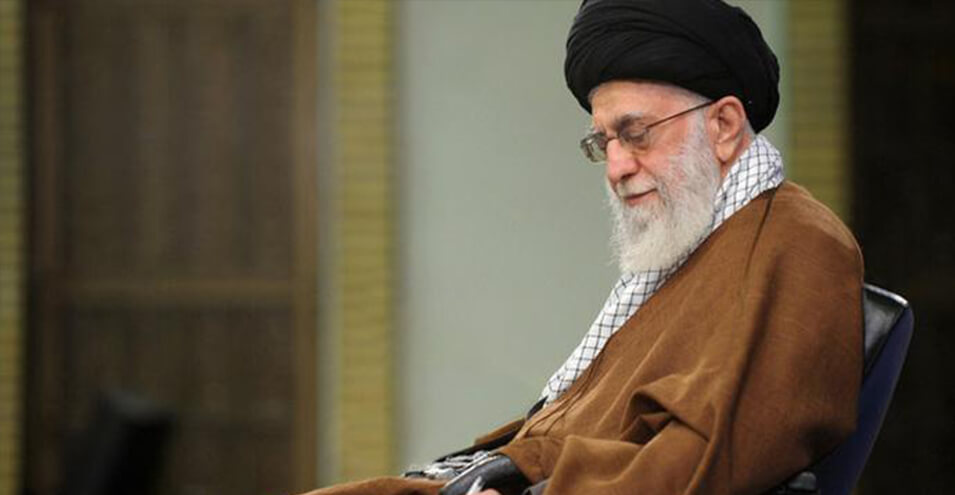
Various groups have highlighted different aspects of the detailed statement issued by Iran’s Supreme Leader known as the “Second Step of the Revolution.” Reform-aligned newspapers have been accused of emphasizing aspects of the statement that contradict its overall spirit.
The main headlines of most Iranian newspapers on Thursday, February 14, 2019 (Bahman 25) focused on the detailed statement by Iran’s Supreme Leader, Ali Khamenei, released Wednesday under the title “Second Step of the Revolution.”
Most media outlets close to the government’s reform faction highlighted in their front pages that part of Khamenei’s remarks stating that the Islamic Revolution is always ready to correct its own mistakes.
In his statement on the occasion of the fortieth anniversary of the establishment of the Islamic Republic, Khamenei wrote: “The Islamic Revolution, as a living and purposeful phenomenon, always has flexibility and is ready to correct its mistakes, but is not subject to revision and is not passive.”
Tasnim News Agency, by publishing images of the front pages of some newspapers, wrote: “The headline of most newspapers in the country today was devoted to the Second Step of Revolution statement, but some newspapers, which mostly had reform tendencies, also headlined a part of this statement that contradicted its overall spirit.”
A media outlet close to the Islamic Revolutionary Guard Corps wrote that these newspapers, without considering “the spirit of the leader’s remarks, which is pride in the past and hope for the future of the revolution,” only highlighted a section that makes “the spirit of this statement presented to the audience in a completely reversed manner.”
“Betrayal” of Khamenei’s Statement
Tasnim News Agency criticized reform-aligned newspapers and reminded them: “Using headlines is to highlight the overall content of a message, but disregarding the spirit of the leader’s remarks in choosing a headline is, in a way, a betrayal of this entire statement, whose highlight is not about correcting past mistakes but about giving hope to the youth.”
Tasnim, in addition to these criticisms, also conducted an interview with Khamenei’s representative at Kayhan Institute and discussed the analysis by Hossein Shariatmadari of the “Second Step of the Revolution” statement. The editor-in-chief of Kayhan newspaper called this statement “unique in its own kind” because, according to him, this is the first time in the past four decades that the highest authority of the system has issued a statement addressing do’s and don’ts.
Shariatmadari described one of the characteristics of this statement as follows: “Enemies wanted the Islamic Revolution not to reach its fortieth year, while the leader of the revolution is drawing up plans and a roadmap for the next forty years and several decades ahead, and this roadmap is completely logical and based on very clear and universally understandable reasons.”
Kayhan’s editor-in-chief, in praising Khamenei’s statement, added: “The enemy tries to make us not know where we stand, but the leadership showed that we are at the height of history and in the great turn of history that has begun and continues, it is we who speak first in many fields.”
Shariatmadari made no reference to errors that need correction, but the large portion of Khamenei’s “guidelines” dedicated to youth about the necessity of fighting corruption could confirm the view of many government figures who say that the Islamic Republic, after four decades, is riddled with “systematic corruption” throughout all its institutions and fabric.
Need for Legitimacy and Systematic Corruption
In part of his statement, Khamenei wrote: “Economic, moral, and political corruption is the filthy mass of countries and systems, and if it appears in the body of governments, it is a destructive and damaging earthquake to their legitimacy; and for a system like the Islamic Republic that needs a legitimacy beyond conventional legitimacies and more fundamental than social acceptance, this is much more serious and fundamental than other systems.”
Ahmad Tavakkoli, former head of the Parliamentary Research Center and current head of the Transparency and Justice Watchdog Organization, who has repeatedly spoken about systematic corruption in the Islamic Republic, recently said that the continuation of this situation is more dangerous for the government than a foreign attack.
Tavakkoli told ILNA news agency in mid-Bahman: “I believe that neither military attack nor coup nor soft revolution will overthrow this government; but when there is systematic and network corruption that, like termites, eats away at the foundations of the system, what need is there for a military attack?”
Systematic corruption refers to a stage of the spread of corruption in which regulatory, judicial, and administrative bodies are so immersed in corruption that any effective and decisive action against this situation is practically impossible without structural reforms.
Source: DW