Issa Kalantari: Iran’s Per Capita Water Has Surpassed Critical Conditions
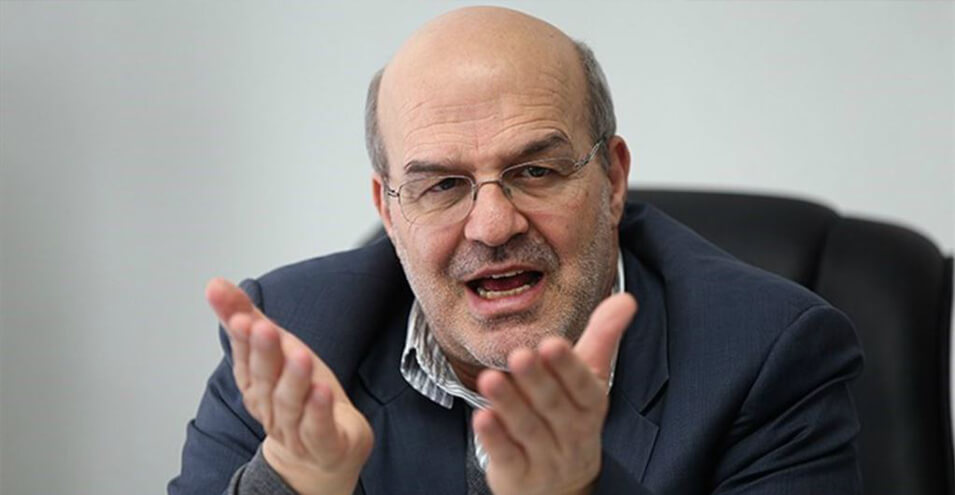
The head of Iran’s Environmental Protection Organization says more than 70 percent of the country’s population currently faces “water scarcity” and Iran’s per capita water in the current solar year has surpassed critical conditions.
Issa Kalantari made these remarks on Thursday, June 24, during a handover and introduction ceremony for the new director general of the Environmental Protection Department of Razavi Khorasan Province.
Previously, Reza Ardakanian, Iran’s Minister of Power, had described the solar year 97 as the most severe year in terms of water supply in the country over the past fifty years and warned that 334 cities with a population of 35 million people are currently facing water stress.
In recent years, gatherings and clashes have been reported in various Iranian cities over water transfer to other areas or water shortage for agriculture.
According to the ISNA news agency, Kalantari further stated that the reason more than 70 percent of Iran’s population faces water scarcity is “one-sided environmental perspective” and “discontinuity” in development strategies after the 1979 Revolution.
Criticizing the neglect of the environment in Iran’s five-year development plans, he added: “Per capita water in the current year has reached below 500 cubic meters, while below 1,000 cubic meters is considered a crisis.”
Kalantari further stated that water shortage conditions in Iran are currently so critical that resolving four major environmental problems of the country including “improving air quality in major cities, waste management, the country’s dust storms, especially those with domestic sources, and wetland restoration… is very difficult.”
This senior environmental protection official referred to the “multi-million” city of Isfahan, which “has no drinking water, while the country’s best water-intensive industries have been established in Isfahan.”
According to him, other parts of Iran facing “environmental crisis” include Khorasan, where “in Razavi Khorasan Province, more than 130 percent of renewable water resources are consumed…while according to international standards no more than 40 percent of renewable water should be used, and this consumption rate throughout the country is 110 percent.”
Previously, Mohammad Mehdi Marouji al-Sharia, governor of South Khorasan Province, had announced that more than 485 villages in this province currently do not have even “a drop” of drinking water.
The water crisis in Iran has become so serious that recently the Prime Minister of Israel announced launching a website in Persian aimed at “helping” the people, particularly farmers of Iran, for water recycling and dealing with the major crisis of water scarcity and severe drought in Iran.
Issa Kalantari, in response to the launch of the aforementioned website in Persian, said “Netanyahu is mistaken; what does he have to do with Iran’s environment? Let him tend to his own affairs.”
“We Don’t Dare Present Real Environmental Indicators in Global Forums”
The head of Iran’s Environmental Organization further stated that in the world “one unit of energy is consumed to produce one unit of goods” but in Iran “for each unit of goods, four units of energy are consumed.”
He called these statistics “shameful” and introduced Iran as one of the world’s “ashamed” countries in terms of environmental protection.
Issa Kalantari, warning about the necessity of changing domestic policies based on environmental protection priorities, added that the environmental situation in Iran is such that “we don’t dare present our real environmental indicators in global forums.”
Criticizing “asymmetric and excessive consumption” in Iran, he called for adopting a strategy to protect the environment and implicitly criticized the obstruction of continuing the work of Kaveh Madani, his deputy, who was forced to resign due to pressure from security agencies and allegations of “espionage.”
Kalantari said, “I had a young deputy who would ride on a truck to carry out environmental activities and visit different regions of the country, without waiting for an airplane or an assignment letter, and was trying to do something positive.”
Statistics about the critical environmental situation in Iran are being presented at a time when, since last winter until now, aside from pressures on Kaveh Madani, dozens of environmental activists have been arrested in various parts of Iran.
These individuals face “espionage” charges, and judicial authorities say Kavous Seidamami, a university professor and one of the most well-known of these individuals, committed “suicide” in prison.
“Wetlands in Iran Are Dead”
According to Kalantari, “today there is practically no living wetland in the country. Our most difficult work is with wetlands.”
Referring to the lack of water in the Zayandeh River bed, he deemed the drying of Gavkhoni wetland logical and yet said that “37 dams were built on the rivers in Lake Urmia and caused the drying of Lake Urmia.”
This environmental protection official, presenting alarming statistics, said, “The water that enters the ground in the country is 19.5 billion, while our extraction in year 51 is 51 billion.”
The head of the Environmental Protection Organization further referred to the putrid state of the Karun and Khormoshahr and Ahvaz rivers, dam construction on all Iranian rivers for development and the resulting dust storms, the drying of all Yaran wetlands due to food self-sufficiency policy, and wrong policies that have caused air pollution in 10 major Iranian cities, as well as waste problems for northern Iranian cities and the subsidence of several tens of meters in the city of Hamedan.
According to him, to help Iran’s environment, officials and people need to be convinced to, respectively, “stop unbalanced and unsustainable behaviors and protect the environment.”
Previously, an official of Iran’s Environmental Protection Organization had announced that 60 wetlands in the country, which comprise approximately 44 percent of the total area of Iran’s wetlands, have dried up.
Source: Radio Farda